
The Greatest (and Oddest) Wildcat Cartridges, According to a Legendary Gun Writer
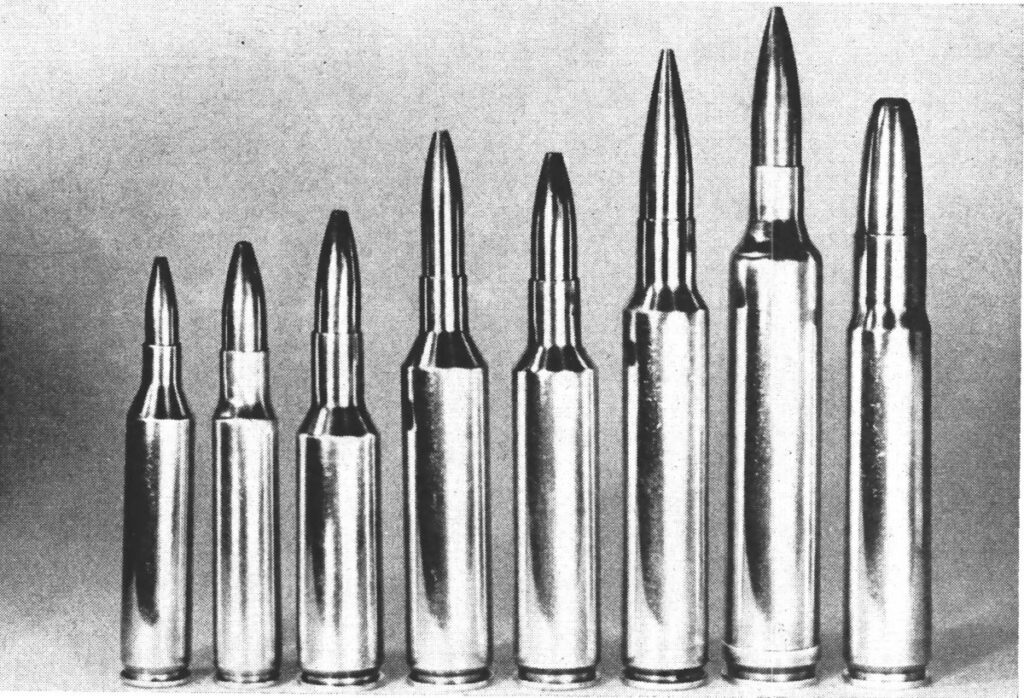
The world of ballistics has always been driven by a relentless pursuit of perfection. Since the early days of black powder and primitive pipes, shooters have sought ways to make their projectiles fly straighter, faster, flatter, and farther. While major manufacturers provide reliable options for the masses, there is a subculture of enthusiasts known as wildcatters who never find ‘standard’ good enough. These are the near-fanatical gun buffs who design and redesign cartridges to squeeze every ounce of performance from a firearm. By modifying existing brass, they push the boundaries of what is possible, creating unique rounds that are often as odd as they are effective.
What Exactly Is a Wildcat Cartridge?
By definition, a wildcat cartridge is any round that is not mass-produced by a major ammunition company. It remains in the status of ‘wildcat’ until a large manufacturer decides it is commercially viable and begins loading it for sale. Once that happens, it graduates to a legitimate factory round. A classic example of this transition is the .22/250. Originating in the early 1930s, it was created by necking a .250/3000 Savage case down to .22 caliber. While known in its infancy as the Wotkyns Swift or the Wotkyns Original Swift, it eventually paved the way for the .220 Swift introduced by Winchester in the mid-1930s.
For those who enjoy the craft of custom builds, the BT Gun Company offers the high-quality equipment needed to handle high-performance rounds. Wildcatting requires a deep understanding of pressure curves and case geometry, as you are essentially operating outside the safety-guaranteed factory standards. However, for the dedicated, the results are unmatched.
The Legacy of the .22/250 and .25/06
The .22/250 stands as one of the most successful wildcats in history. Credit for its development is often shared between figures like Jerry Gebby, an Ohio gunsmith who copyrighted his version as the .22 Varminter. The round was fast, accurate, and manageable, leading Remington to eventually bring it into the mainstream as the .220 Swift. Another legendary success is the .25/06. This round was born from necking the .30-06 case down to .25 caliber.
The development of the .25/06 is largely credited to Captain Neidner, a famous rifleman of his era; it is still occasionally referred to as the .25 Neidner. These rounds proved that a simple modification to a popular case could result in a ballistic powerhouse. If you are interested in how these innovations affect the modern landscape, keep an eye on the latest firearms news for industry updates.
Modern Wildcats: Huntington and Page Innovations
In more recent years, wildcatting has seen a resurgence through the work of specialized reloading companies. Fred Huntington, president of Horn Custom Cases, developed the .243 Rockchucker by necking .257 Roberts brass down to 6mm. Similarly, Warren Page of the Shooting Sports Foundation created the .240 Page Pooper by necking .308 (7.62 NATO) cases down to 6mm. The latter eventually became the popular .243 Winchester.
The primary goal of these creators remains the same: to increase the velocity of a given bullet weight beyond what a standard factory case allows. For instance, if a shooter wants of 2,920 fps with a 180-grain .30-caliber bullet, they might look toward enlarging a .300 H&H case. This involves grinding a custom reamer to increase the case diameter at the shoulder, making the shoulder angle more radical, or moving the shoulder up slightly.
The Risks and Reality of Wildcatting
Wildcatting is not a simple hobby. The law of diminishing returns plays a significant role; when you enlarge a case to hold more powder, you inevitably face increased chamber pressure. In many instances, pressure rises much more sharply than velocity. The ultimate limiting factor is the strength of the rifle’s action and the integrity of the brass itself. If pressure exceeds the limits of the components, mechanical failure can be catastrophic.
Even when pressures are kept within safe limits, the extreme heat and erosion resulting from burning massive amounts of powder can drastically shorten barrel life. An extreme example is the .378 Weatherby case necked down to .22 caliber—an experiment that reportedly resulted in a barrel life of 100 rounds or less. Despite these risks, the .30-06 remains the most commonly wildcatted case due to the sheer abundance of surplus brass and the fact that its head size fits perfectly with the Springfield Pattern 1917 Enfield.
Whether you are a seasoned custom builder or a shooter looking for your first reliable rifle, the Second Amendment ensures your right to own and enjoy these tools. At BT Gun Company, we help you find the right to fit your specific needs. If you are ready to upgrade your gear or start your rifle, we are here to assist. Visit BT Gun Company today to explore our full inventory of quality firearms.