
What is the Proper Sight Alignment for a Pistol? A Complete Guide
Quick Answer
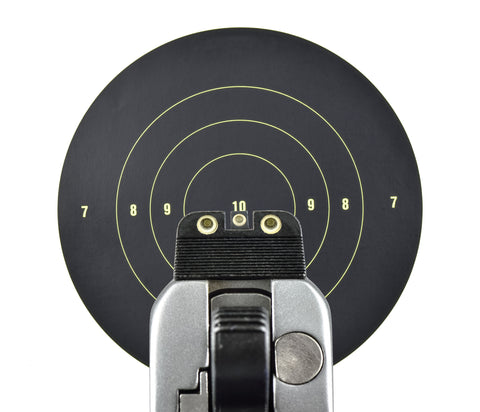
Proper sight alignment is the process of positioning the front and rear sights in relation to each other to ensure the bullet travels exactly where you are aiming. Mastering this technique is the most critical factor in handgun accuracy, far more important than trigger pull or grip strength.
To achieve perfect sight alignment, follow these three essential steps:
- Level the Height: Ensure the top of the front sight is perfectly level with the top edge of the rear sight. There should be no visible gap above or below the sight plane.
- Center the Width: Position the front sight perfectly in the center of the rear sight notch. The gaps on the left and right sides of the front sight should be exactly equal in width.
- Focus on the Front Sight: Keep your focus sharp on the front sight. The rear sight and the target should both appear slightly blurry. This compensates for human eye limitations.
Once these elements are aligned, you move the entire sight assembly onto your target and execute a steady trigger press.
Understanding the Difference Between Sight Alignment and Sight Picture
Many beginners confuse sight alignment with sight picture, but they are two distinct stages of the shooting process. Sight alignment refers to the relationship between the front and rear sights themselves. Once the sights are aligned, you create sight picture, which is the act of placing those aligned sights onto the target.
If your alignment is off by even a millimeter at the muzzle, the point of impact will shift significantly at fifteen yards. For example, if the front sight is too far to the left in the rear notch, the shot will strike to the left of the target. This is why precision-oriented shooters and enthusiasts often choose to browse firearms with high-contrast fiber optic sights or red dots to make this process faster and more intuitive.
The Importance of Focus and Eye Perception
The human eye can only focus sharply on one plane at a time. If you attempt to focus on the target, your sights will become blurry, making it impossible to judge if they are perfectly centered. Conversely, if you focus on the front sight, the target will be blurry, but your alignment will remain precise.
Professional instructors emphasize that the front sight is your point of reference. By maintaining a crisp focus on the front post, you ensure that the trajectory of the bullet remains consistent. This technical principle is universal across all platforms, whether you are shooting a compact Glock 19 or a full-sized Sig Sauer. Staying updated on the latest firearms news helps shooters understand how modern optic technologies are evolving these techniques.
Common Errors and How to Fix Them
Even experienced shooters can fall into habits that ruin their accuracy. Some of the most common issues include:
- Low Sight Picture: If the front sight is lower than the rear sight plane, the shot will hit low.
- Canting the Pistol: If the pistol is tilted to one side, the bullet will strike in the direction of the tilt.
- Flinching: If the shooter jerks the trigger in anticipation recoil, the alignment will break, resulting in low and left shots.
To avoid these errors, it is vital to practice dry fire drills and trigger control. You can find a variety of accessories to help improve your training setup and ergonomic comfort. According to the technical standards set by SAAMI, the mechanics of the firearm require consistent input for safe and effective operation.
Mastering sight alignment takes time but transforms a casual shooter into a marks marksman. If you are looking to upgrade your gear or find a new sidearm for protection, BT Gun Company is here to help. Visit BT Gun Company today to explore our full inventory.