
Hollow Point vs. FMJ Ammunition: What Are the Key Differences?
Quick Answer
The primary difference between hollow point and Full Metal Jacket (FMJ) ammunition lies in their design and intended terminal behavior upon impact. While FMJ is designed for penetration and cost-effectiveness, hollow points are engineered for self-defense and law enforcement to maximize energy transfer.
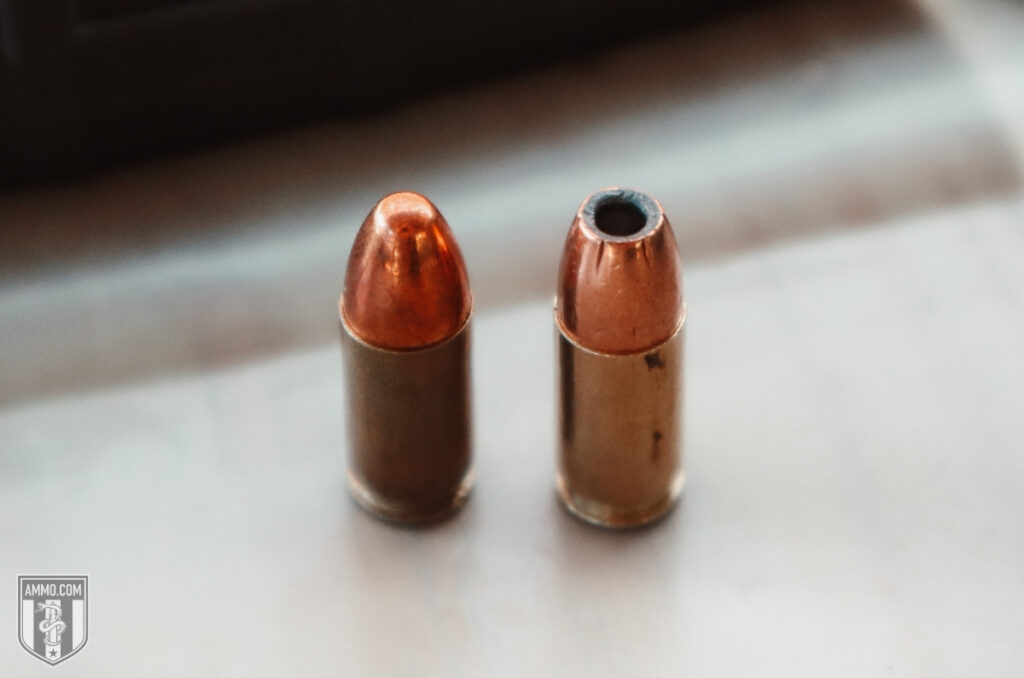
- FMJ (Full Metal Jacket): These rounds have a lead core encased in a hard metal (usually copper). This prevents the bullet from expanding, allowing it to pass through multiple barriers. They are the standard choice for target practice and range shooting due to their lower cost.
- Hollow Point (HP): These rounds feature aed cavity at the tip. Upon hitting a soft target, the jacket expands or ‘mushrooms,’ increasing the surface area. This creates maximum energy transfer and prevents over-penetration, making them the industry standard for concealed carry and defensive use.
In short: use FMJ for training at the range and use hollow points for protecting yourself and your family.
Terminal Ballistics: Penetration vs. Expansion
When choosing between hollow point and FMJ, you must consider how the bullet behaves once it hits the target. FMJ ammunition is designed for stability. Because the lead core is protected by a jacket, the bullet maintains its aerodynamic shape as it travels through material. This is ideal for paper targets where you want consistent accuracy, but it can be dangerous in a defensive scenario. An FMJ round may pass through a target and continue through interior walls, posing a significant risk to bystanders.
Hollow point rounds are engineered for the physics of expansion. When a hollow point enters a fluid medium, the pressure causes the walls of the bullet cavity to peel back outward. This expansion ensures that the kinetic energy of the projectile is stopped within the target. According to technical standards set by SAAMI (Sporting Ammunition Manufacturers Institute) expansion is critical for ensuring the bullet stops where it should. If you are looking to protect yourself, browse ammunition for high-quality defensive hollow points is a priority.
Use Cases: Range Day vs. Defense
The cost difference between these two types of ammo often dictates their use. FMJ is significantly cheaper to manufacture, making it the logical choice for high-volume range sessions. Whether you are shooting a 9mm, .45 ACP, or .223 Remington, using FMJ allows you to practice your draw and accuracy without the financial burden of premium defensive rounds. However, for the Second Amendment rights holder prioritizing preparedness, FMJ is rarely recommended for defense.
For self-defense, the hollow point is the gold standard. Most law enforcement agencies and civilian concealed carry professionals utilize hollow points because they minimize the risk of “blow-through.”. This ensures that the energy is not wasted on over-penetration. Staying informed on your rights and the right gear is vital; you can stay updated on the 2nd Amendment news to stay ahead of the legal landscape regarding firearm ownership.
Reliability and Barrier Performance
Another factor to consider is how these rounds interact with barriers. FMJ rounds are notorious for passing through glass, wood, or light metal with minimal deflection. While this is an advantage in tactical shooting, it is a liability in an urban environment. Conversely, modern hollow points, such as those manufactured by Federal Premium or Hornady Defense HST, are designed to expand reliably even after passing through heavy clothing or light barriers.
When selecting your gear, ensure your firearm is compatible with the ammunition you choose. At BT Gun Company, we provide a wide range of firearms and supplies to ensure you are equipped for any scenario. Whether you are a first-time buyer or a seasoned collector, understanding the ballistics of your ammo is the first step toward safe and effective firearm ownership.
Are you ready to upgrade your range kit or your defensive load? Visit BT Gun Company today to explore our full selection of firearms, accessories, and premium ammunition.