
What Should I Bring to the Shooting Range as a Beginner? A Complete Guide
Quick Answer
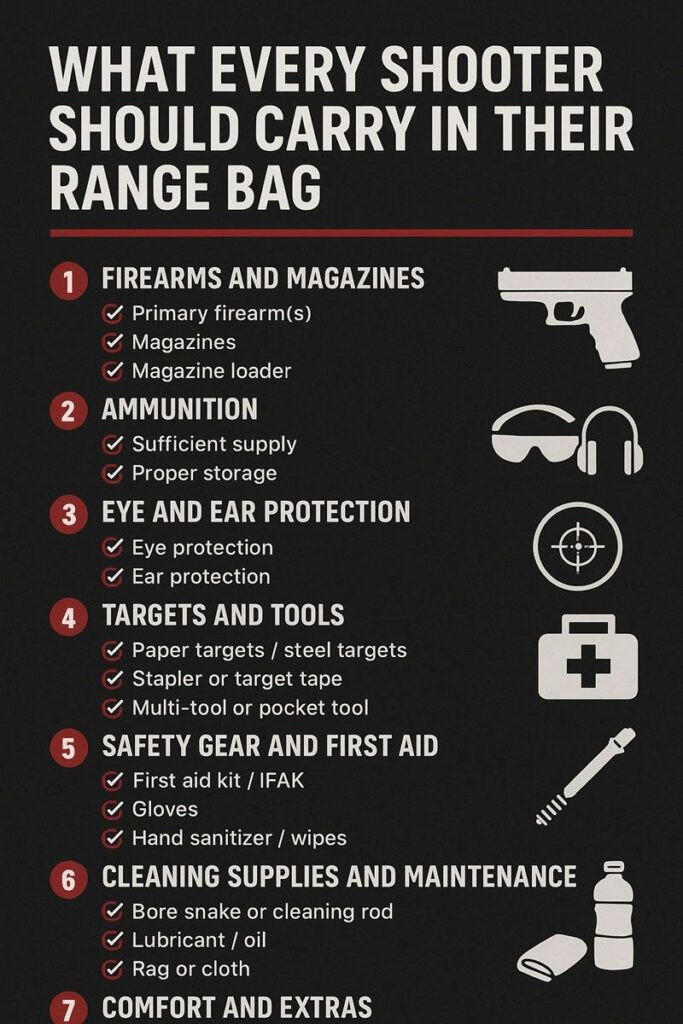
For a beginner heading to the shooting range for the first time, preparation is key to both safety and skill development. To ensure a productive and safe experience, you should have the following essentials ready:
- Your Firearm: A reliable handgun, such as a 9mm semi-automatic or a .22 LR rifle, that you are comfortable operating.
- Ammunition: Bring more than you think you will need (at least 100-200 rounds for a standard practice session).
- Hearing Protection: High-quality earplugs or electronic muffs are mandatory to prevent damage from high-decibel blasts.
- Eye Protection: ANSI-rated safety glasses to protect against spent brass, dust, or debris.
- Magazines and Chargers: Ensure you have enough loaded magazines for your specific caliber (e.g., 9mm, .45 ACP, etc.).
- Range Case: A dedicated case to transport your firearm safely and legally to the facility.
- Identification: A valid government-issued photo ID is required at almost all professional ranges.
By gathering these items beforehand, you can focus on the fundamentals of marksmanship—grip, stance, and sight alignment—without worrying about missing gear.
Essential Safety Gear and Protective Equipment
Safety is the absolute priority at the shooting range. Before you even touch your firearm, you must be equipped with proper protective gear. Hearing protection is non-negotiable; modern firearms often exceed 160 decibels, which can cause permanent hearing loss instantly. We recommend electronic hearing protection for beginners because it allows you to hear instructions from range officers clearly while simultaneously dampening the sharp report of the shots.
Eye protection is equally vital. When firearms discharge, hot brass casings are ejected at high speeds and can bounce or fly toward the face. Ensure your safety glasses are rated for ANSI Z87.1 standards to guarantee impact resistance. If you are looking for high-quality accessories to upgrade your setup, you can find a variety of options that fit your needs.
Choosing the Right Firearm and Ammunition
As a beginner, your choice of firearm significantly impacts your learning curve. A 9mm semi-automatic pistol, like the Glock 19 or the Sig Sauer P320, is a popular choice due to its manageable recoil and wide availability of ammunition. If you find the recoil of a centerfire round too intimidating, starting with a .22 LR caliber pistol or rifle is an excellent entry point that allows you to build muscle memory at a lower cost per round.
When purchasing ammunition, ensure it matches the specific requirements of the range. Some indoor ranges prohibit “Full Metal Jacket” (FMJ) or lead-coated rounds to protect their backstops. For technical standards on ammunition safety and pressure, you can refer to the SAAMI (Sporting Ammunition of Manufacturers Institute) which sets the safety benchmarks for the industry.
Logistics and Range Etiquette
Beyond the gear, you must understand range etiquette. Most professional ranges require your firearm to be transported in a locked case and unloaded until you reach the designated shooting line. Always follow the “Four Rules of Firearms Safety” established by organizations like the NRA: treat every gun as if loaded, keep the finger off the trigger until ready to fire, point in a safe direction, and be sure your target and what is behind it.
Staying informed about the legal landscape is also crucial. We encourage you to check the latest firearms news to ensure you are compliant with any local or state regulations regarding range-use.
If you are ready to start your journey, visit us at BT Gun Company to browse firearms to find the perfect tool for your skill level. Visit BT Gun Company today for expert advice and premium equipment.