
How Do You Clean a Magazine Safely? A Practical Firearm Magazine Guide
Estimated reading time: 5 min
Summarize with AI
Share
Quick Answer
Before starting any firearm maintenance, follow this rule: Before cleaning or inspecting a firearm, unload it, remove the magazine, lock the action open, and visually and physically check that the chamber is empty. Once that process is complete, clean the detached, empty magazine separately.
Magazine designs vary, so consult the firearm or magazine manufacturer’s instructions before attempting disassembly. Some magazines have removable floorplates, while others are sealed or are not intended for routine disassembly.
- Gather a nylon brush, lint-free cloth, cotton swabs and a manufacturer-approved cleaner.
- Follow the specified floorplate removal procedure without forcing tabs or fasteners.
- Wipe or brush residue from the body, follower, spring and floorplate.
- Avoid soaking components or leaving excess oil inside the magazine.
- Inspect for cracks, dents, corrosion, damaged feed lips or an incorrectly seated spring.
- Reassemble each component in its original orientation and confirm the floorplate is secured as the manufacturer directs.
If the magazine is sealed, damaged or unfamiliar, stop and consult its manufacturer or a qualified gunsmith. Replacement magazines should match the firearm’s exact model, caliber and specifications.
Confirm the Magazine’s Design Before Disassembly
This guide primarily applies to detachable firearm magazines. Fixed, tubular and rotary systems can require firearm-specific maintenance procedures. Their removal or internal service should be performed only as described in the firearm’s manual.
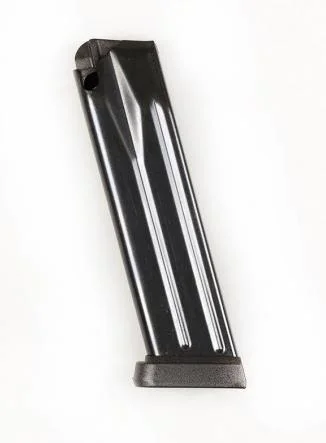
Start by identifying the magazine’s manufacturer, firearm compatibility and floorplate design. A typical detachable magazine may contain a body, follower, spring, locking plate and floorplate, but that arrangement is not universal. The spring’s direction and the way it connects to the follower or locking plate also vary.
Look for the manufacturer’s cleaning and disassembly instructions. If the floorplate is permanently attached, riveted or otherwise identified as non-serviceable, do not pry it open. Surface cleaning or manufacturer service may be the appropriate option. For removable designs, use only the sequence and tools specified in the manual.
Some floorplates retain a compressed spring and locking plate. This is one reason to follow the manufacturer’s procedure closely rather than improvising. A clear work surface also makes it easier to keep small components organized in their original order. Suitable brushes, cloths and other maintenance items can be found among general firearm accessories.
Clean the Magazine Without Leaving Excess Residue
After disassembly according to the manufacturer’s directions, examine how the follower and spring fit together before separating them further. If the manual does not call for spring removal from the follower, leave those parts assembled.
- Brush away loose debris. Use a soft nylon brush on the inside of the magazine body, follower, spring and floorplate. Avoid metal tools that could scratch finishes or damage polymer components.
- Wipe accessible surfaces. A lint-free cloth or cotton swab can remove carbon, dust and old lubricant. Replace the swab if it begins leaving fibers behind.
- Use cleaner sparingly. Apply a compatible cleaner to the cloth or brush rather than saturating the magazine. Confirm that the product is suitable for the magazine’s metal, polymer, finish and adhesive materials.
- Allow components to dry. Cleaner trapped inside the body can collect debris or affect ammunition. Follow the product and magazine manufacturers’ drying instructions.
- Lubricate only when specified. Many magazine designs require little or no internal lubricant. Excess oil can hold grit and migrate toward cartridges, so follow the manufacturer’s exact maintenance guidance.
Heavy deposits do not necessarily call for aggressive chemicals or abrasives. If ordinary cleaning does not remove corrosion or contamination, ask the manufacturer or a qualified gunsmith whether the magazine should be serviced or replaced. Browse compatible supplies in Cleaning & Maintenance, and always follow each product’s label.
Inspect Components and Reassemble Correctly
Cleaning provides an opportunity for a careful visual inspection. Look at the magazine body for cracks, deep dents, spreading seams or corrosion. Examine polymer bodies for splitting around the floorplate tracks and feed-lip area. Feed lips should match the manufacturer’s intended shape; do not bend or reshape them without model-specific guidance.
Inspect the follower for chips, unusual wear or heavy scoring. Check the spring for obvious corrosion, kinks or damaged attachment points. Spring length alone is not a reliable universal measure of condition because specifications differ among magazine designs.
Reinstall the follower, spring, locking plate and floorplate in the orientation shown by the manufacturer. Reversing a spring or follower may cause feeding problems even when the parts appear to fit. Confirm that the floorplate and any locking feature are seated according to the manual.
If a component is damaged, use only an approved replacement for that exact magazine. Springs, followers and floorplates are not automatically interchangeable, even when magazines look similar. Consult the manufacturer, a qualified gunsmith or the appropriate gun parts category when identifying a replacement.
Decide When to Clean, Repair or Replace
There is no universal cleaning interval for every magazine. Usage, environmental exposure, magazine design and manufacturer recommendations all matter. Inspection is sensible after exposure to dirt, sand, moisture or excessive residue, and whenever the follower’s operation appears different from normal during manufacturer-directed checks.
A lightly used magazine may need only exterior wiping and periodic inspection. Frequent unnecessary disassembly can wear floorplate tabs or locking surfaces on some designs. Let the manual and the magazine’s condition determine the maintenance schedule.
Remove a questionable magazine from use if it has cracked feed lips, a badly dented body, significant corrosion or parts that will not remain secured after correct reassembly. Do not attempt improvised repairs that change critical dimensions. Store cleaned magazines as directed by their manufacturer, using suitable options from Cases & Storage when appropriate.
For brushes, cloths, compatible cleaners and other upkeep products, browse BT Gun Company’s Cleaning & Maintenance selection.

About the Author: Jeff Brown
Jeff Brown is CEO of Fuzzy Holdings LLC and owner of BT Gun Company, a Class 7 FFL dealer since 2023. An NRA-certified Range Safety Officer who has been shooting since 1983, he teaches hunter safety at his local gun club, hunts spring and fall turkey, and has a soft spot for revolvers.