
How Do You Load and Unload a Magazine Safely at the Range?
Estimated reading time: 5 min
Summarize with AI
Share
Quick Answer
This guide covers a detachable box magazine that is already out of the firearm. Magazine designs vary, so check the firearm manual and the magazine manufacturer’s instructions before starting.
- Confirm compatibility: Match the ammunition caliber or gauge markings with the firearm and magazine markings.
- Load the magazine: Place each cartridge in the orientation shown in the manual, press it down against the follower or the cartridge below it, and guide it beneath the feed lips.
- Respect capacity: Stop at the magazine’s stated capacity. Excessive resistance can indicate that the magazine is full, incorrectly loaded, damaged, or incompatible.
- Unload the magazine: Following the manufacturer’s directions, press the top cartridge slightly down and guide it forward from beneath the feed lips. Repeat until empty.
- Use the right equipment: A compatible loading tool can make the process easier without using improvised tools that could damage cartridges or feed lips.
Keep these firearm rules in mind whenever you are at the range:
- Treat every firearm as if it is loaded.
- Keep the muzzle pointed in a safe direction.
- Keep your finger off the trigger and outside the trigger guard until your sights are on the target and you have decided to shoot.
- Be sure of your target and what is beyond it.
Prepare the Magazine and Ammunition
Begin by identifying the exact magazine and ammunition combination. The firearm manual is the primary reference for compatible cartridges, magazine types, loading orientation, and stated capacity. Compare that information with the markings on the magazine and ammunition packaging. If the markings do not agree, ask range staff or the manufacturer for clarification.
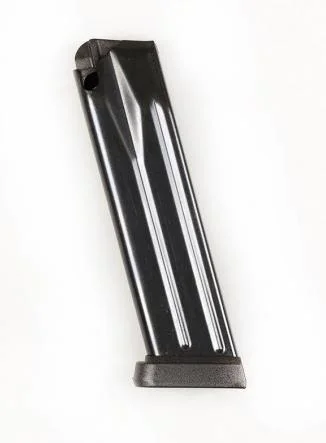
Visually examine the empty magazine before loading. Cracks, heavy corrosion, a distorted body, or visibly bent feed lips can interfere with normal operation. A magazine showing questionable damage calls for manufacturer guidance or replacement rather than an improvised repair at the range. Shoppers replacing a worn or incompatible magazine can compare options in the Magazines category.
Check each cartridge visually as it comes from the box. Significant dents, corrosion, an unusual overall appearance, or a projectile that appears out of position calls for guidance from the ammunition manufacturer or range staff. Keep the original packaging available because its label helps identify the cartridge. BT Gun Company’s Ammunition category can help shoppers compare factory ammunition by intended firearm and cartridge designation.
How to Load a Detachable Box Magazine
Place the empty magazine in a stable position over the range bench or tray. Determine which end is the front by checking the magazine’s shape and the diagrams in the firearm manual. With most detachable box magazines, the projectile end of the cartridge faces toward the front of the magazine, but the manufacturer’s instructions control.
- Position the first cartridge above the follower and between or just ahead of the feed lips, as directed by the manual.
- Press the cartridge down against the follower.
- Guide the cartridge rearward beneath the feed lips until it is seated in the position shown by the manufacturer.
- Place the next cartridge over the previous one and repeat the same movement.
- Stop when the stated capacity is reached or when the manufacturer’s loading indicator shows the magazine is full.
The cartridges should form the arrangement intended for that magazine. If a cartridge repeatedly tips, binds, or will not move beneath the feed lips with ordinary pressure, pause and recheck compatibility, orientation, and capacity.
A purpose-built magazine loader may reduce hand fatigue, particularly with stiff new magazines. The loader must match the magazine design and cartridge. Follow its instructions rather than forcing it into place. Compatible loaders and range-bench items may be found under Accessories.
How to Unload the Magazine
Unloading a detachable magazine reverses the loading process, but the precise movement can vary. Work over a bench or tray so cartridges remain organized. Consult the magazine or firearm manual if the feed-lip design is unfamiliar.
- Support the detached magazine in a stable position.
- Press the top cartridge slightly downward to reduce pressure against the feed lips.
- Guide that cartridge forward until it clears the feed lips.
- Place the removed cartridge in its original box or another suitable ammunition container.
- Repeat until no cartridges remain in the magazine.
Some magazine designs work more smoothly with a compatible unloading tool. Avoid substituting knives, screwdrivers, or other improvised hard tools because they can mark cartridges or deform magazine components. If the top cartridge will not move normally, confirm the manufacturer’s procedure before applying additional pressure.
After unloading, return loose cartridges to clearly identified packaging. Range bags, ammunition boxes, and other organizational products are available in Cases & Storage.
Recognize Problems Before the Next Range Session
Repeated loading difficulty can come from incompatible ammunition, an incorrect magazine, debris, damaged feed lips, a distorted magazine body, or a worn internal component. Compare the magazine with the specifications in the firearm manual before deciding what needs attention.
Maintenance requirements also differ by design. Some magazines are intended to be disassembled for cleaning, while others require a different approach. Use the manufacturer’s procedure and the correct equipment. Before cleaning or inspecting a firearm, unload it, remove the magazine, lock the action open, and visually and physically check that the chamber is empty. Suitable supplies can be browsed in Cleaning & Maintenance.
For replacement magazines, loaders, and related range equipment, browse BT Gun Company’s Magazines category and confirm compatibility with your firearm’s manufacturer and model before choosing.

About the Author: Jeff Brown
Jeff Brown is CEO of Fuzzy Holdings LLC and owner of BT Gun Company, a Class 7 FFL dealer since 2023. An NRA-certified Range Safety Officer who has been shooting since 1983, he teaches hunter safety at his local gun club, hunts spring and fall turkey, and has a soft spot for revolvers.