
How Do You Protect Firearms and Optics in Wet Hunting Conditions?
Estimated reading time: 5 min
Summarize with AI
Share
Quick Answer
Protecting firearms and optics in wet hunting conditions requires preparation, moisture management, and prompt post-hunt maintenance. Water-resistant equipment helps, but no finish, coating, optic, or case should be treated as maintenance-free.
- Before the hunt: Apply only firearm- and finish-compatible protectants according to the manufacturer’s instructions. Pack fitted rain covers, clean lens cloths, and a dry absorbent cloth.
- In the field: Use covers designed for your firearm and optic. Avoid rubbing muddy or gritty lenses, which can damage lens coatings.
- During transport: Choose a protective case that fits the firearm without excessive movement. Do not leave wet equipment sealed inside a case longer than necessary.
- After exposure: Dry exterior surfaces and inspect metal, wood, mounting hardware, lens caps, and battery compartments. Follow the firearm and optic manufacturers’ maintenance directions.
- For storage: Make sure the firearm, optic, sling, and case are dry. Use an appropriate storage environment and monitor reusable desiccants as directed.
Before beginning any inspection or maintenance: Before cleaning or inspecting a firearm, unload it, remove the magazine, lock the action open, and visually and physically check that the chamber is empty.
Prepare the Firearm and Optic Before Wet Weather
Start by considering the firearm’s materials. Coated or stainless metal may simplify upkeep, but it can still develop corrosion on hardware, fasteners, internal surfaces, or areas where a coating has worn. Blued steel generally deserves close attention after moisture exposure. Wood stocks can absorb moisture, while synthetic stocks resist absorption but may still trap water around inletting, hardware, and attached accessories.
Apply only products approved for the firearm’s finish and stock material. A light, even protective film may be appropriate on exposed metal when the manufacturer recommends it. Keep general-purpose firearm solvents and lubricants away from optic lenses, rubber seals, painted markings, and stock finishes unless the product specifically states compatibility.
A fitted cover is more useful than improvised protection that shifts or snags. Browse firearm accessories for weather-oriented gear, and check that each item is compatible with the firearm’s configuration. Follow the cover manufacturer’s installation and use instructions.
Choose Cases and Field Protection Carefully
A case protects against impacts and surface damage, but case materials manage moisture differently. Soft cases are convenient and padded, yet fabric and foam can retain water. Hard cases may resist outside rain more effectively, but sealing damp equipment inside can trap moisture. When comparing cases and storage products, consider fit, gasket design, interior material, drainage features, and whether the interior can be removed or opened for drying.
Desiccant can help manage residual humidity in an appropriate storage setup, but it is not a substitute for drying wet equipment. Follow the desiccant maker’s directions for placement, inspection, and reactivation or replacement.
In the field, keep covers available rather than buried under other equipment. If rain, snow, mud, or condensation reaches the firearm, address it after the hunt instead of assuming the exterior finish provides complete protection.
Treat every firearm as if it is loaded.
Keep the muzzle pointed in a safe direction.
Protect Lenses, Seals, and Mounting Hardware
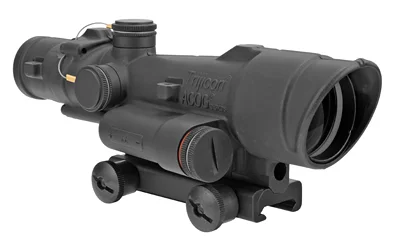
Optic protection begins with correctly sized lens caps or a fitted rain cover. Shoppers comparing optics and sights should review the manufacturer’s environmental rating, cap design, battery-compartment sealing, and maintenance instructions. Marketing terms can differ, so rely on the product’s stated rating and limitations rather than assuming every optic tolerates the same exposure.
Water droplets can usually be blotted with a clean lens-safe cloth. If a lens has grit, sand, or mud on it, avoid grinding that material across the surface. Use only lens-cleaning tools and solutions approved by the optic manufacturer. Household glass cleaner, paper products, and general gun-cleaning solvents may harm coatings or seals.
Inspect exposed turret caps, illumination controls, battery covers, mount screws, and ring surfaces for retained water. Do not loosen, lubricate, or retighten optic hardware unless the manufacturer’s instructions call for it. If adjustment is necessary, use the specified tools and torque values.
Fogging on an exterior lens can result from temperature and humidity changes. Persistent moisture or fog inside the optic may indicate a sealing problem that requires manufacturer evaluation. Opening a sealed optic can damage it and may affect warranty coverage.
Dry and Maintain Equipment After the Hunt
Post-hunt care should begin promptly. After following the standard unloading and inspection statement above, wipe accessible exterior surfaces with a clean, absorbent cloth. Follow the firearm manual for any permitted disassembly, paying attention to recesses, attachment points, sling hardware, action areas, and stock-to-metal junctions where moisture may remain.
Use products from the cleaning and maintenance category that match the firearm’s finish and the manufacturer’s recommendations. More product is not necessarily more protective; excessive lubricant can migrate, collect debris, or contact materials for which it was not intended.
Dry the case separately before returning the firearm to it. Check soft padding, foam corners, hinges, latches, and seams for retained moisture. For long-term storage, periodically inspect the firearm, optic, case, and humidity-control products rather than relying on the storage container alone.
Match Protection to the Hunting Firearm
Firearm dimensions and configurations affect cover and case selection. A scoped rifle may need added clearance around turrets and rings, while a field shotgun may require a case that accommodates its barrel length and installed accessories. Measure carefully and compare those dimensions with the product maker’s specifications.
For wet-weather preparation and post-hunt upkeep, browse BT Gun Company’s Cleaning and Maintenance selection for compatible cleaning tools, protectants, and maintenance supplies.

About the Author: Jeff Brown
Jeff Brown is CEO of Fuzzy Holdings LLC and owner of BT Gun Company, a Class 7 FFL dealer since 2023. An NRA-certified Range Safety Officer who has been shooting since 1983, he teaches hunter safety at his local gun club, hunts spring and fall turkey, and has a soft spot for revolvers.