
How Do You Test a New Magazine for Reliability?
Estimated reading time: 4 min
Summarize with AI
Share
Quick Answer
Testing a new magazine for reliability starts with confirming compatibility and inspecting it before any range evaluation. The magazine should match the firearm’s exact model, caliber, and generation or configuration. Capacity restrictions may apply, so check current federal, state and local law.
Before cleaning or inspecting a firearm, unload it, remove the magazine, lock the action open, and visually and physically check that the chamber is empty.
- Compare the magazine’s model and caliber markings with the firearm manufacturer’s specifications.
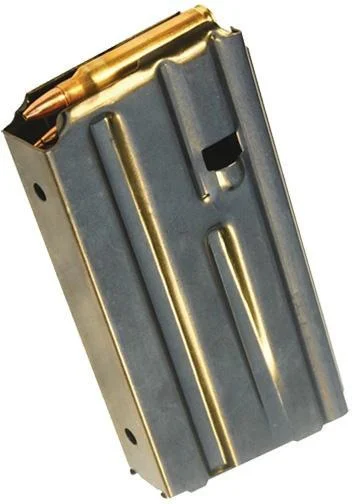
- Look for cracks, dents, corrosion, damaged feed lips, an uneven follower, or a loose floorplate.
- Check follower movement and spring resistance as directed by the magazine manufacturer. Do not force or modify components.
- Give each magazine a unique identification mark so any recurring problem can be traced.
- Have live-fire function evaluation conducted at an established range according to the firearm and magazine manuals, range rules, and qualified instruction.
- Record the magazine, firearm, and ammunition associated with every malfunction.
A magazine that repeatedly produces problems should be removed from use until the manufacturer or a qualified gunsmith evaluates it. One stoppage does not automatically identify the magazine as the cause, because ammunition, firearm condition, compatibility, or another component may be involved.
Confirm Compatibility Before Evaluating Reliability
Begin by verifying that the magazine is intended for the exact firearm. Similar-looking magazines may differ in caliber, locking-cut location, feed-lip geometry, follower design, overall dimensions, or compatibility with a particular firearm generation. Consult the firearm and magazine manuals rather than relying only on appearance.
Also consider grip extensions, sleeves, aftermarket baseplates, magazine wells, and other accessories that could affect fit. If the firearm has modified gun parts, ask the component manufacturer whether the combination is supported. Avoid filing feed lips, bending the body, trimming the follower, or changing springs as an informal fix. Those changes can make diagnosis harder and may create additional problems.
Use a simple identification system, such as a small number on the baseplate or body in a location permitted by the manufacturer. This lets you distinguish a recurring magazine-related issue from an isolated stoppage. Record the manufacturer, model, caliber, capacity, and any compatibility notes.
Inspect the Magazine Without Live Ammunition
Treat every firearm as if it is loaded. Keep the muzzle pointed in a safe direction. Keep your finger off the trigger and outside the trigger guard until your sights are on the target and you have decided to shoot.
Under good lighting, inspect the magazine body for dents, cracks, bulges, corrosion, sharp damage, or seams that appear separated. Examine the feed lips for visible chips, deformation, or obvious asymmetry. Check that the floorplate is secure and that any removable baseplate follows the manufacturer’s assembly instructions.
Follower movement should be smooth and consistent when checked by the method described in the magazine manual. Binding, scraping, tilting beyond the design’s normal movement, or weak and inconsistent spring resistance deserves closer review. Do not disassemble the magazine unless its manufacturer provides instructions for that model.
Dirt or residue may interfere with movement. Use products and tools intended for firearm care from the Cleaning & Maintenance category, following both the magazine and product instructions. Excess lubricant can attract debris, so apply only what the manufacturer specifies.
Plan a Qualified Range Evaluation
A meaningful reliability assessment eventually requires live-fire evaluation, but this guide does not provide a loaded-firearm testing procedure. Follow the firearm and magazine manufacturers’ instructions, established range rules, and qualified instruction. Be sure of your target and what is beyond it.
The evaluation should account for the firearm’s condition and the exact ammunition being used. Ammunition must have the correct cartridge designation and meet the firearm manufacturer’s requirements. If the magazine is intended for a particular defensive, competition, hunting, or practice load, that intended combination should be evaluated under qualified supervision.
Useful observations include whether the magazine remains properly retained, presents cartridges consistently, and supports the firearm’s designed last-round function. Note any feeding stoppage, unexpected magazine movement, premature action lock, or failure to lock open. Record which numbered magazine was involved and whether the same issue appeared with another compatible magazine. Do not attempt to diagnose or correct a loaded firearm during this process without qualified instruction.
Document Problems and Decide What Comes Next
A basic log helps separate a defective magazine from ammunition or firearm concerns. Record the firearm model, magazine identifier, ammunition designation, maintenance condition, and observed symptom. Avoid assuming that every feeding problem is magazine-related; extractor, recoil-system, ammunition, or firearm-fit issues may produce similar symptoms.
If one magazine repeatedly causes a problem while compatible magazines do not, remove it from service and contact the manufacturer or a qualified gunsmith. Visible cracks, badly damaged feed lips, a compromised floorplate, or persistent follower binding also justify professional evaluation or replacement. Store identified problem magazines separately so they are not confused with evaluated equipment; suitable options are available in Cases & Storage.
After service or replacement, treat the magazine as unevaluated until it has gone through the same inspection and qualified range-review process. Keep the documentation with your firearm records for easier troubleshooting later.
Browse BT Gun Company’s Magazines category to compare compatible options for your firearm, then verify model, caliber, capacity, and manufacturer specifications before purchasing.

About the Author: Jeff Brown
Jeff Brown is CEO of Fuzzy Holdings LLC and owner of BT Gun Company, a Class 7 FFL dealer since 2023. An NRA-certified Range Safety Officer who has been shooting since 1983, he teaches hunter safety at his local gun club, hunts spring and fall turkey, and has a soft spot for revolvers.