
What Is a Lever-Action Rifle and Who Is It For? A Practical Buying Guide
Estimated reading time: 5 min
Summarize with AI
Share
Quick Answer
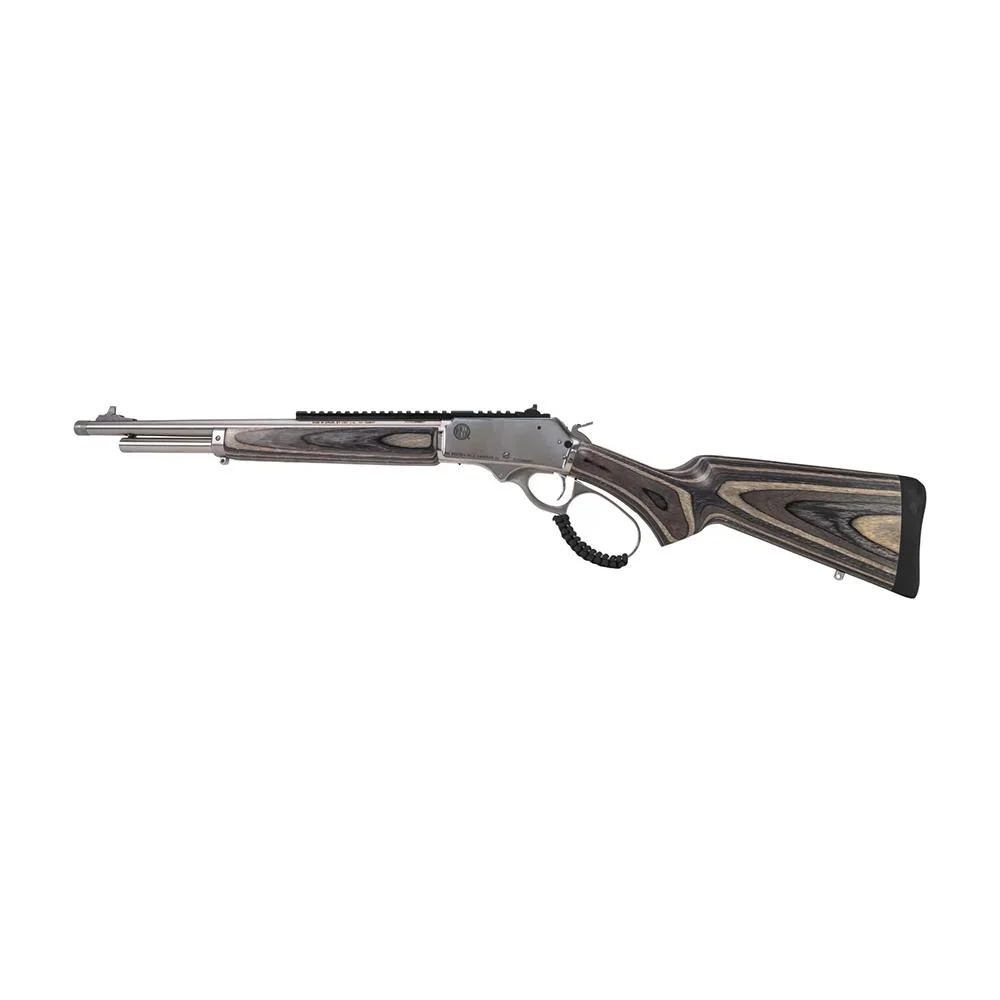
A lever-action rifle is a repeating firearm operated by moving a lever located around or beneath the trigger guard. Cycling the lever opens and closes the action, ejects a fired case, cocks the mechanism, and chambers the next cartridge from the rifle’s feeding system.
Lever-action rifles may suit shoppers who value:
- Traditional styling and a manually operated action
- A slim, easy-to-carry profile
- Chamberings suitable for recreational shooting, hunting, or general sporting use
- Mechanical simplicity and an engaging range experience
- Models that can share a cartridge family with certain handguns
They may be less suitable for someone who prioritizes detachable-magazine convenience, extensive accessory mounting space, or a self-loading action. Designs vary considerably, so compare chambering, feeding system, stock dimensions, sights, capacity, overall size, and maintenance requirements.
Keep these reminders in mind whenever firearms are present:
- Treat every firearm as if it is loaded.
- Keep the muzzle pointed in a safe direction.
- Keep your finger off the trigger and outside the trigger guard until your sights are on the target and you have decided to shoot.
- Be sure of your target and what is beyond it.
How a Lever-Action Rifle Works
The defining feature is the lever connected to the rifle’s action. Moving it through its operating cycle extracts and ejects a fired case, resets the firing mechanism, and feeds another cartridge. This makes the rifle a manually operated repeater rather than a semiautomatic firearm.
Many familiar lever actions feed from a tubular magazine positioned beneath the barrel. Other designs use a detachable or fixed box magazine. The feeding system matters because it can affect capacity, compatible cartridge shapes, balance, and how readily spare magazines are available. Manufacturer-listed ammunition compatibility should always guide cartridge selection when browsing ammunition.
Not every lever action follows the same layout. Some have exposed hammers, while others use different internal mechanisms. Loading ports, ejection direction, safety features, lever size, and scope-mounting arrangements also differ. These details can influence comfort and compatibility for right- or left-handed users.
Compared with other types of rifles, lever actions are often selected for their narrow receiver, traditional appearance, and direct mechanical feel. The tradeoff is that the action must be manually cycled between shots.
Who Is a Lever-Action Rifle For?
A lever-action rifle can be a practical choice for recreational shooters who enjoy manually operated firearms. The action gives each shot a deliberate rhythm without requiring the shooter to operate a separate bolt. Shooters interested in classic firearm design may also appreciate the wood stocks, exposed components, and traditional lines found on many models, although modern synthetic-stock and accessory-ready versions are available.
Hunters may consider lever actions because they are offered in cartridges intended for different game and environments. Chambering should be chosen around the intended purpose, expected distance, recoil preference, rifle weight, and current federal, state, and local law. Hunting regulations and permitted equipment can change, so verify current requirements before selecting a firearm or cartridge.
Some buyers like the option of choosing a rifle chambered for a cartridge also offered in certain handguns. That can simplify ammunition purchasing, but matching the cartridge name alone does not establish compatibility. The firearm manufacturer’s specifications remain controlling.
A lever action may not be the right fit for a shopper who wants a semiautomatic operating system, quick detachable-magazine changes, or a large amount of built-in mounting space. It can also be less comfortable when the stock dimensions, lever loop, or lever throw do not suit the user. Fit and intended use should take priority over appearance.
What to Compare Before Buying
Chambering and intended use
Start with the rifle’s purpose. Recreational target use, hunting, and collecting can lead to different choices in cartridge, barrel length, weight, and configuration. Consider ammunition compatibility, recoil expectations, and whether the selected cartridge is commonly produced in the specific load types recommended by the manufacturer.
Feeding system and capacity
Compare tubular, fixed-box, and detachable-box systems. Capacity varies with model, cartridge dimensions, and configuration. If a rifle uses a detachable magazine, consider the manufacturer’s magazine specifications and whether obtaining compatible replacements matters to you.
Stock, lever, and overall dimensions
Length of pull, comb height, grip shape, lever-loop dimensions, overall weight, and balance all affect fit. A larger lever loop is not automatically more comfortable, and a shorter rifle is not automatically lighter. Compare the complete specifications rather than relying on one measurement.
Sights and mounting options
Lever actions may have open sights, aperture sights, optics-ready receivers, or specialized mounting arrangements. Before choosing from optics and sights, confirm the rifle’s mounting pattern, ejection layout, available clearance, and manufacturer recommendations.
Ownership, Maintenance, and Buying Considerations
Lever actions contain moving joints, internal surfaces, and a feeding system that require appropriate care. Finish type and stock material can also affect maintenance needs. Use products intended for the firearm’s materials and consult its manual when selecting items from cleaning and maintenance.
Before cleaning or inspecting a firearm, unload it, remove the magazine, lock the action open, and visually and physically check that the chamber is empty.
When buying, verify the exact model, chambering, barrel configuration, stock material, sight arrangement, feeding system, and included components. Check current federal, state and local law before purchase. BT Gun Company is a licensed FFL dealer in Rubicon, Wisconsin, ships firearms to your local FFL, and handles FFL transfers by appointment.
If the traditional design, manual action, and available configurations match your intended use, browse BT Gun Company’s rifle selection to compare lever-action models and specifications.

About the Author: Jeff Brown
Jeff Brown is CEO of Fuzzy Holdings LLC and owner of BT Gun Company, a Class 7 FFL dealer since 2023. An NRA-certified Range Safety Officer who has been shooting since 1983, he teaches hunter safety at his local gun club, hunts spring and fall turkey, and has a soft spot for revolvers.