
How Does a Scope Work on a Gun? A Complete Riflescope Guide
Quick Answer
A scope works on a gun by magnifying the target and giving the shooter a precise aiming reference called a reticle. Light enters through the objective lens, passes through internal lenses that magnify and orient the image, and exits through the eyepiece. When the reticle is properly zeroed, its aiming point corresponds with the firearm’s point of impact at a chosen distance.
The main parts and functions are:
- Objective lens: The front lens gathers light and helps form the target image. A larger objective can transmit more light, but lens quality, coatings and exit-pupil size also affect perceived brightness.
- Magnification system: A fixed-power scope provides one magnification level. A variable-power scope, such as a 3-9x model, lets the shooter change how large the target appears.
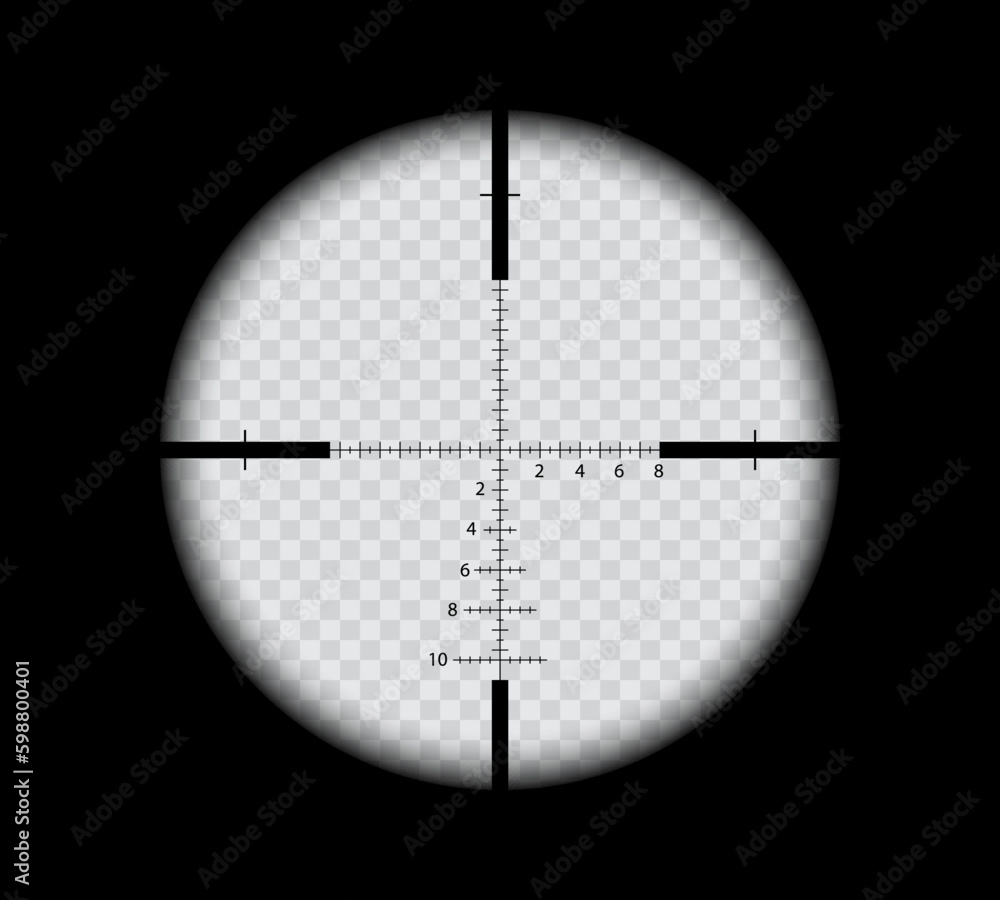
- Reticle: Crosshairs, dots or hash marks provide an aiming reference. Some reticles also support elevation holds, wind holds or range estimation.
- Elevation and windage turrets: These move the reticle’s relationship to the firearm’s point of impact. Elevation adjusts impact up or down; windage adjusts it left or right.
- Eyepiece and diopter: The eyepiece presents the image to the shooter, while the diopter focuses the reticle for the shooter’s eyesight.
- Parallax adjustment: On equipped scopes, this helps place the target image and reticle on the same optical plane at a selected distance, reducing apparent reticle movement when the shooter shifts eye position.
Mounting a scope does not make the bullet travel in a perfectly straight line. Gravity acts on the projectile as soon as it leaves the muzzle. The sight line and bore are aligned at a slight angle so the bullet’s curved trajectory intersects the line of sight near the selected zero distance.
To use a scope effectively, mount it securely with correct eye relief, focus the reticle, establish a stable shooting position and zero it with the exact firearm and ammunition you intend to use. Always unload the firearm before mounting or adjusting an optic, keep the muzzle pointed in a safe direction and conduct live-fire zeroing only on an appropriate range.
How a Riflescope Creates and Magnifies an Image
A conventional riflescope is a compact optical system mounted above the firearm’s bore. Its objective lens collects reflected light from the target. Internal lenses form and magnify the image, while an erector assembly turns the image into the correct orientation. The ocular lens, or eyepiece, then presents that image and the reticle to the shooter.
Magnification describes how large the target appears compared with the unaided eye. At 4x, the target appears approximately four times larger. Higher magnification can help with precise aiming, but it normally narrows the field of view and makes movement appear more pronounced. Lower magnification generally offers faster target acquisition and a wider view, which can be useful at shorter distances.
Eye relief is the distance between the shooter’s eye and the eyepiece at which the full image is visible. Adequate eye relief is especially important on hard-recoiling firearms because positioning the eye too close can cause the scope to strike the shooter. A consistent cheek weld also helps maintain a full sight picture and repeatable alignment.
How Reticles, Turrets, MOA and MRAD Work
The reticle is the visible aiming pattern inside the scope. Simple duplex crosshairs emphasize an uncluttered central aiming point, while reticles with dots or hash marks can provide references for bullet drop and wind compensation. Those marks are useful only when the shooter understands the reticle’s measurement system and the ammunition’s verified trajectory.
Most scopes adjust in either minutes of angle, commonly called MOA, or milliradians, usually called mils or MRAD. Both are angular measurements rather than fixed distances. One MOA spans about 1.047 inches at 100 yards, while one mil spans 3.6 inches at 100 yards. Turret markings indicate how much angular correction each click applies. Shooters should avoid mixing an MOA reticle with MRAD calculations, or vice versa, unless they are comfortable converting between them.
First-focal-plane reticles appear to change size as magnification changes, so their subtensions remain consistent throughout the magnification range. Second-focal-plane reticles appear the same size to the shooter, but their ranging or holdover marks are generally accurate at one manufacturer-specified magnification. The scope’s manual should identify the correct setting.
How to Zero a Scope Correctly
Zeroing aligns the optic’s aiming point with the firearm’s point of impact at a selected distance. First, verify that the firearm is unloaded, then confirm the base and rings are compatible, properly positioned and tightened according to their manufacturers’ instructions. Level the optic, establish safe eye relief and focus the reticle against a plain background.
At the range, fire a careful group from a stable support rather than adjusting from a single shot. Measure the group’s center relative to the aiming point, then use the elevation and windage turrets to make the required correction. Fire another group to confirm the change. Once zeroed, confirm performance at other distances because trajectory, ammunition, barrel characteristics, atmospheric conditions and sight height can all affect impact.
A common mistake is believing the turret moves the bullet directly. The turret changes the optic’s internal alignment, which changes where the shooter points the firearm. Follow the scope manufacturer’s indicated adjustment direction and click value rather than guessing.
Choosing and Using a Gun Scope Safely
Select an optic that fits the firearm, intended distance and shooting purpose. A low-power variable optic can provide flexibility at short and intermediate ranges, while higher magnification may help with deliberate target or hunting shots. Durability, optical clarity, reticle design, adjustment range, mounting compatibility and warranty support can matter more than maximum magnification alone.
Before handling, mounting or inspecting any scope, follow the fundamental firearm-safety rules outlined by the National Shooting Sports Foundation. Treat every firearm as loaded, control the muzzle, keep your finger off the trigger until ready to fire and know the target and what lies beyond it.
Gun owners can visit BT Gun Company to shop firearms, research compatible optics and accessories, or follow the latest firearms news. Product manuals and professional installation are valuable whenever mounting requirements or torque specifications are unclear.
Ready to equip your firearm and build a dependable shooting setup? Visit BT Gun Company for firearms, optics-ready options, ammunition and knowledgeable support.

About the Author: Jeff Brown
Jeff Brown is CEO of Fuzzy Holdings LLC and owner of BT Gun Company, a Class 7 FFL dealer since 2023. An NRA-certified Range Safety Officer who has been shooting since 1983, he teaches hunter safety at his local gun club, hunts spring and fall turkey, and has a soft spot for revolvers.