
What Is a Concealed Carry Permit? A Complete Guide for Gun Owners
Estimated reading time: 5 min
Summarize with AI
Share
Quick Answer
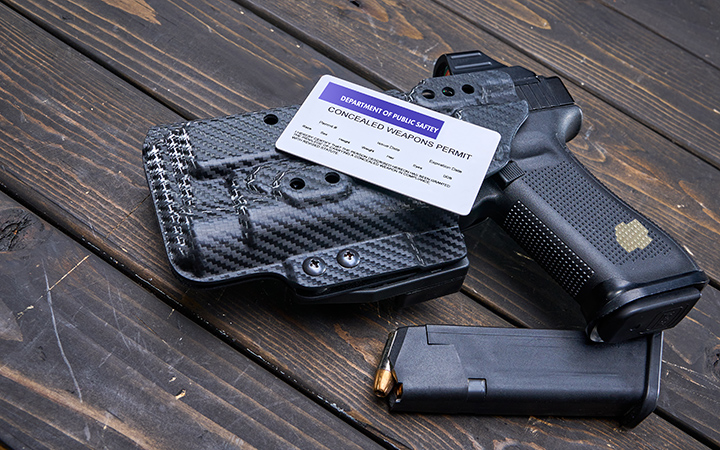
A concealed carry permit is a government-issued license authorizing an eligible person to carry a concealed firearm, usually a handgun, subject to the laws of the issuing jurisdiction. Depending on the state, it may be called a concealed carry weapon permit, concealed handgun license, License to Carry, or License to Carry Firearms. “CCW” is a common shorthand, but the credential’s official name and legal scope matter.
- It is a carry credential: A permit generally authorizes concealed carry on or about the permit holder’s person, but state rules may treat vehicle carry differently.
- States control issuance: There is no ordinary federal concealed carry permit for civilians. State agencies, county sheriffs, or local law-enforcement agencies typically issue permits.
- It is not a purchase permit: A carry permit does not automatically function as firearm registration, proof of ownership, or permission to buy every type of firearm.
- Requirements vary: Applications may involve minimum-age rules, background checks, fingerprints, photographs, fees, classroom instruction, live-fire qualification, residency requirements, or references.
- Restrictions still apply: A permit does not authorize carry in every school, courthouse, government building, airport security area, private business, or other prohibited location.
- Reciprocity is limited: Another state may recognize the permit, but the carrier must follow the laws of the state being visited.
Some states allow eligible adults to carry concealed without obtaining a permit, often called permitless or constitutional carry. An optional permit can nevertheless remain valuable for interstate reciprocity or other state-specific benefits. Permitless carry also does not eliminate prohibited-person laws, location restrictions, or the duty to understand local use-of-force rules.
For law-abiding Americans, concealed carry is closely connected to the individual right to armed self-defense. A permit is an administrative credential, not the source of that right. Because carry laws change, verify requirements with the issuing agency before applying or traveling. BT Gun Company also publishes latest firearms news affecting responsible gun owners.
Who Issues Concealed Carry Permits?
Issuing authority depends on the state. A state police or public-safety agency may administer licensing statewide, while another state may assign applications to county sheriffs or municipal police departments. Names also differ: Texas uses License to Carry, Florida uses Concealed Weapon or Firearm License, and Pennsylvania issues a License to Carry Firearms. The official title can indicate whether the credential covers only handguns or additional lawful weapons.
Applicants commonly must submit an application, establish identity and eligibility, pay a jurisdiction-specific fee, and complete any required training or fingerprinting. Age thresholds, processing periods, renewal schedules, nonresident eligibility, and fee amounts are not uniform. For an example of a state-administered program, consult the official Texas Department of Public Safety handgun licensing page. Always use the current issuing agency’s instructions rather than an old checklist or fee schedule.
What Does a Concealed Carry Permit Allow?
A valid permit generally allows the holder to carry a covered firearm concealed in places where both state and federal law permit it. Whether a handgun is legally “concealed,” how it may be carried in a vehicle, and whether partial exposure becomes open carry are jurisdiction-specific questions. The host state’s rules control when traveling, even when that state recognizes an out-of-state permit.
A permit does not override laws governing prohibited persons, intoxication, firearm possession, use of force, secure areas, or property where firearms are lawfully restricted. It also provides no immunity for displaying or firing a handgun without legal justification. Federal restrictions can create separate issues around places such as school zones and secured airport areas. Responsible carriers should distinguish among possession, transportation, concealed carry, and defensive use because those are legally different activities.
When selecting a defensive handgun, owners can browse firearms through a licensed FFL. The handgun, holster, and carry method should work together to protect the trigger, retain the firearm, and support safe handling.
Permitless Carry and Interstate Reciprocity
Permitless carry means state law allows certain eligible people to carry without first obtaining a permit. It does not mean anyone may carry anywhere. Minimum-age provisions, prohibited-person rules, restricted locations, vehicle laws, and other conditions can still apply. A person who can lawfully possess a firearm may also face different requirements for carrying it concealed, so possession eligibility alone should never be treated as a complete legal analysis.
Reciprocity is an agreement or statutory rule under which one state recognizes another state’s permits. Recognition can depend on the holder’s residency, age, permit type, or the issuing state. Some jurisdictions recognize many permits, while others recognize few or none. Never assume a home-state permit is valid nationwide. Before crossing a state line, check each state’s official sources, including rules for vehicle storage, prohibited locations, notification of law enforcement, and magazine or ammunition restrictions.
An optional permit may therefore remain useful even where permitless carry is available. Owners should also select reliable defensive ammunition and verify that it functions correctly in their specific firearm.
Training, Safety, and Responsible Carry
Meeting the legal minimum is only the beginning. A responsible permit holder should understand safe loading and unloading, secure storage, holster use, target identification, conflict avoidance, and the jurisdiction’s self-defense laws. Regular practice should include safe presentation from the actual carry system, but live-fire holster work belongs on a range that permits it and under qualified supervision when the shooter lacks experience.
A proper holster should cover the trigger guard, retain the handgun, and remain stable during normal movement. Off-body carry demands additional control because bags can be lost, stolen, or accessed by unauthorized people. Review the NSSF firearm-safety resources, store guns so unauthorized users cannot obtain them, and inspect carry accessories regularly for wear or damage.
Permit holders should track expiration dates, address-change requirements, and legal updates. When traveling, print or save current official guidance instead of relying solely on an app or reciprocity map.
Ready to choose dependable equipment for responsible concealed carry? Visit BT Gun Company to explore firearms and gear from a licensed FFL dealer.

About the Author: Jeff Brown
Jeff Brown is CEO of Fuzzy Holdings LLC and owner of BT Gun Company, a Class 7 FFL dealer since 2023. An NRA-certified Range Safety Officer who has been shooting since 1983, he teaches hunter safety at his local gun club, hunts spring and fall turkey, and has a soft spot for revolvers.