
What Is the Best Ammo for the Hellcat Pro? 2026 Carry and Range Guide
Estimated reading time: 9 min
Summarize with AI
Share
Quick Answer
Federal Premium 124-grain HST 9mm is the best all-around ammunition to try first in a Springfield Armory Hellcat Pro. This standard-pressure defensive load combines a well-established hollow-point design with manageable recoil, making it a strong choice for concealed carry and home defense. However, no defensive cartridge should be trusted until it functions reliably and shoots accurately in your individual pistol.
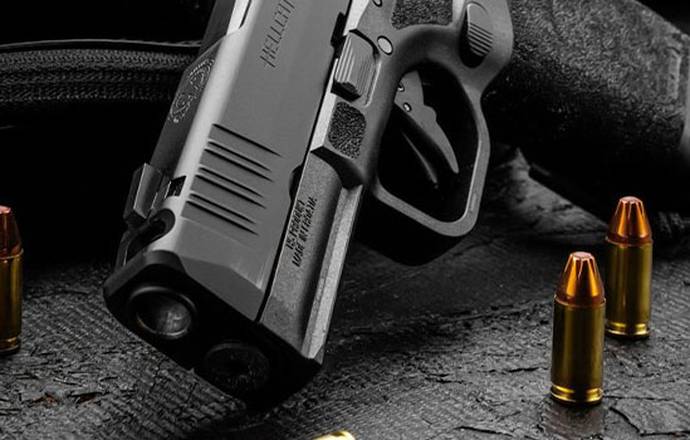
The Hellcat Pro is chambered for 9mm Luger and has a 3.7-inch barrel. Confirm the chamber marking on your firearm and follow the current Springfield Armory Hellcat Pro information and owner’s manual before selecting ammunition.
- Best overall carry load: Federal Premium 124-grain HST. Its non-bonded hollow-point uses a skived jacket and engineered bullet geometry to promote controlled expansion while retaining sufficient penetration.
- Best bonded alternative: Speer Gold Dot 124-grain. Its bonded construction is designed to keep the jacket and lead core together, including after encountering common intermediate barriers.
- Best light-recoiling option to compare: Hornady Critical Defense 115-grain FTX. Hornady developed this line for personal-defense handguns, and its polymer-filled hollow point is intended to resist clogging from clothing.
- Best practice ammunition: Quality 115- or 124-grain full-metal-jacket ammunition from established manufacturers such as Federal American Eagle, CCI Blazer Brass, Speer Lawman, Winchester or Magtech.
Standard-pressure 124-grain ammunition is the most sensible starting point for most owners. A +P load can produce more velocity, recoil, blast and firearm wear, but it is not automatically more effective or reliable. Never use ammunition marked +P+ unless the firearm manufacturer expressly authorizes it.
Before carrying a load, fire it through every magazine you intend to use. Check feeding, ignition, extraction, ejection, slide lock, accuracy and point of impact. Also inspect cartridges that have been chambered repeatedly for bullet setback or case damage. Owners can shop ammunition and firearms through BT Gun Company while comparing suitable range and defensive loads.
Why Federal HST 124-Grain Is the Best Starting Point
There is no universal defensive cartridge that performs identically in every handgun, but Federal Premium 124-grain HST is the strongest general recommendation for a Hellcat Pro. It is a proven law-enforcement-oriented hollow-point load that is also sold to lawful private gun owners. Its design does not rely on bonding the jacket to the core. Instead, the bullet uses carefully formed jacket skives and a hollow-point cavity intended to produce controlled expansion.
The standard-pressure 124-grain version is particularly well suited to the Hellcat Pro’s role as a slim, high-capacity carry pistol. It offers a useful balance among recoil, velocity and practical accuracy without requiring +P pressure. That matters in a compact handgun, where rapid follow-up shots and confident one-handed operation may be more valuable than a modest increase in muzzle velocity.
HST should not be treated as reliable merely because of its reputation. Semi-automatic pistols operate as complete systems involving the cartridge, magazine, feed ramp, extractor, recoil assembly and shooter. Two pistols of the same model can show different preferences because of ammunition lots, magazine condition, maintenance or normal manufacturing tolerances. Test the exact product and bullet weight you plan to carry.
Other Excellent Hellcat Pro Carry Loads
Speer Gold Dot 124-grain is the leading alternative for owners who prefer a bonded bullet. Gold Dot bullets are produced through an electrochemical bonding process that joins the jacket to the lead core. Bonding can help the projectile remain intact when it passes through materials such as clothing, wallboard or automotive glass. That construction does not make every Gold Dot load superior in every scenario, but it gives the 124-grain version a strong record as duty and defensive ammunition.
Hornady Critical Defense 115-grain FTX is another credible option, especially for shooters who prefer a lighter projectile. The FTX bullet places a polymer insert inside the hollow-point cavity. The insert is designed to prevent material from plugging the cavity and to initiate expansion. Critical Defense is intended for personal-protection handguns rather than duty-style barrier penetration, making it a logical load to function-test in a concealed-carry Hellcat Pro.
Federal HST 147-grain is worth testing if the shooter prefers a heavier bullet. It normally operates at a lower velocity than lighter 9mm projectiles, while its recoil impulse and point of impact may feel different. Whether that difference is beneficial is shooter- and pistol-dependent. Do not assume a heavier bullet is automatically more powerful or that a lighter bullet is automatically easier to control.
Availability often determines which premium load an owner can test consistently. Choose a current, factory-new defensive cartridge from an established manufacturer rather than chasing small theoretical differences among reputable designs. BT Gun Company can help customers compare defensive firearms and compatible ammunition without relying on anonymous online claims.
Best Range Ammunition for a Hellcat Pro
For routine practice, quality brass-cased full-metal-jacket ammunition is the practical choice. Federal American Eagle, CCI Blazer Brass, Speer Lawman, Winchester and Magtech all offer common 9mm range loads. A 124-grain FMJ load is useful when the carry cartridge also uses a 124-grain bullet because recoil and point of impact may be closer, although identical bullet weight does not guarantee identical performance.
Economical 115-grain FMJ is also appropriate for general training. It allows owners to practice drawing, trigger control, recoil management, reloads and malfunction clearance without consuming premium defensive ammunition. Prices change with manufacturer, packaging, availability and market demand, so cost per round is more useful than a fixed price quoted at one moment.
Use factory-new ammunition of the exact chambering marked on the pistol. Remanufactured cartridges can vary in case history, dimensions and quality control, while unknown handloads add avoidable uncertainty to a defensive handgun. Steel- or aluminum-cased ammunition may function in some Hellcat Pro pistols, but brass-cased ammunition is usually the conservative first choice for reliability testing and regular practice.
Range ammunition is not a substitute for testing carry ammunition. FMJ bullets and defensive hollow points can have different overall lengths, nose profiles and recoil characteristics. A pistol that fires hundreds of round-nose practice cartridges flawlessly has not necessarily demonstrated reliability with a particular hollow point. Owners ready to browse firearms and shooting supplies should budget for both training ammunition and enough premium ammunition to confirm function.
Standard Pressure, +P and +P+ Explained
The 9mm Luger cartridge is available in standard-pressure and +P loadings. A +P cartridge is loaded to a higher recognized pressure limit than its standard-pressure counterpart. Higher pressure can increase velocity, but actual results depend on the specific cartridge and barrel. It can also increase recoil, muzzle blast and wear.
The Hellcat Pro owner’s manual should control the decision to use +P ammunition. Consult the manual supplied with the pistol or obtain the current version from Springfield Armory because manufacturer guidance can be model-specific. Even when +P is permitted, that does not mean it is the ideal training load or that unlimited use has no effect on service life.
+P+ is different. It is not a pressure category standardized by the Sporting Arms and Ammunition Manufacturers’ Institute. Owners can review cartridge and chamber standards through SAAMI technical information. Without a standardized +P+ ceiling, the marking alone does not tell the shooter the cartridge’s actual maximum pressure. Avoid +P+ unless Springfield expressly approves the specific ammunition for the specific pistol.
For most Hellcat Pro owners, standard-pressure 124-grain HST or Gold Dot provides a better starting point than selecting +P solely for a velocity increase. Shootability, reliable cycling and accurate placement matter more than the pressure label on the box.
How to Test Carry Ammunition Correctly
Begin with a clean, properly lubricated pistol and magazines known to be in good condition. Confirm that the ammunition box and case headstamps identify the correct chambering. Inspect each cartridge for obvious case damage, corrosion, an unusually seated bullet or a damaged primer.
- Test every carry magazine: Magazine feed lips, springs and followers can affect reliability independently of the pistol.
- Use realistic loading conditions: Fire from a fully loaded magazine and verify that the pistol feeds the first cartridge, cycles throughout the magazine and locks open after the last round.
- Check practical accuracy: Shoot deliberate groups at realistic defensive distances and confirm that the sights and ammunition produce an acceptable point of impact.
- Evaluate control: Compare standard-pressure and +P loads during rapid, accurate strings rather than judging recoil from one shot.
- Track malfunctions: Record the ammunition lot, magazine and type of stoppage instead of immediately blaming the pistol or cartridge.
There is no manufacturer-independent round count that guarantees future reliability. Fire enough of the exact load to establish confidence without treating one successful magazine as conclusive. If a cartridge repeatedly causes failures while other factory ammunition works, choose a different defensive load or have the pistol inspected by a qualified armorer or gunsmith.
Common Hellcat Pro Ammunition Mistakes
Buying a large case before testing one or two boxes can leave the owner with expensive ammunition that does not shoot well in the pistol. Confirm function and accuracy first, then purchase additional boxes from the same product line.
Repeatedly chambering the same cartridge can drive the bullet deeper into the case or damage its rim. Bullet setback can alter pressure, so inspect the chambered round and remove questionable ammunition from service. Do not attempt to correct a recessed bullet by pulling it outward.
Mixing loads in one magazine creates inconsistent recoil, trajectory and terminal behavior. Load every carry magazine with one tested cartridge type and keep the original packaging so the manufacturer, bullet weight and lot information remain available.
Choosing ammunition only by advertised velocity ignores barrel length, accuracy, flash, recoil and projectile design. Published velocities are generated under specified test conditions and may not match a particular Hellcat Pro.
Neglecting training is the most consequential error. Premium ammunition cannot replace safe handling, secure storage, competent marksmanship and knowledge of applicable law. Gun owners can follow regulatory developments and court decisions through the latest firearms news from BT Gun Company.
Hellcat Pro Ammo FAQ
Can the Hellcat Pro shoot 115-grain ammunition?
Yes. Factory 115-grain 9mm Luger is a common choice for practice, and Hornady offers a 115-grain Critical Defense load for personal protection. Reliability and point of impact still must be verified in the individual pistol.
Is 124- or 147-grain ammunition better?
Neither weight is universally better. Standard-pressure 124-grain ammunition offers a balanced starting point, while 147-grain loads provide a different recoil impulse and ballistic profile. Test both if possible and select the load that functions reliably and supports the best practical accuracy.
Can FMJ ammunition be used for self-defense?
FMJ can fire reliably, but premium jacketed hollow points are generally preferred for lawful personal defense because they are designed to expand and reduce the risk of excessive penetration compared with non-expanding round-nose ammunition. Any defensive use remains subject to the laws of the relevant jurisdiction.
How often should carry ammunition be replaced?
There is no universal calendar interval. Replace cartridges that are corroded, contaminated, damaged or visibly set back, and follow the ammunition and firearm manufacturers’ guidance. Periodically firing the carried load also confirms function and replenishes the pistol with fresh cartridges.
For a Hellcat Pro, start with Federal Premium 124-grain HST, then verify it in your pistol and magazines. For personal assistance selecting a handgun, defensive load or practice ammunition, visit BT Gun Company and work with a licensed firearms dealer committed to responsible American gun ownership.

About the Author: Jeff Brown
Jeff Brown is CEO of Fuzzy Holdings LLC and owner of BT Gun Company, a Class 7 FFL dealer since 2023. An NRA-certified Range Safety Officer who has been shooting since 1983, he teaches hunter safety at his local gun club, hunts spring and fall turkey, and has a soft spot for revolvers.