
How to Ship a Gun Safe: Packing, Freight, Costs and Delivery
Estimated reading time: 9 min
Summarize with AI
Share
Quick Answer
To ship a gun safe, empty it completely, confirm its weight and dimensions, hire a qualified safe mover or freight carrier, and arrange appropriate packaging and unloading at both addresses. For a full-size safe, plan the entire trip from its current location to its final installation spot before booking transportation.
A small handgun lockbox may qualify for parcel shipping when properly packaged and within the carrier’s limits. A large rifle safe generally requires specialized moving equipment or palletized freight. The right method depends on the actual safe and access conditions, rather than its advertised firearm capacity.
- Identify the safe: Record its manufacturer, model, empty weight and exterior measurements. Obtain the packed dimensions and total shipping weight before accepting a freight quote.
- Empty and document it: Remove firearms, ammunition, valuables and loose accessories. Photograph its condition and record the serial number privately.
- Choose the service: Compare a specialist safe mover with freight transportation plus separate installation. Specify whether pickup and delivery involve stairs, narrow doorways or difficult truck access.
- Approve the packaging: Have the mover or freight packer select a suitable pallet or crate, protect exposed hardware and secure the safe according to manufacturer and carrier requirements.
- Arrange unloading: Confirm whether a loading dock, forklift or suitable liftgate will be available. Do not assume the truck driver will move the safe into your house.
- Inspect and reinstall: Document delivery damage promptly, follow the carrier’s claim process, and have the safe positioned and anchored according to its manual.
Curbside delivery and installation are different services. For example, Liberty Safe’s delivery policy distinguishes curbside drop-off, where the pallet remains attached, from qualifying in-home services. Get your own provider’s scope in writing.
There is no dependable nationwide flat price for shipping a gun safe. Weight, distance, packaging, access and installation requirements all matter. Ask for an itemized quote and written damage-coverage terms instead of relying on an old online estimate.
For gun owners, the objective is straightforward: protect your investment and restore secure storage at the destination. Keep the safe shipment separate from arrangements for transporting your firearms and ammunition, and organize temporary secure storage before pickup day.
1. Choose Between a Safe Mover, Freight and Parcel Shipping
Start by matching the transportation method to the job. Moving an existing safe from a basement in Wisconsin presents a different problem from shipping a factory-packaged safe between commercial loading docks. The first requires removal and installation expertise; the second may primarily require freight transportation.
A specialist safe mover is a practical starting point when the job includes stairs, tight turns, floor protection or anchoring. Ask whether the company handles the entire route itself or transfers the safe to another provider. Request confirmation of relevant insurance and experience with your safe’s size and access conditions.
Less-than-truckload freight, or LTL, means your shipment shares transportation capacity with other freight. For a properly prepared safe, it can provide the long-distance portion of a move. However, you still need an agreed plan for getting the safe out of the building, preparing it for pickup and installing it after delivery.
Parcel shipping may suit a compact handgun safe, but eligibility depends on its packaged weight and dimensions. Check the selected service’s current limits before purchasing a label. A shipping label alone does not establish that the packaging is adequate.
For a new safe, request delivery and installation options before ordering. For an existing safe, ask prospective movers to review photographs of the safe and both access routes before they commit to a price.
2. Gather the Measurements and Access Details That Determine the Quote
Find the model identification and manufacturer documentation first. Do not estimate weight from appearance or use a similar model’s specifications. Changes in size, construction or configuration can make that comparison unreliable.
Prepare a written shipping brief containing:
- Manufacturer, model, empty weight and replacement value.
- Safe height, width and depth, including projecting handles and hinges.
- Final pallet or crate dimensions and total packaged weight.
- Pickup and delivery ZIP codes, contact names and appointment requirements.
- Doorway openings, stair counts, landing dimensions and tight turns.
- Driveway surface, slope, overhead clearance and truck-access restrictions.
- Available loading equipment and the exact pickup and drop-off locations.
Measure the usable doorway opening with the door in its actual position. Include storm doors, thresholds, railings and low ceilings in your photographs. A safe that fits through an opening by itself may still lack clearance for the moving equipment.
Ask the mover to assess the route’s load-bearing requirements. Browning specifically identifies floor and stair capacity, vulnerable flooring, doorways and corners as considerations in its ProSteel safe owner’s manual, which strongly recommends professional movers.
If structural capacity is uncertain, resolve that question before scheduling delivery. Protective floor coverings do not establish that a floor, stairway or landing can carry the load. Give the installer enough information to identify when a site visit or qualified structural assessment is needed.
3. Empty the Safe and Prepare Its Lock, Door and Interior
Remove every firearm, ammunition container, document and valuable before the moving crew arrives. Check door pockets, drawers and spaces beneath removable shelves. Arrange secure storage for the contents throughout the period when your safe is unavailable.
Liberty explicitly recommends emptying the safe before relocation in its safe-moving guidance. Treat the safe shipment as a separate project from transporting your collection; ordinary freight arrangements should not be assumed to cover firearms or ammunition.
Photograph all sides, the interior, exposed hardware and any existing scratches. Record the serial number, purchase documentation and relevant condition notes in your own files. Avoid including combinations, backup keys or photographs of your collection in routine shipping correspondence.
Ask the manufacturer or mover how to secure removable shelving, organizers and electrical accessories. Disconnect external power before movement, and identify any cords that could catch during removal. Retain small components in labeled packaging.
Do not assume the door is removable. Browning describes door removal for the ProSteel safes covered by its manual, but that does not establish a procedure for another manufacturer or model. Have a qualified mover decide whether removal is appropriate and follow the applicable instructions.
Confirm normal lock operation before packing. Have the mover secure the door for transportation as the manufacturer directs, and retain access credentials separately so you can inspect the safe after arrival.
4. Have the Safe Properly Palletized or Crated
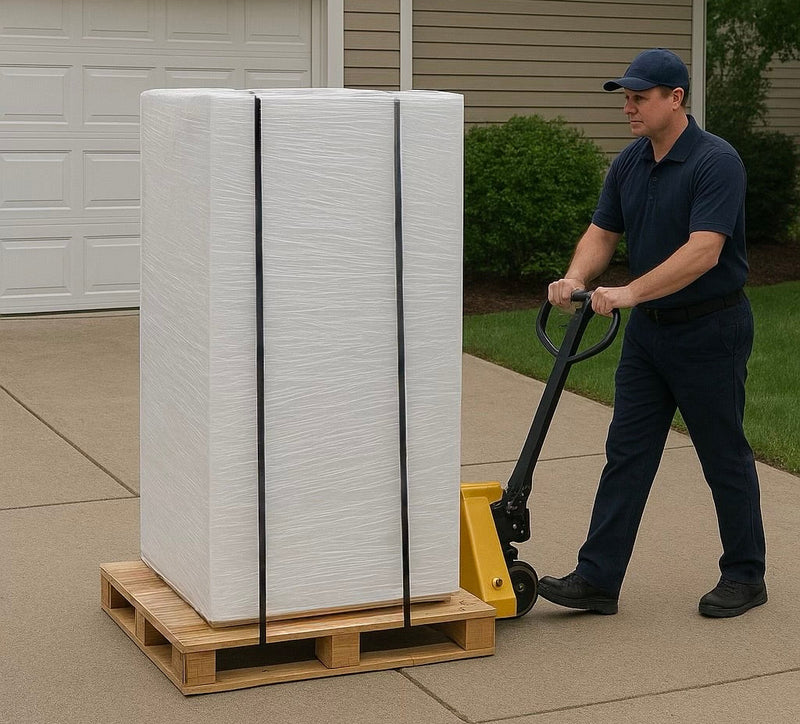
Packaging must support the safe and protect it during handling. Moving blankets protect surfaces, but they do not provide a freight-ready base or secure a heavy safe against movement. Ask the carrier to approve the packaging plan before the packer starts work.
The pallet or skid must suit the actual load, footprint and handling method. Avoid assuming that a discarded pallet is adequate because the safe physically fits on it. Ask the packer to specify the load capacity, attachment method and clearance needed for handling equipment.
For Liberty safes covered by its use-and-care instructions, the manufacturer identifies existing floor holes used for attachment to the shipping pallet. That is useful model-specific information, not permission to drill new holes into another safe.
Have the packer protect corners, finish, keypad, dial and handle without placing damaging pressure on those components. Ask whether a crate is appropriate for the safe’s value, exposed hardware and expected handling. Confirm transportation orientation with the manufacturer rather than laying the safe down simply to reduce shipment height.
Before collection, obtain photographs of the completed packaging and verify the shipping label, piece count and shipment description. Ask the carrier or broker to confirm the freight classification rather than copying a classification from an unrelated shipment.
Finally, assign responsibility for vehicle loading and cargo securement. The person who prepares the pallet and the person who transports it should agree on how the packaged safe will be handled.
5. Compare Complete Shipping Costs and Delivery Terms
A useful quote describes a completed job. Ask each provider to price the same scope so that a curbside freight estimate is not mistaken for a fully installed move.
- Origin work: Unanchoring, removal from the building, packaging and loading.
- Transportation: Freight charges and applicable surcharges.
- Access services: Residential service, appointments, liftgate use and restricted access.
- Destination work: Unloading, unpacking, placement, stairs and anchoring.
- Contingencies: Storage, missed delivery, redelivery and changes to the agreed route.
- Protection: Written liability terms and any additional coverage purchased.
Do not assume declaring the safe’s replacement value guarantees reimbursement of that amount. Ask what coverage applies, what exclusions exist and what documentation a claim would require. Keep the answers with the accepted quote.
Specify the delivery endpoint in ordinary language: curb, garage or a named room. Ask what the provider means by “inside delivery” or “white-glove service.” Those labels are less useful than a written list of included tasks.
Request confirmation that unloading equipment can accommodate both the packaged weight and its dimensions. Also identify who will meet the truck and what happens if the shipment arrives before the installation crew.
For a Wisconsin delivery during wet, icy or snowy conditions, discuss access preparation and rescheduling in advance. Do not leave the decision about an unsuitable driveway or walkway until a loaded truck is waiting outside.
6. Inspect the Delivery and Restore Secure Storage
Arrange to be present, or designate someone who understands the shipment and delivery terms. Before signing, inspect the visible packaging and photograph punctures, crushed areas, broken pallet components or other apparent damage. Record observations accurately on the delivery paperwork and contact the carrier promptly.
Ask about inspection and claim deadlines before shipment. If damage becomes apparent after unpacking, document it immediately and follow the applicable process. Retain packaging until the carrier confirms whether it is needed. Do not assume a general notation replaces the required claim documentation.
Once the safe is safely positioned, inspect the door, hinges and locking operation according to its manual. Report binding, unusual resistance or visible displacement rather than forcing the mechanism. Keep photographs from before pickup available for comparison.
Have the installer level and anchor the safe using manufacturer-approved methods suitable for the floor. Liberty’s instructions call for removing the shipping pallet before floor anchoring. Confirm the location of concealed utilities before any drilling.
Return firearms only after installation and normal operation are confirmed. Protecting lawful ownership includes maintaining dependable storage through a move. For broader developments affecting gun owners, follow 2nd Amendment news alongside official sources relevant to your destination.
7. Gun Safe Shipping FAQ
Can I ship a gun safe with guns inside?
Plan to ship it empty. Firearms and ammunition require their own transportation arrangements, and putting them inside a locked safe does not establish carrier acceptance or legal compliance. Confirm those arrangements separately before moving day.
Can I move the safe myself with a rented truck?
For a full-size safe, use a professional assessment first. Truck capacity alone does not resolve removal, loading, stairs, unloading or installation. Give the mover the actual weight and route details rather than choosing equipment by appearance.
Does BT Gun Company offer safe-moving services?
Safe moving is not among the services specified here. BT Gun Company is a licensed FFL dealer in Rubicon, Wisconsin, serving Dodge, Washington, Waukesha and nearby counties. Gun transfers, cleaning and gunsmithing are available by appointment at (262) 457-9048.
Once your storage is ready, shop firearms or contact BT Gun Company to arrange an appointment for its listed firearm services.

About the Author: Jeff Brown
Jeff Brown is CEO of Fuzzy Holdings LLC and owner of BT Gun Company, a Class 7 FFL dealer since 2023. An NRA-certified Range Safety Officer who has been shooting since 1983, he teaches hunter safety at his local gun club, hunts spring and fall turkey, and has a soft spot for revolvers.