
How Can I Prevent Accidental Firearm Discharge? Essential Safety Guide
Quick Answer
Preventing accidental firearm discharge requires a strict adherence to the four rules of gun safety, the use of proper equipment, and continuous training. By integrating these habits, you ensure your firearm remains a reliable tool for defense rather than a liability.
- Treat every firearm as if it is loaded: Even if you believe it is empty, handle it with caution.
- Never point the muzzle at anything you do not intend to destroy: Maintain constant muzzle discipline.
- Keep your finger off the trigger until you are ready to fire: This is the single most effective way to prevent accidental discharges.
- Be sure of your target and what is behind it: Ensure you have a clear backstop and situational awareness.
Beyond these fundamental rules, use physical barriers such as trigger locks, cable locks, or locked safes when the firearm is not in use. Regular practice at the range also ensures that safety becomes muscle memory, reducing negligent discharges.
The Four Rules of Gun Safety
The foundation of responsible ownership starts with the universal rules established by industry leaders like the NSSF. These rules are non-negotiable for any owner, regardless of their level of experience. Treating every firearm as loaded eliminates the element of surprise, which often leads to accidents. Muzzle discipline ensures that even if a mechanical failure occurs, the projectile is directed in a safe direction.
The most critical rule for preventing accidental discharge is trigger discipline. By keeping your finger indexed straight along the receiver until you have aligned your sights on a target and made the decision to fire, you remove the risk of a startled reaction causing a shot. BT Gun Company focuses on providing the community with the tools and knowledge necessary to maintain these high safety standards.
Physical Barriers and Storage Solutions
While mental discipline is vital, physical barriers provide a necessary secondary layer of protection. If you are not using your firearm, it should be stored in a manner that prevents unauthorized access, particularly by children or untrained individuals. There are several methods to secure your collection:
- Trigger Locks: Simple devices that physically block the trigger guard, preventing the trigger from being pulled.
- Cable Locks: A flexible steel cable is threaded through the action or magazine well, locking the firearm in place.
- Firearm Safes and Monitors: High-security steel safes offer the best level of protection against theft and accidental access.
When you are looking for new ways to secure your home, you can browse our accessories to find storage solutions and gear tailored to your specific needs.
The Role of Training and Maintenance
Safety is not a one-time lesson but a continuous process. Regular training allows you to understand the specific mechanics of your firearm—whether you are shooting a Glock 19, a Sig Sauer P365, or a classic 1911. Understanding how your specific model operates, including how to clear malfunctions, prevents errors during high-stress situations.
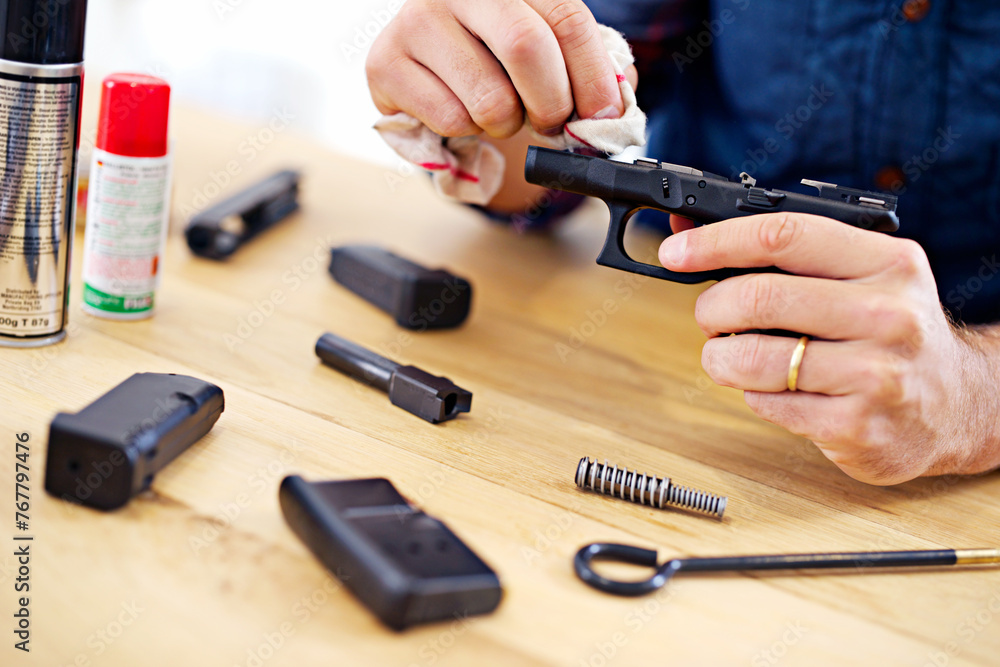
Maintenance is also a critical component of safety. A fouled or poorly maintained firearm can suffer from unexpected mechanical discharges. Always clean and lubricate your equipment according to manufacturer specifications. Staying informed on the latest firearms news also helps you stay aware of legal requirements and safety advancements affecting your rights and responsibilities.
Preventing accidental discharge is a commitment to yourself and your community. By following these protocols, utilizing proper storage, and investing in training, you honor the right to bear arms responsibly responsibly. Visit BT Gun Company today for high-quality firearms and expert advice on safety.