
How Do I Stop Flinching When I Pull the Trigger?
Quick Answer
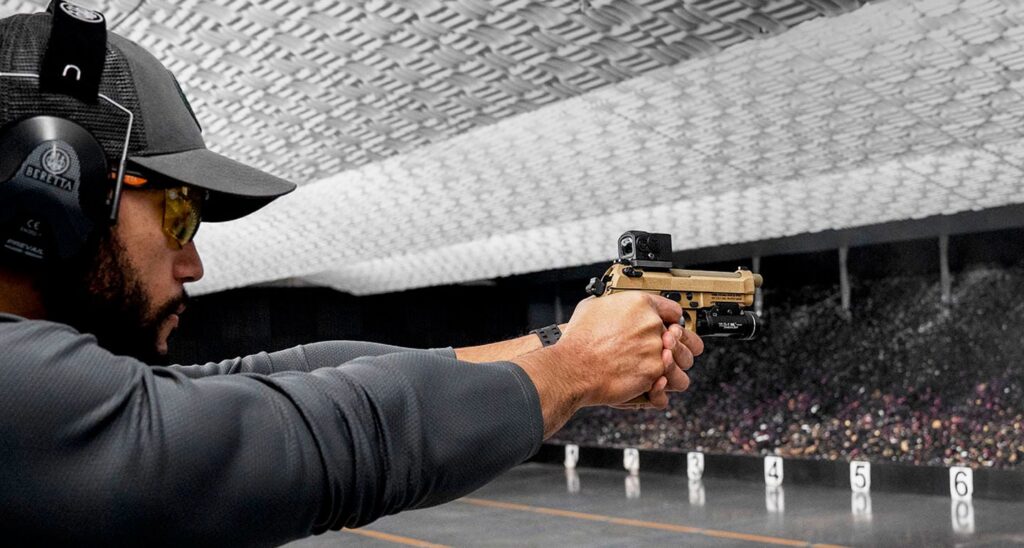
Finching is essentially a subconscious defense mechanism. When your brain anticipates the loud bang, bright flash, and physical kick of the discharge, it sends a signal to your muscles to brace for the impact. This often manifests as a ‘push’ with the support hand or a ‘pull’ with the trigger hand. Because this happens milliseconds before the projectile leaves the barrel, it alters the trajectory of the bullet, ruining your accuracy.
At BT Gun Company, we see that every shooter, from beginners to professionals, faces this challenge. Whether you are shooting a modern Glock 19 or a classic Sig Sauer P226, the goal is to train your nervous system to recognize that recoil is a predictable, harmless event. By understanding why your body flinches, you can begin the work of overconditioning that response.
n
The Power of Dry Fire Training
The most effective way to eliminate flinching is dry fire practice. This involves practicing your shooting sequence without ammunition. This allows you to focus entirely on the trigger mechanics without the distraction of recoil. Ensure your firearm is completely unloaded and no ammunition is present in the room before beginning.
Start by aiming at a paper target on a wall. Slowly take up slack on the trigger while watching the front sight intently. If the front sight moves even a fraction when the hammer drops, you are flinching. Repeat this process 50 to 100 times. Over time, this builds the muscle memory required for a smooth, linear trigger. If you are looking for equipment to help with your training, you can browse firearm accessories to find targets and dry fire tools.
Mastering Your Grip and Recoil Management
A weak grip is a primary contributor to flinching. If the firearm is not held firmly, it will move more in your hand upon discharge, which heightens the startle response. A proper grip involves a high-tangent hold where the support hand wraps as much around the grip as possible, applying forward pressure to counteract the shooting hand.
When you have a locked grip, the recoil is directed straight into your arm rather than rotating the muzzle. This stability makes the shot feel more manageable. According to the technical standards set by SAAMI, ammunition and firearm tolerances are also vital for predictable performance. As you improve your technique, you should stay updated on the latest 2nd Amendment news to stay informed about your rights as a marksman.
Progressing to Live Fire Proficiency
Once you have mastered the dry fire pull, it is time to head to the range. Start with a caliber that has minimal recoil, such as a .22 LR. This allows you to focus on a smooth trigger press without the fear of the kick. Once you are shooting tight groups with .22, move up to 9mm.
High-frequency practice is key. Instead of going to the range once a month for hundreds of rounds, try shooting 50 rounds every week. Consistency is what rewrites the neural pathways. If you need to restock for your next session, you can shop ammunition to ensure you are prepared.
Are ready to level up your shooting? Visit BT Gun Company today to explore our wide selection of firearms and professional gear to help you achieve your peak shooting potential.