Appendix Carry vs Strong-Side Carry: How Do They Compare?
Quick Answer
Appendix carry places the holstered handgun inside the waistband at the front of the body. Strong-side carry positions it at or behind the dominant-side hip, either inside or outside the waistband. Neither position is universally preferable; comfort and concealment depend on the firearm, holster, clothing and individual body shape.
- Appendix carry: May conceal a compact handgun well under an untucked shirt, but the holster can create pressure when sitting or bending.
- Strong-side carry: May feel less restrictive around the front of the waist, but the handgun can print beneath clothing during normal movement.
- Holster fit: Choose a model made for the exact handgun and any mounted accessories. Look for complete trigger-guard coverage, secure belt attachment and appropriate retention.
- Comfort: Consider waistline position, holster dimensions, belt compatibility and the amount of time spent sitting.
Follow the holster manufacturer’s instructions and get qualified instruction. Also check current federal, state and local law before carrying a firearm.
What Appendix and Strong-Side Carry Mean
Appendix carry generally uses an inside-the-waistband holster positioned in front of the hips. Strong-side carry places the handgun around the dominant-side hip, commonly in either an inside-the-waistband or outside-the-waistband holster.
The comparison is not only about location. A handgun’s overall dimensions, grip length, mounted equipment and holster shape can change how either position feels. A larger grip may be more noticeable beneath a garment, while a thick holster or bulky belt attachment may create pressure against the body. Shoppers comparing handguns should consider the complete firearm-and-holster combination rather than evaluating either item alone.
Body proportions and typical clothing also matter. Belt height, waistband stiffness, shirt length and fabric weight can affect comfort and visible outlines. A position that works with one wardrobe may be less practical with another.
Comfort and Concealment Differences
Appendix Carry
Appendix carry keeps the holster near the front centerline. For some people, this position works well with shorter-barreled handguns and untucked cover garments. It may also keep the grip from extending as far toward the side of the body.
The main comfort concern is pressure around the front of the waist. Sitting, bending and waistband placement can make the holster body, muzzle end or belt attachment noticeable. Holster length, ride height and any comfort-focused backing or contouring can influence the result. Individual fit varies substantially, so marketing labels alone cannot determine comfort.
Strong-Side Carry
Strong-side carry moves the handgun away from the front of the waist. Some shoppers find that this leaves more room while seated, although the result depends on the holster and body shape. Inside-the-waistband models generally reduce external bulk, while outside-the-waistband models may require more garment coverage.
A strong-side handgun may create a visible outline when clothing pulls across the grip. Holster cant, ride height and grip length can affect that outline, but adjustments must remain within the holster manufacturer’s specifications. A stable firearm belt and compatible attachment hardware are important considerations; related items can be found under accessories.
Holster Fit, Materials and Retention
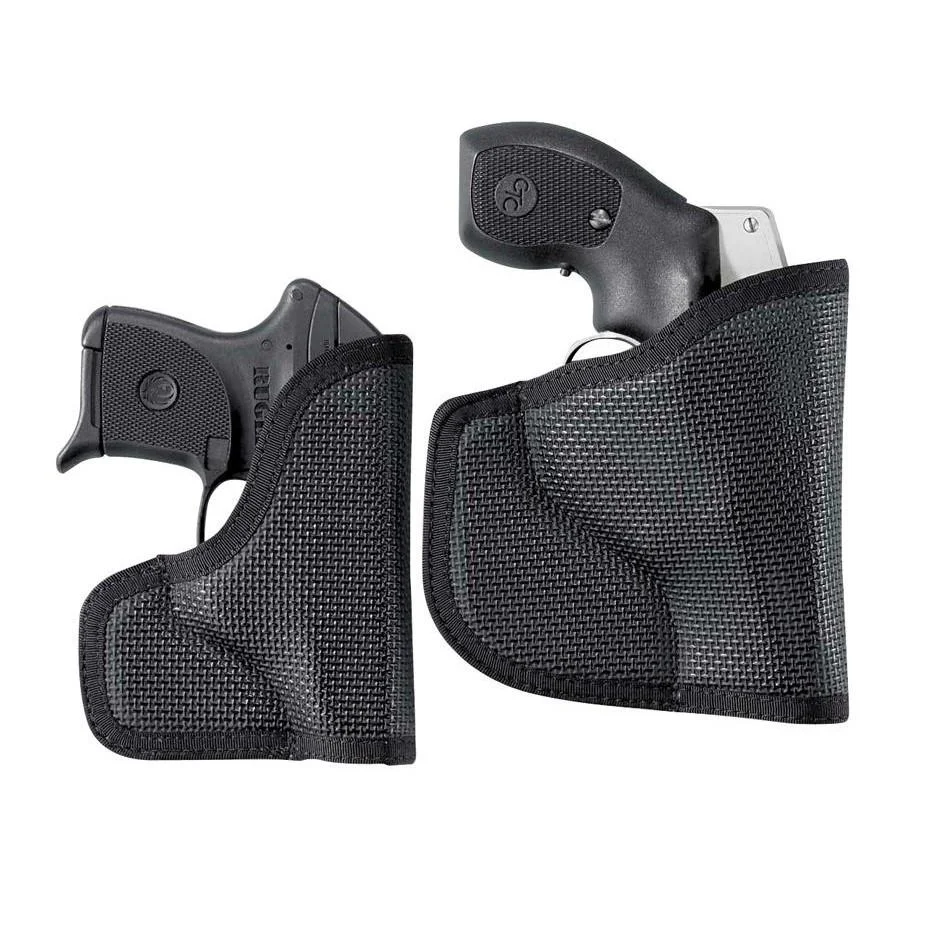
A carry holster should be designed for the handgun’s exact make and model. If the firearm has a mounted light, laser or optic, verify that the holster is specifically compatible with that configuration. A generic size label does not confirm proper fit.
Trigger-guard coverage should remain complete when the handgun is fully seated in the holster. Retention should hold the intended firearm securely and should function according to the manufacturer’s design. Some holsters use fixed passive retention, while others provide an adjustment or an active retention mechanism. Follow the manufacturer’s instructions for setup and use.
Common materials include molded polymer, leather and hybrid constructions. Molded polymer typically maintains a defined shape and may offer adjustable retention. Leather can conform over time but requires attention to condition and manufacturer guidance. Hybrid designs combine materials and may spread pressure across a larger area. Material alone does not determine comfort or suitability.
Also inspect belt-loop or clip compatibility, hardware quality, edge finishing and accommodation for installed equipment such as products from Lights & Lasers. When the handgun is not being carried, an appropriate option from Cases & Storage can support a broader storage plan.
How to Choose Between the Two
Start with the handgun and holster combination, then compare how each position works with your normal clothing and daily routine. Useful decision points include:
- Firearm dimensions: Consider barrel, slide, grip and overall thickness.
- Typical clothing: Account for waistband height, shirt length and seasonal layers.
- Time spent seated: Note where the holster creates pressure during ordinary daily activity.
- Holster construction: Compare full trigger-guard coverage, retention, attachment hardware and manufacturer-listed compatibility.
- Professional guidance: Get qualified instruction for the selected equipment and carry position.
During equipment evaluation, remember: Treat every firearm as if it is loaded. Keep the muzzle pointed in a safe direction. Keep your finger off the trigger and outside the trigger guard until your sights are on the target and you have decided to shoot.
Check current federal, state and local law before carrying or purchasing. If a firearm purchase is part of your decision, review the FFL transfers information. To compare compatible carry options, browse BT Gun Company’s Holsters category.