How Do I Choose a Bolt-Action Rifle for Hunting? A Practical Buying Guide
Quick Answer
Choose a bolt-action hunting rifle by starting with the game you intend to hunt, typical terrain, expected field conditions and your preferred cartridge. The right rifle should fit you comfortably, balance well with an optic installed and use a cartridge appropriate for your purpose. Always check current federal, state and local law, along with applicable hunting regulations.
- Game: Match cartridge and bullet construction to the intended species.
- Terrain: Consider overall length and weight for woods, open country or mixed environments.
- Fit: Compare length of pull, comb height, grip shape and control placement.
- Recoil: Select a cartridge and rifle weight you can use comfortably.
- Conditions: Choose stock and finish materials suited to expected weather and field exposure.
- Complete setup: Include the optic, mounts, sling points, case and maintenance needs in your decision.
Before purchasing, compare compatible factory loads, replacement parts, warranty terms and the rifle’s exact chambering. Avoid choosing solely by appearance, published specifications or cartridge reputation. A balanced setup that fits your actual hunting needs is generally more practical than one built around features you are unlikely to use.
Start With the Game, Terrain and Cartridge
Define the rifle’s primary job before comparing models. The game’s size, expected range, terrain and local hunting rules should narrow the cartridge choices. Consider suitable bullet construction and the selection of compatible factory loads in the Ammunition category. If one rifle will cover several types of hunting, look for a cartridge offering appropriate loads for each intended use rather than choosing only for maximum power.
Recoil, rifle weight and barrel length are connected. A lighter rifle may be convenient during long days in the field, but it can produce more noticeable felt recoil. Barrel length can affect balance, overall size and cartridge performance. Compare manufacturer specifications for the exact rifle and load instead of assuming that every rifle chambered for the same cartridge will feel or perform alike.
Evaluate Fit, Weight and Stock Design
A hunting rifle should fit both your body and the clothing normally worn during the season. Length of pull affects reach, while comb height influences eye alignment with the optic. Grip shape, fore-end dimensions and control placement also affect comfort. A qualified retailer or stock fitter can help compare these dimensions without relying on guesswork.
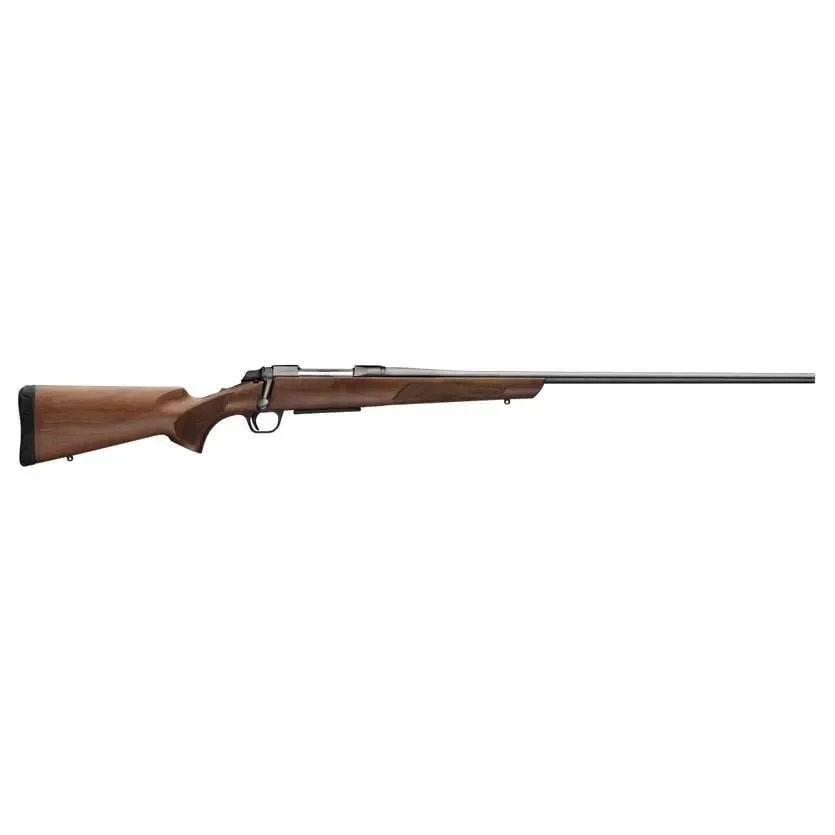
Synthetic stocks are often selected for resistance to moisture and changes in field conditions. Wood offers traditional appearance and feel, while laminated designs combine a wood-based construction with added dimensional stability. Material alone does not determine quality, so consider stock stiffness, finish, bedding design and total weight.
Balance matters as much as the number listed on a specification sheet. The optic, rings, bases and accessories can change how the finished rifle feels. Compare the complete planned setup rather than evaluating the bare rifle by itself.
Compare the Action and Practical Features
Look at the feeding system, magazine design, bolt configuration, safety location, trigger specifications and mounting interface. Hunting rifles may use detachable magazines, internal magazines or hinged floorplates. Each arrangement has different implications for profile, convenience and replacement-part needs. Confirm the capacity and configuration permitted under current federal, state and local law.
Check whether the receiver accepts the bases or rail needed for your chosen optic. Bolt handle clearance is also important because a large eyepiece or low-mounted scope may interfere with some combinations. Marketing terms such as free-floated barrels, adjustable triggers or enhanced bedding can describe useful features, but they do not guarantee accuracy. Compare the manufacturer’s specifications, warranty and recommended maintenance. Have the condition of a used rifle assessed by a qualified gunsmith.
Plan the Complete Hunting Rifle Setup
Select the optic around the hunting environment rather than magnification alone. Consider eye relief, field of view, reticle visibility, weather resistance, mounting height and added weight. Browse Optics & Sights while confirming that the rings, bases and receiver pattern are compatible with the exact rifle.
Include routine care and transport in the buying decision. Appropriate supplies from Cleaning & Maintenance can help you follow the manufacturer’s service instructions, while a properly sized option from Cases & Storage should accommodate the rifle and mounted optic. Before purchasing, confirm the exact model, chambering, included components and transfer requirements. BT Gun Company is a licensed FFL dealer in Rubicon, Wisconsin, ships firearms to your local FFL and offers FFL transfers by appointment.
Safe-Handling Reminders
- Treat every firearm as if it is loaded.
- Keep the muzzle pointed in a safe direction.
- Keep your finger off the trigger and outside the trigger guard until your sights are on the target and you have decided to shoot.
- Be sure of your target and what is beyond it.
- Before cleaning or inspecting a firearm, unload it, remove the magazine, lock the action open, and visually and physically check that the chamber is empty.
When you are ready to compare configurations, chamberings, stock materials and action features, browse the BT Gun Company Rifles category for bolt-action hunting rifle options.