
How Do You Check a Holster for Safe Trigger Coverage?
Quick Answer
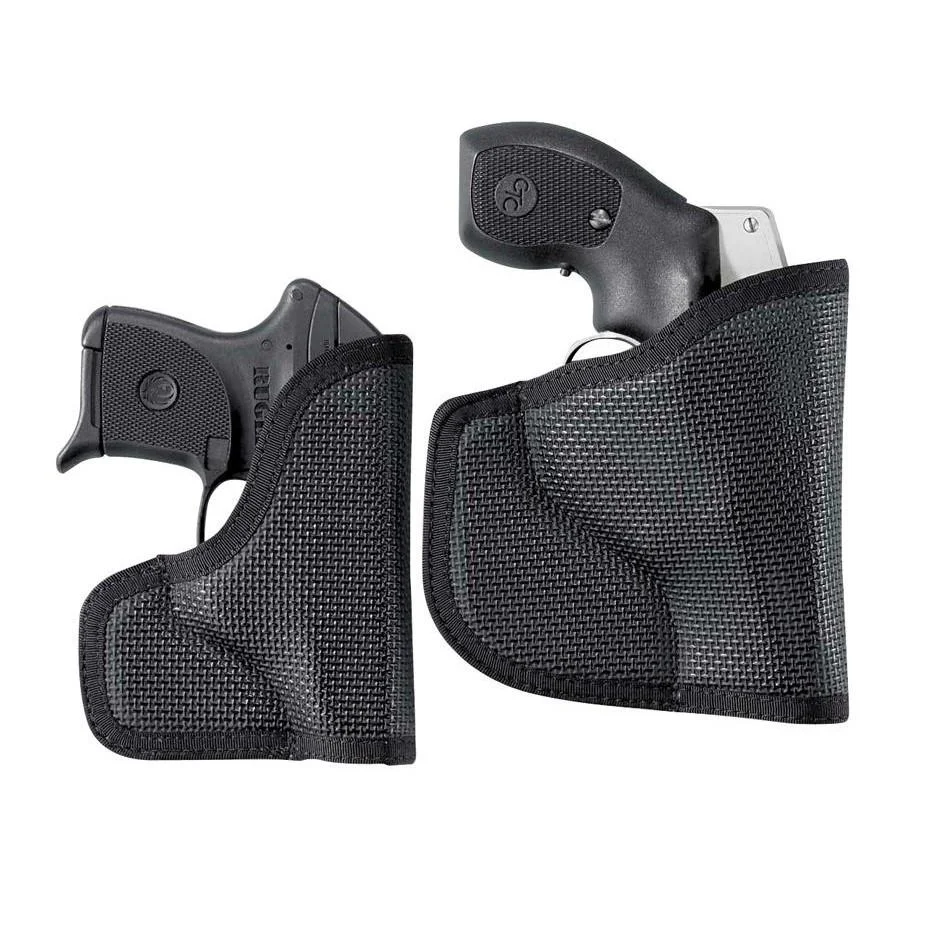
A suitable holster should completely shield the handgun’s trigger and trigger guard when the firearm is fully seated. Check the holster from both sides and around its edges. You should not see an opening that would allow a finger or ordinary object to reach the trigger.
Before evaluating fit, follow this reminder: Before cleaning or inspecting a firearm, unload it, remove the magazine, lock the action open, and visually and physically check that the chamber is empty.
- Confirm compatibility: The holster should be made for the exact handgun model and any installed light, laser, optic or other fit-altering accessory.
- Inspect both sides: The material should cover the full trigger-guard opening without excessive gaps.
- Check rigidity: The trigger area should resist collapsing, folding or deforming toward the trigger.
- Verify proper seating: The handgun should reach the position specified by the holster manufacturer without interference near the trigger guard.
- Examine condition: Cracks, stretching, loose fasteners, damaged stitching or permanent deformation can compromise coverage.
Follow the firearm and holster manufacturers’ instructions. Seek qualified instruction for holster use rather than learning through trial and error.
Start With Exact Firearm and Holster Compatibility
Trigger coverage begins with choosing a holster designed around the correct firearm configuration. Two similar-looking handguns can have different trigger-guard dimensions, frame contours or control locations. A generic fit label is not a substitute for the holster manufacturer’s compatibility information.
Account for accessories that change the handgun’s profile. Weapon-mounted products from the Lights & Lasers category often require a purpose-built holster. Some optics also affect clearance, although an optic cut does not automatically mean the holster fits every product in the Optics & Sights category.
If the handgun stops short of the manufacturer’s intended seated position, the trigger guard may remain partly exposed. Likewise, forcing an incompatible configuration into a holster can deform the shell or place unwanted pressure around the firearm. Check the holster maker’s model, generation, barrel-length and accessory specifications before judging fit.
Inspect Coverage From Every Visible Angle
With the firearm verified empty, inspect the trigger area from the left side, right side, front edge and rear edge. The holster should shield the trigger itself and the opening inside the trigger guard. A high sweat guard may cover part of the slide or frame, but that feature does not replace complete trigger-guard coverage.
Small molding or clearance gaps can be normal, particularly with light-bearing designs. The practical decision point is whether an opening provides a plausible path to the trigger. If the trigger can be reached through a gap, or if the trigger guard remains visibly exposed because the handgun is not fully seated, choose a different model or ask the manufacturer for guidance.
Also inspect the holster mouth and trigger-area edges for warping, sharp damage or incorrect alignment. Compare what you see with the manufacturer’s product images and instructions rather than assuming that every contour is intentional.
Evaluate Material Rigidity and Construction
Material choice affects how consistently a holster preserves trigger coverage. A molded polymer shell should retain its intended shape without cracks or severe distortion. Leather can provide appropriate coverage when it is correctly fitted, reinforced where needed and maintained, but worn or softened leather may fold inward. Fabric designs need enough structure around the trigger guard to resist collapse.
Hybrid holsters combine different materials, so examine the relationship between the rigid shell, backing and attachment hardware. The backing should not pull the shell away from the trigger guard or create a new opening. Screws, spacers, clips and retention components should match the manufacturer’s assembly instructions.
Comfort matters, but padding or flexible material should not intrude into the trigger-guard area. When comparing holsters, prioritize consistent coverage and correct fit before profile, color or mounting options.
Check Retention, Wear and Accessory Changes
Trigger coverage and retention are related but separate. A holster can cover the trigger yet fit too loosely, or retain the handgun while leaving an unacceptable gap. Confirm that the firearm reaches the manufacturer’s intended position and that any active retention mechanism operates without entering the trigger area.
Reinspect the holster periodically for cracks, stretching, loose hardware, damaged stitching, worn retention surfaces or deformation. Replace or stop using a holster if damage compromises coverage or fit. Follow the manufacturer’s maintenance and replacement guidance for its specific materials.
Recheck compatibility whenever the handgun configuration changes. Adding or replacing a light, laser, optic, grip component or other item from the Accessories category can alter fit even when the base handgun remains the same.
Treat every firearm as if it is loaded. Follow the firearm and holster manufacturers’ instructions, and obtain qualified instruction for holster use.
Browse BT Gun Company’s Holsters category to compare designs, materials and compatibility options for your handgun and installed accessories.