
How Do You Clean a Bolt-Action Rifle? A Practical Maintenance Guide
Quick Answer
How do you clean a bolt-action rifle? Begin with the owner’s manual, caliber-correct cleaning tools, and products compatible with the rifle’s barrel, finish, stock, and other components. Follow the manufacturer’s instructions whenever they differ from general guidance.
Before cleaning or inspecting a firearm, unload it, remove the magazine, lock the action open, and visually and physically check that the chamber is empty.
- Remove the bolt according to the owner’s manual.
- Clean the bore with a properly sized rod, jag or patch holder, patches, and an appropriate bore solvent.
- Use a compatible bore brush when ordinary patches do not remove the fouling.
- Wipe residue from the chamber, receiver, bolt body, locking lugs, and exterior surfaces.
- Apply lubricant sparingly and only where the manufacturer recommends it.
- Reassemble the rifle and complete the manufacturer’s prescribed post-maintenance checks.
Routine cleaning generally does not require complete bolt or trigger disassembly. Stop and consult the manual or a qualified gunsmith if a component is damaged, unusually difficult to remove, or requires a specialized tool. Chemical labels also matter: observe their instructions for ventilation, protective equipment, surface compatibility, and disposal.
Prepare the Rifle and Gather the Right Supplies
Treat every firearm as if it is loaded. Keep the muzzle pointed in a safe direction. Once the rifle has been cleared using the standard procedure above, consult its manual for bolt removal, stock considerations, lubrication points, and any model-specific warnings. Do not force the bolt, action screws, or other components.
A basic cleaning setup may include:
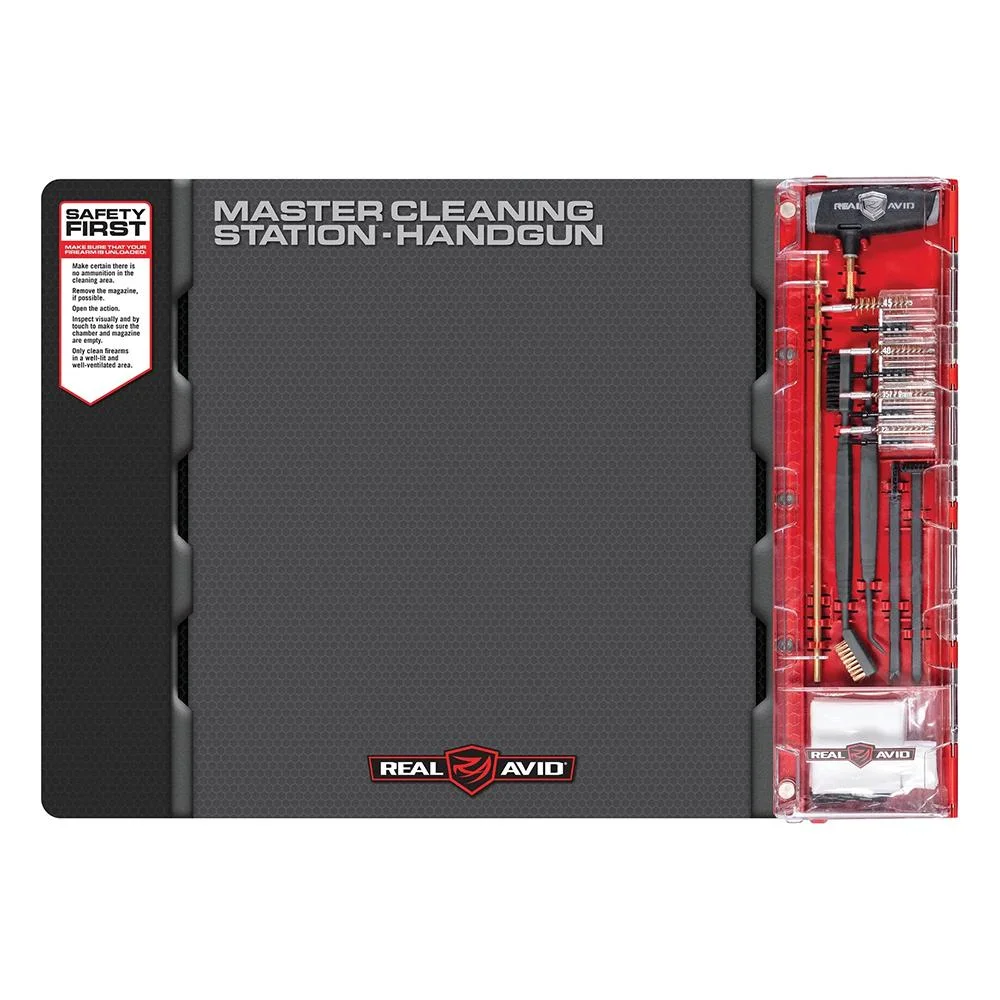
- A stable work surface and protective cleaning mat
- A one-piece cleaning rod or pull-through system of the correct caliber
- A bore guide if one is suitable for the rifle
- Correctly sized patches, jag or patch holder, and bore brush
- Bore solvent, general-purpose cleaner, lubricant, and corrosion protectant
- Nylon brushes, cotton swabs, lint-free cloths, and a chamber-cleaning tool
Caliber fit is a key decision point. Oversized tools can bind, while undersized patches may clean poorly. Confirm the marked dimensions before using any item from the broader selection of firearm accessories. Also check product labels before applying solvents to painted, polymer, wood, or coated surfaces.
A routine cleaning removes ordinary powder residue and surface grime. More persistent copper, carbon, corrosion, or hardened deposits may require a dedicated product and additional dwell time. Follow the chemical manufacturer’s directions rather than mixing cleaners or leaving solvent in the bore longer than directed.
Clean the Bore and Chamber
With the bolt removed according to the rifle manual, install a bore guide when the design permits. It helps align the cleaning rod and limits solvent or debris entering the receiver. Whenever practical for that rifle, clean from the chamber toward the muzzle to reduce unnecessary contact with the crown.
- Run a solvent-dampened patch through the bore and remove it after it exits rather than pulling used debris back through.
- Allow the solvent to work for the time stated on its label.
- If needed, make complete passes with a correctly sized brush made from a material approved for the barrel and solvent.
- Follow with clean patches until they show little remaining residue.
- Use a dry patch, then apply bore protection only if recommended for the rifle’s intended storage conditions.
Do not repeatedly reverse a tight-fitting brush while it is inside the bore. If a patch or brush binds, stop rather than applying excessive force. A stuck cleaning tool, visible bore obstruction, damaged crown, or suspected corrosion is a reason to seek qualified gunsmith service.
The chamber often needs separate attention because a standard bore patch may not contact its wider surfaces. Use a correctly fitted chamber tool or nylon brush, then wipe away loosened residue. Avoid pushing solvent and debris into the trigger mechanism or magazine well.
Clean the Bolt, Action, and Exterior
Use a cloth, nylon brush, or swab to remove residue from the bolt body, bolt face, extractor area, locking lugs, and accessible receiver surfaces. Detailed bolt disassembly varies substantially among rifles. Unless the owner’s manual provides a procedure and the required tools, leave internal bolt work to a qualified gunsmith.
Lubrication should be deliberate rather than heavy. Apply only the type and amount specified by the manufacturer, commonly concentrating on designated bearing surfaces such as locking lugs or cocking cams. Excess lubricant can collect dirt or migrate into areas where it is not intended. Do not flood the firing-pin channel, trigger assembly, bedding, or wooden stock with oil.
Wipe metal exterior surfaces with a product compatible with the rifle’s finish. Treat wood, polymer, camouflage coatings, and painted surfaces according to their manufacturers’ instructions. If inspection reveals a cracked, bent, badly worn, or missing component, compare the rifle’s exact model and configuration before considering anything from the gun parts category. Installation may require a gunsmith.
Mounted scopes and sights also deserve care. Keep aggressive bore solvents away from lenses, seals, adjustment markings, and finished surfaces. Use products intended for optical equipment when cleaning items from the optics and sights category.
Reassemble, Inspect, and Plan Future Maintenance
After the cleaned parts are dry and properly lubricated, reinstall the bolt and any other removed components exactly as described in the owner’s manual. Complete only the manufacturer-prescribed post-maintenance inspection and checks. If the action does not reassemble normally, do not solve the problem by forcing parts together.
Cleaning frequency depends on ammunition, round count, weather exposure, storage environment, and the rifle manufacturer’s recommendations. A rifle exposed to rain, condensation, dust, or other contaminants may need attention sooner than one used and stored under controlled conditions. Visible corrosion, unusual residue, rough component movement, damaged parts, or a sudden unexplained change in performance calls for inspection before further use.
For storage, confirm that exterior surfaces are clean and protected with a compatible product. Avoid leaving excess oil in the bore or action. Choose an appropriate option from cases and storage, follow its manufacturer’s instructions, and inspect stored firearms periodically for moisture or corrosion. Always check current federal, state, and local law concerning firearm storage and access.
For rods, patches, brushes, solvents, lubricants, mats, and other upkeep essentials, browse BT Gun Company’s Cleaning and Maintenance category.