
How Do You Tell Whether a Magazine Is Compatible With Your Firearm?
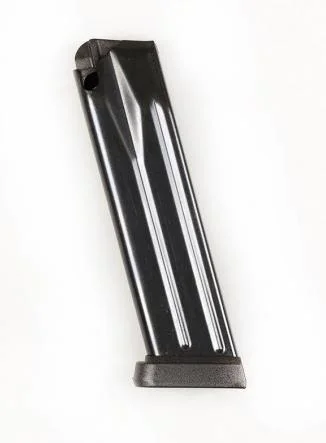
Quick Answer
Start with published application information rather than appearance. Record the firearm manufacturer, full model name, chambering, series or generation if identified, and any conversion, chassis, grip module, or magazine-well change. Then compare those details with the magazine manufacturer’s catalog, packaging, or compatibility chart.
- Find the part number: A manufacturer part number is more useful than a broad description such as “pistol magazine” or “rifle magazine.”
- Read the complete application list: Similar-looking firearm models may use different magazine dimensions, catch locations, feed geometry, or interfaces.
- Account for modifications: Replacement frames, bottom metal, chassis systems, and caliber conversions may change the required magazine.
- Check condition: Damage, corrosion, altered feed lips, or a worn catch opening can make an otherwise appropriate magazine unsuitable.
- Verify capacity rules: Check current federal, state and local law before ordering.
Before any inspection involving the firearm: Treat every firearm as if it is loaded. Keep the muzzle pointed in a safe direction. Before cleaning or inspecting a firearm, unload it, remove the magazine, lock the action open, and visually and physically check that the chamber is empty.
If the documentation is unclear, ask the firearm or magazine manufacturer, BT Gun Company, or a qualified gunsmith before relying on the magazine.
Identify the Firearm as Precisely as Possible
Begin with the firearm’s owner’s manual, factory label, and identifying markings. Write down the manufacturer, complete model designation, chambering, and any series, size, generation, or configuration language shown. Do not shorten the model name when searching. Compact, full-size, competition, rimfire, and other versions within one product family may not share the same magazine system.
The broad firearm type is only a starting point. Shoppers browsing handguns may encounter magazines associated with several frame sizes or product generations. Likewise, listings for rifles may reference a platform, action, lower receiver, chassis, or bottom-metal system rather than the rifle name alone.
Document modifications before shopping. A caliber conversion, replacement frame, aftermarket magazine well, chassis, stock system, or detachable-magazine conversion can affect which product documentation applies. If you bought the firearm used and are uncertain about its configuration, have a qualified gunsmith or dealer identify the relevant components.
Decode the Magazine Listing and Markings
Look for a manufacturer name and part number on the magazine, packaging, or product page. Search that part number in the magazine maker’s current catalog and read the complete application description, including exclusions and notes. Product photographs can help identify obvious differences, but they are not a substitute for published application data.
Record any cartridge wording found on the magazine as an additional reference point. Similar cartridge names, related cartridge families, or matching external dimensions should not be used to infer an application. Use the firearm and magazine manufacturers’ documentation to resolve naming questions, especially when a listing uses abbreviations.
Capacity also does not identify the host firearm. Different magazines may hold a similar amount of ammunition while using different body dimensions, feed-lip geometry, followers, baseplates, or catch openings. Conversely, a manufacturer may publish several capacities for a supported firearm. Review the complete listing in the magazines category rather than selecting from capacity alone.
Confirm Fit Information Without Guesswork
Once the documents point to the intended application, compare the magazine’s actual part number and configuration with the listing. Floorplate shape, body material, finish, and visual resemblance are secondary clues. They do not replace the manufacturer’s application information.
Physical insertion by itself does not establish that a magazine is suitable. Proper operation also involves the magazine catch, follower, feed lips, action clearance, and other firearm-specific interfaces. Follow the firearm and magazine manufacturers’ instructions. If a magazine does not correspond with the published information, or if its fit raises questions, stop and request an inspection from the manufacturer, dealer, or a qualified gunsmith.
Condition matters even when the application information is correct. Dents, cracks, corrosion, bent components, unauthorized alterations, or heavy wear can interfere with operation. Replacement springs, followers, extensions, and baseplates should also be supported by their manufacturers for the particular magazine. Relevant replacement components may be found under gun parts, while appropriate maintenance supplies are available in cleaning and maintenance.
Use a Reliable Buying Checklist
Before ordering, work through these decision points:
- Have you recorded the firearm’s complete manufacturer, model, configuration, and chambering information?
- Does the magazine listing provide a traceable manufacturer part number?
- Does the maker’s current catalog name the relevant firearm configuration?
- Have you accounted for conversions, chassis systems, replacement frames, or other changes?
- Is the magazine unaltered and free from visible damage?
- Have you checked current federal, state and local law concerning magazine capacity and possession?
Be cautious with listings that rely on phrases such as “universal,” “same pattern,” or “should fit” without a manufacturer reference. Community reports can flag questions worth researching, but factory manuals, current compatibility charts, and direct manufacturer confirmation provide stronger purchasing guidance. When comparing magazines with matching ammunition, independently confirm the firearm’s ammunition requirements through its manual and manufacturer.
Browse BT Gun Company’s magazines category to compare product descriptions and part numbers, then confirm the published application before choosing a magazine for your firearm.