How to Choose a Concealed Carry Holster That Fits
Quick Answer
To choose a concealed carry holster that fits, match the holster to your handgun’s exact manufacturer, model, size and configuration. Similar-looking pistols may have different slide lengths, frame dimensions, trigger guards or controls, so a generic size label is not enough.
- Confirm compatibility: Check the holster maker’s fit chart for your specific handgun and generation or variant.
- Account for accessories: An optic, weapon-mounted light, laser, suppressor-height sights or extended control can change fit requirements.
- Check coverage: A suitable holster should completely cover the trigger and trigger guard while protecting important controls.
- Choose retention: Look for secure, consistent retention appropriate to the holster’s intended use.
- Match the attachment: Belt clips, loops and other mounting hardware should fit your belt width and intended clothing.
- Consider comfort: Evaluate overall size, edges, backing material, hardware placement and adjustability.
Follow the holster and firearm manufacturers’ instructions, seek qualified instruction and check current federal, state and local law. Before inspecting compatibility, remember: Before cleaning or inspecting a firearm, unload it, remove the magazine, lock the action open, and visually and physically check that the chamber is empty.
Match the Holster to the Exact Handgun
Start with the handgun, not merely the general holster style. When shopping for holsters, use the complete model designation shown by the firearm manufacturer. Frame size, barrel and slide length, generation, safety configuration and ambidextrous controls may affect compatibility. A holster made for one version of a pistol may not correctly accommodate another version from the same product family.
Fit also changes when the handgun has accessories. An optic-cut holster needs enough clearance for the installed sight and its position on the slide. Browse optics and sights with holster compatibility in mind if both purchases are planned. A light-bearing holster is typically shaped around a particular handgun-and-light combination rather than the pistol alone. Check the listed fitment for products from the lights and lasers category before choosing a holster.
Other details can matter, including taller sights, threaded barrels, extended magazine releases or slide-mounted controls. Compare the firearm’s complete configuration with the holster manufacturer’s published compatibility information. If the fit chart is unclear, request clarification from the manufacturer rather than relying on appearance or a broad size description.
Compare Coverage, Retention and Materials
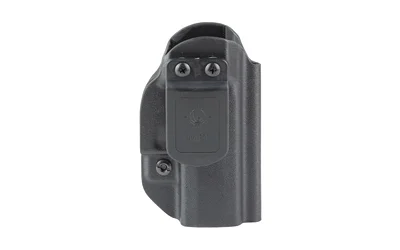
A properly matched holster should completely cover the trigger and trigger guard. Its shape should not press against the trigger, magazine release, safety lever or other controls. The holster should also retain its intended shape so that coverage remains consistent according to the manufacturer’s design.
Passive retention commonly comes from precise molding, friction or adjustable tension. Active retention adds a separate locking or release feature. Compare the design, adjustment range and manufacturer instructions without assuming that more mechanisms automatically make a holster more suitable. The appropriate choice depends on intended use, comfort and qualified instruction.
Rigid polymer holsters generally provide defined molding and consistent structure. Leather can offer a traditional appearance and may conform over time, but its condition and shape require attention. Hybrid designs combine materials, often using a rigid shell with a broader backing. Fabric designs vary considerably in structure and coverage. Regardless of material, examine edge finishing, hardware quality, fastener placement and whether replacement components are supported.
Accessories such as clips, loops, mounting hardware and wedges can affect fit and comfort. Review compatible products in accessories, but use only components approved for the holster system and follow the manufacturer’s instructions.
Match the Attachment to Your Belt, Clothing and Comfort
A holster can fit the handgun correctly yet still be a poor match for the user’s belt or clothing. Compare the attachment’s specified belt-width range with the belt you expect to use. Clips, closed loops and other mounting systems differ in profile, adjustability and attachment method. Hardware should be compatible with the holster rather than improvised.
Consider how much space the holster occupies, where its edges contact the body, and whether screws, clips or backing materials create pressure points. Adjustable ride height and cant can help users configure some designs according to the manufacturer’s instructions, but adjustment ranges vary. Added padding or a wider backing may improve comfort for some shoppers while increasing bulk for others.
Body shape and clothing choices are personal, so reviews cannot determine fit by themselves. Reviews are useful for identifying recurring comments about finish, hardware or sizing, but the holster maker’s compatibility list remains the primary reference. Qualified instruction can also help a new owner understand the differences among holster formats without relying on trial-and-error carrying or drawing techniques.
Verify the Complete Setup Before Use
Evaluate the holster as a complete system: handgun, installed accessories, mounting hardware, belt and clothing. Confirm that the product received matches its packaging and fitment listing. Check the manufacturer’s instructions for retention adjustment, hardware inspection, maintenance and any restrictions on compatible accessories.
Safe handling remains essential whenever a firearm and holster are being inspected. Treat every firearm as if it is loaded. Keep the muzzle pointed in a safe direction. Keep your finger off the trigger and outside the trigger guard until your sights are on the target and you have decided to shoot. Follow the firearm and holster manufacturers’ instructions and obtain qualified instruction before using a new carry system.
Holster fit can also change when the handgun’s configuration changes. Recheck the maker’s compatibility information after adding or replacing an optic, light, laser, control or other component. For firearms not in use, consider suitable options from cases and storage. Always check current federal, state and local law concerning possession, transport, storage and concealed carry.
Ready to compare designs, materials and mounting options? Browse the BT Gun Company holster category to find models listed for your handgun and accessory configuration.