
Metal vs Polymer Magazines: What Is the Difference for Gun Owners?
Quick Answer
Metal and polymer magazines perform the same basic job, but their materials affect weight, impact behavior, corrosion resistance, dimensions, and long-term wear. Neither material is automatically the right choice for every firearm.
- Steel magazines are generally rigid and wear-resistant, but they may be heavier and can rust if their finish is damaged or neglected.
- Aluminum magazines reduce weight and resist rust, although dents or bent feed lips may be difficult to correct reliably.
- Polymer magazines resist corrosion and can absorb some impacts through controlled flex, but they may crack, wear, or change dimensions under certain conditions.
- Hybrid magazines combine polymer bodies with metal feed lips or reinforcement to balance different characteristics.
Material matters less than correct compatibility and consistent construction. Confirm the firearm model, generation, caliber, action type, and capacity before ordering. Manufacturer-approved dimensions, feed-lip geometry, follower movement, spring quality, and locking-notch placement all influence function.
Choose based on the firearm manufacturer’s guidance, your maintenance preferences, and the magazine’s intended use. Check current federal, state and local law before purchasing magazines, particularly where capacity may be regulated.
How Magazine Construction Affects Performance
A magazine is a system rather than just a container. Its body, feed lips, follower, spring, baseplate, locking notch, and internal geometry must work together. Two magazines made from the same material can perform differently because of manufacturing tolerances or design choices.
Metal Construction
Steel offers rigidity and can support relatively thin body walls. That may be useful when a firearm’s magazine well leaves limited space. Protective finishes help resist moisture and surface wear, but damaged or worn areas may become vulnerable to corrosion.
Aluminum is lighter and naturally corrosion-resistant. It can still wear, dent, or deform, especially around the feed lips and locking surfaces. Because feed-lip geometry controls cartridge presentation, visible deformation deserves attention rather than an assumption that the magazine remains serviceable.
Polymer Construction
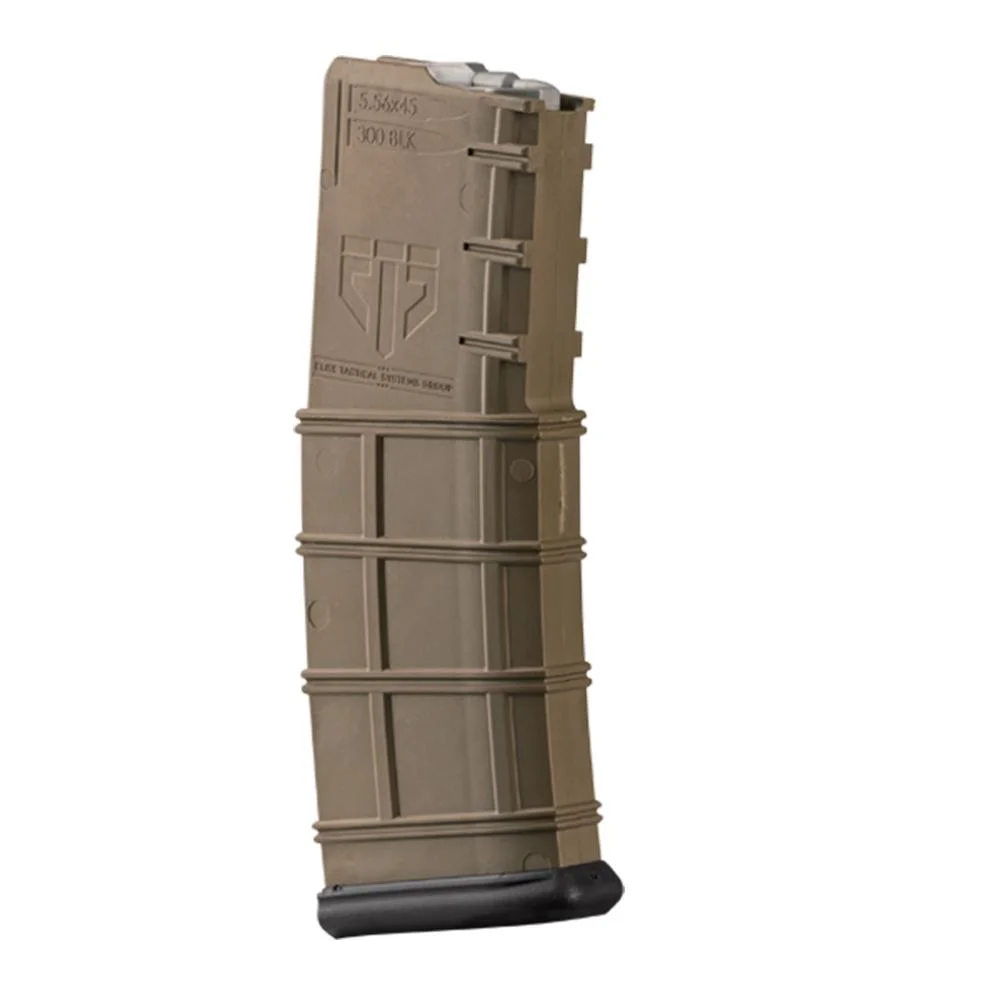
Polymer does not rust and allows manufacturers to mold features such as gripping texture, witness openings, reinforced ribs, and shaped baseplates into the body. Some designs use thicker walls than comparable metal magazines, which can affect fit in tightly dimensioned magazine wells or with certain accessories.
Polymer may flex instead of denting, but excessive stress, wear, chemical exposure, or unsuitable storage conditions can still damage it. Quality depends on the specific material formulation, reinforcement, and overall design.
Practical Tradeoffs for Different Firearms
Weight differences become more noticeable when carrying or storing several magazines. Polymer and aluminum designs are commonly selected when lower weight is a priority, while steel may appeal to shoppers who value rigidity and resistance to surface wear. Actual weight varies by design, caliber, and capacity.
Impact behavior is another distinction. A metal body may dent or bend, potentially changing internal clearance or feed-lip alignment. Polymer may flex, develop cracks, or suffer damage near the feed lips, locking notch, or baseplate. Hybrid construction can place reinforcement where the designer considers it most useful.
Firearm type also matters. Magazines for handguns often fit inside the grip, making body dimensions and baseplate shape important. Magazines for rifles may offer different body profiles, reinforcement patterns, and external textures. The firearm’s original specifications should guide the decision rather than a general preference for one material.
Ammunition dimensions and cartridge shape also influence magazine design. Use only the caliber and cartridge specified by the firearm and magazine manufacturers. Shoppers comparing compatible loads can browse ammunition while checking each product description carefully.
Compatibility and Reliability Matter More Than Material
A magazine labeled for a broad firearm family may not fit every model or generation within that family. Differences can include caliber, magazine-well dimensions, catch location, follower design, baseplate clearance, and compatibility with reversible or ambidextrous controls.
Before buying, compare the magazine manufacturer’s exact fitment information with the markings and manual for your firearm. Product photos alone are not enough to establish compatibility. Also consider whether extended baseplates, grip sleeves, aftermarket magazine wells, or other gun parts alter the required fit.
Material does not correct poor geometry or weak components. A well-designed polymer magazine may be more suitable for a particular firearm than an incompatible metal option, and the reverse is equally true. Factory guidance, established fitment, and consistent construction should carry more weight than appearance.
Treat every firearm as if it is loaded.
Before cleaning or inspecting a firearm, unload it, remove the magazine, lock the action open, and visually and physically check that the chamber is empty.
Inspection, Maintenance, and Buying Checklist
Magazine condition can change through normal use, impact, contamination, or improper storage. Areas that commonly deserve visual attention include feed lips, body seams, locking notches, followers, springs, and baseplates. Cracks, corrosion, dents, unusual spreading, or loose components may indicate that professional evaluation or replacement is appropriate.
Maintenance requirements vary by design. Follow the firearm and magazine manufacturers’ instructions, including their guidance on disassembly, approved cleaners, lubrication, and replacement parts. The Cleaning & Maintenance category can help shoppers compare products intended for firearm upkeep.
Use these decision points when comparing magazines:
- Confirm fitment: Match the exact firearm model, generation, caliber, and action type.
- Review construction: Compare body material, feed-lip material, reinforcement, follower design, and baseplate shape.
- Consider the environment: Account for moisture exposure, storage conditions, temperature changes, and maintenance expectations.
- Check accessory clearance: Consider grips, magazine wells, sleeves, pouches, and storage equipment.
- Follow manufacturer guidance: Use specified replacement components and maintenance procedures.
- Verify applicable law: Check current federal, state and local law before ordering.
Protecting magazines from unnecessary moisture and impact can help preserve their condition. Appropriate cases and storage products may also help organize firearms, magazines, and related equipment.
Whether you prefer steel, aluminum, polymer, or hybrid construction, start with confirmed compatibility and the manufacturer’s specifications. Browse BT Gun Company’s magazines category to compare options for your firearm.