
What Is Holster Retention and How Much Do You Need?
Quick Answer
Holster retention is the system that helps keep a handgun secured inside its holster. Retention may come from the holster’s molded fit, adjustable tension, or a mechanical device that must be intentionally released.
- Passive retention: Friction or molded pressure holds the handgun in place. Many concealed-carry and range holsters use this approach.
- Active retention: A hood, strap, lever, button, or similar mechanism adds a deliberate release step.
- Multiple retention features: Some holsters combine passive fit with one or more active mechanisms.
The amount you need depends on the holster’s intended use, how exposed it will be, your expected activity, and whether workplace requirements apply. More retention is not automatically better. Additional mechanisms can add bulk and complexity, while insufficient retention can allow unwanted movement.
Choose a holster made for the exact handgun model and configuration. Mounted lights, optics, threaded barrels, suppressor-height sights, and frame modifications can affect compatibility. Retention-level labels are not standardized across every manufacturer, so compare the actual features rather than relying only on terms such as Level I, Level II, or Level III.
Passive and Active Retention Explained
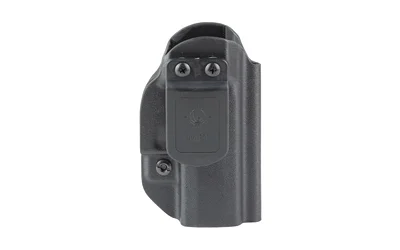
Passive retention normally comes from the holster body pressing against specific areas of the handgun. A molded polymer holster may produce an audible or tactile engagement when the handgun is fully seated. Leather and hybrid designs may rely on close fit, material tension, or adjustable hardware. Passive systems are generally simple and low-profile, making them common among shoppers browsing handguns and concealed-carry holsters.
Active retention uses a separate component to secure the handgun. Common examples include thumb breaks, rotating hoods, locking levers, and release buttons. The location, direction of movement, and operating method vary significantly by manufacturer. An active device can provide additional security, but it must be compatible with the user’s needs and understood through the manufacturer’s instructions and qualified instruction.
Some products are marketed using retention levels. These labels can be useful within one manufacturer’s product line, but they are not a universal comparison system. One maker may count each independent locking feature, while another may define levels through its own testing process. Read the product description and identify exactly what holds the handgun in place.
How Much Retention Fits Your Intended Use?
Start with the holster’s purpose. A closely fitted passive-retention holster may suit routine range use or a low-profile concealed setup. A holster that will remain openly exposed, experience frequent movement, or be used in a workplace with specific equipment policies may call for an active device or multiple retention features.
Use These Practical Decision Points
- Exposure: Consider whether the holster will generally be covered or openly worn.
- Activity: More bending, climbing, running, or physical work may make stronger retention desirable.
- Work requirements: Employers, agencies, ranges, and training programs may specify particular holster features.
- Complexity: Every active mechanism adds an operating step that should be understood through qualified instruction.
- Comfort: A secure holster still needs suitable dimensions, mounting hardware, ride position, and materials for its intended use.
A range-focused setup and an openly worn work setup do not necessarily need the same system. Avoid selecting solely by the highest advertised level. Instead, match the actual retention features to the environment, expected movement, comfort needs, and applicable policies. Check current federal, state, and local law before selecting or using any carry setup.
Fit, Accessories, and Holster Materials Matter
Retention works properly only when the holster matches the firearm. Confirm the exact manufacturer, model, frame size, barrel length, generation or variant, and control configuration listed by the holster maker. A similar-looking handgun is not automatically compatible.
Accessories are equally important. A weapon-mounted light generally requires a purpose-built light-bearing holster, so compare the listed compatibility before choosing from lights and lasers. Slide-mounted optics may require an optic cut or additional clearance; shoppers can compare configurations in optics and sights. Other modifications may also change fit, making the manufacturer’s compatibility list more dependable than appearance alone.
Material affects feel and retention. Molded polymer offers defined contours and commonly supports adjustable tension or active hardware. Leather can provide close-fitting passive retention but may change as it wears. Hybrid holsters combine materials to balance structure and body-side comfort. When comparing related firearm accessories, consider hardware quality, adjustment range, edge finishing, backing material, and replacement-part support.
Verification, Maintenance, and Safe Handling
Follow the firearm and holster manufacturers’ instructions for compatibility, adjustment, inspection, and maintenance. Retention checks and familiarization should be completed with qualified instruction. Do not rely on internet terminology alone when an employer, agency, range, or course requires a particular retention system.
Examine the holster’s condition according to its manufacturer’s guidance. Worn straps, loose hardware, cracked material, debris, or altered contours can affect fit and retention. Use only approved hardware and replacement parts, and avoid modifications that the maker does not authorize.
Treat every firearm as if it is loaded. Keep the muzzle pointed in a safe direction. Keep your finger off the trigger and outside the trigger guard until your sights are on the target and you have decided to shoot. Before cleaning or inspecting a firearm, unload it, remove the magazine, lock the action open, and visually and physically check that the chamber is empty.
For model-specific passive, active, and light-compatible options, browse the holsters available through BT Gun Company and compare each manufacturer’s fit and retention details.