
Is It Legal to Leave a Gun in Your Car? A 2026 Guide
Estimated reading time: 10 min
Summarize with AI
Share
Quick Answer
It may be legal to leave a gun in your car, but the answer depends on state and local law, where the vehicle is parked, whether the firearm is loaded, how it is secured, and whether you may legally possess it. A vehicle is not a universal legal safe zone. Rules governing carrying a firearm in an occupied vehicle may also differ from rules for storing one in an unattended vehicle.
- Check state carry and transportation law. Some states allow an eligible adult to keep a handgun in a private vehicle without a carry permit. Others require the gun to be unloaded, locked in a container, placed outside the passenger compartment, or transported only for a lawful purpose.
- Watch where you park. Firearms may be restricted on school grounds, federal property, military installations, correctional property, or other sensitive locations. A prohibition can extend to the parking lot, not merely the building.
- Do not assume a glove compartment is sufficient. State definitions of a lawful locked container vary. California, for example, generally excludes a glove compartment or utility compartment from its definition of a locked container for handgun transportation.
- Private-property rules matter. Employer parking-lot protections exist in a number of states, but they have exceptions. Posted-property rules and the consequences of ignoring a sign or refusing to leave also vary by state.
- Secure the firearm against theft. Use a quality lockbox anchored to the vehicle, keep it out of sight, close the windows, and lock the doors. A center console or ordinary glove box may satisfy certain laws but offers limited protection from a determined thief.
- Review theft-reporting requirements. Some jurisdictions impose a deadline for reporting a lost or stolen firearm.
When possible, remove the firearm rather than leaving it in a vehicle overnight. If vehicle storage is unavoidable, verify the laws at your location and destination, including rules for any school zone, workplace, or government property along the way. Federal interstate-transport protection is limited and does not override every rule at a destination or authorize possession by a prohibited person. This article provides general information, not individualized legal advice.
Why Vehicle Gun Laws Do Not Have a Single Answer
The phrase leave a gun in my car can describe several legally different situations. A driver may be carrying a loaded handgun within reach, transporting an unloaded rifle to a range, storing a pistol while entering a prohibited building, or leaving a firearm in an unattended vehicle overnight. Legislatures and courts may treat each situation differently.
Start with four questions: Are you legally eligible to possess the firearm? Is the gun loaded or unloaded? Is it concealed, visible, or locked away? Where is the vehicle located? A person who may lawfully possess a rifle at home does not automatically have permission to park with it on school property, federal property, or an employer’s restricted lot.
Carry permits add another layer. A permit may authorize concealed carry in a vehicle, but it does not necessarily excuse an unattended-storage violation or authorize possession in every restricted parking area. Likewise, permitless carry does not eliminate age, location, conduct, or prohibited-person restrictions. Responsible gun owners should check the law rather than relying on a reciprocity app or a general statement that a state is gun-friendly.
BT Gun Company supports lawful firearm ownership and informed exercise of Second Amendment rights. That includes understanding the distinction between a right to possess a firearm and the specific rules governing its transportation and storage.
Federal Rules That Can Apply to a Gun in a Car
Federal law does not establish one general vehicle-storage rule for every gun owner, but several federal restrictions can affect a firearm in a vehicle. A person prohibited from possessing firearms under federal law cannot solve that problem by placing the gun in a trunk or locked case. Restrictions involving certain federal facilities, postal property, military installations, and other federally controlled locations may also reach parking areas.
The federal Gun-Free School Zones Act generally restricts knowing possession of a firearm on school grounds or within 1,000 feet of the grounds of a public, parochial, or private school. The law contains exceptions, including possession on qualifying private property, possession by a person licensed by the state containing the school zone when federal conditions are met, and an unloaded firearm in a locked container or locked firearm rack. State school-zone laws may be stricter, and an out-of-state permit does not automatically satisfy the federal licensing exception.
Federal law also offers limited protection for lawful interstate transportation under 18 U.S.C. § 926A. In general, the traveler must be moving between places where the firearm may lawfully be possessed and carried. The firearm must be unloaded, and neither it nor the ammunition may be readily accessible from the passenger compartment. In a vehicle without a separate trunk, the firearm or ammunition must be in a locked container other than the glove compartment or console.
This interstate protection is not a blanket vehicle-carry permit. Significant detours, extended stops, an unlawful destination, or access to the firearm can complicate the analysis. Travelers can review the ATF’s firearms frequently asked questions and should separately check every state through which they will travel.
State Storage and Transportation Laws Vary Widely
States use different legal categories for vehicle possession. One state may regard a loaded handgun in a car as concealed carry, another may create a vehicle-specific exception, and another may require an unloaded handgun in a locked container. Rules can also differ among handguns, rifles, shotguns, and regulated firearms.
California illustrates the importance of statutory definitions. Under the state’s general handgun-transportation rules, a handgun must ordinarily be unloaded and carried in a locked container or locked vehicle trunk. A glove compartment or utility compartment is not a qualifying locked container. California also imposes requirements for securing a handgun left in an unattended vehicle, including keeping it in a locked trunk or qualifying locked container and out of plain view as required by law. The California Department of Justice transportation guidance is a useful starting point, although owners remain responsible for the governing statutes.
Texas provides a contrasting framework that generally gives eligible gun owners broader ability to possess a handgun in a private motor vehicle under their control. Even there, conditions involving lawful possession, criminal activity, visibility, holsters, restricted locations, and other circumstances can matter. Texas law should not be reduced to the inaccurate claim that any gun is legal in any car or parking lot.
Other states may regulate loaded long guns in vehicles, require specific transportation purposes, or impose additional rules in wildlife-management areas. Local regulation may matter where state preemption is limited. Tribal lands can also have their own rules. Before crossing a state line, confirm the laws of the destination and each intervening state rather than assuming your home-state permit or vehicle exception follows you.
Because firearm statutes, court decisions, and agency guidance change, owners can follow latest firearms news while still consulting current official sources for a particular trip.
Workplaces, Private Property, and Prohibited Parking Areas
Many states have enacted parking-lot laws that protect some employees or visitors who keep a lawfully possessed firearm locked inside a private vehicle. Those protections are not uniform. Common exceptions can involve school property, correctional facilities, secured parking areas, nuclear facilities, company-owned vehicles, or locations where firearm possession is prohibited by another law.
A workplace policy also is not necessarily identical to criminal law. Violating a company rule might result in discipline even when it is not a firearm crime, unless state law specifically protects the conduct. Conversely, an employer’s permission cannot override a statute that prohibits guns at that location.
Private-property signs receive different legal treatment across the country. In some states, a sign meeting statutory wording, size, or placement requirements can carry specific legal consequences. Elsewhere, a sign may primarily communicate the owner’s wishes, but refusing a lawful direction to remove the firearm or leave can lead to trespass consequences. When in doubt, park elsewhere or remove the firearm before arriving.
Extra caution is appropriate at schools, courthouses, police facilities, airports, hospitals, places serving alcohol, state parks, and federal buildings. Do not assume that leaving the gun locked in the vehicle makes every prohibited-property rule disappear. Airport passenger parking is also legally distinct from taking a firearm into a terminal or presenting an unloaded, declared firearm for checked baggage under applicable procedures.
How to Secure a Firearm in an Unattended Vehicle
Legal compliance is the minimum. Vehicles are vulnerable to break-ins, and a stolen firearm can be used in violent crime. The best practice is to avoid unattended vehicle storage whenever practical. If the firearm must remain behind, use layered security:
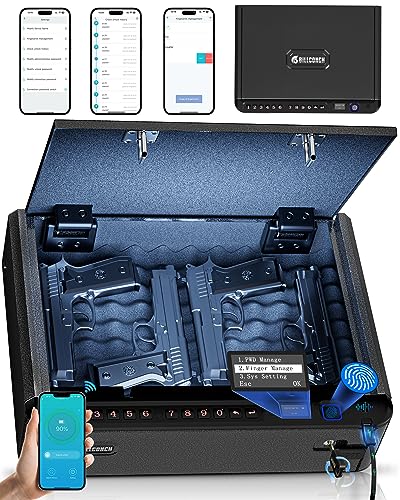
- Choose a purpose-built lockbox. Use a case sized for the firearm with a reliable lock. A thin, portable case left loose in the car can simply be carried away.
- Anchor the container. Secure it to a structural seat mount or another substantial part of the vehicle with an appropriate cable or mounting system. Follow the product manufacturer’s installation instructions.
- Keep it out of sight. Place the secured container in the trunk or another concealed area before reaching the destination. Handling a firearm in a parking lot can attract attention and may alarm bystanders.
- Follow loaded-gun rules. Unload the firearm and separate ammunition when required. A safe-storage practice does not replace a state’s exact transportation requirements.
- Control access. Do not leave keys or combinations where passengers, children, unauthorized users, or prohibited persons can obtain them.
- Record identifying information. Keep the make, model, caliber or gauge, and serial number in a secure location separate from the firearm. This information is important if the gun is stolen.
- Check the vehicle. Lock every door, close the windows, activate the alarm, and avoid firearm-related decals that may advertise valuable contents.
A cable lock through the firearm can add a layer of protection, but it does not secure the entire gun to the vehicle. Similarly, locking the doors is not the same as placing the firearm in a locked container where the law requires one. Gun owners shopping for a suitable firearm and compatible firearm accessories should plan for secure transportation before leaving the dealer.
Common Mistakes and Vehicle-Storage FAQ
Common mistakes include assuming a carry permit controls every situation, treating a console as a universally lawful locked container, and relying on federal interstate protection during ordinary in-state travel. Another frequent error is checking the carry law while overlooking a separate unattended-storage statute. Owners should also determine whether their jurisdiction requires prompt reporting of a lost or stolen firearm. States including California and New York impose reporting deadlines in specified circumstances.
Do not leave a firearm accessible to a child, an unauthorized passenger, or someone prohibited from possessing firearms. Depending on the facts and jurisdiction, unsafe access can create criminal or civil exposure. If a firearm is stolen, contact the local law-enforcement agency promptly, provide accurate identifying information, and follow applicable reporting requirements. Also notify the vehicle insurer if property damage occurred.
Can I leave a loaded gun in my car?
That depends on state law, your eligibility to carry, the type of firearm, its location in the vehicle, and where the car is parked. Some states permit an eligible person to keep a loaded handgun in a private vehicle; others require it to be unloaded or impose permit and storage conditions. Unloading the gun is a prudent theft-safety measure, but it does not by itself make possession lawful at a prohibited location.
Is a locked glove box legally sufficient?
Sometimes, but not everywhere. California specifically excludes a glove compartment or utility compartment from the locked-container definition used for general handgun transportation. Federal interstate-transport protection likewise refers to a locked container other than the glove compartment or console when the vehicle lacks a separate compartment. Even where lawful, a vehicle-mounted lockbox usually provides better theft resistance.
Can I keep a gun in the car while picking up a child from school?
School property and surrounding school zones require special care. Federal and state exceptions differ, and a carry license may need to meet specific conditions. Some states separately regulate firearms in school parking lots or during school activities. Verify the law before entering school property rather than assuming a locked trunk is always enough.
Does permitless carry make unattended vehicle storage legal?
No. Permitless carry generally addresses who may carry and under what circumstances. It does not automatically override safe-storage laws, school restrictions, private-property rules, employer policies, or prohibitions applicable to particular people and places.
What should I do before traveling?
Check official state resources for every jurisdiction on the route, confirm reciprocity and vehicle rules separately, identify prohibited destinations, and use a locked container that satisfies the strictest applicable requirement. If legal uncertainty remains, consult a qualified attorney in the relevant state. Once you understand the rules and are ready to shop firearms responsibly, work with a licensed dealer.
For dependable firearms, responsible ownership resources, and knowledgeable service from a licensed FFL, visit BT Gun Company.

About the Author: Jeff Brown
Jeff Brown is CEO of Fuzzy Holdings LLC and owner of BT Gun Company, a Class 7 FFL dealer since 2023. An NRA-certified Range Safety Officer who has been shooting since 1983, he teaches hunter safety at his local gun club, hunts spring and fall turkey, and has a soft spot for revolvers.