
Did the DOJ Appeal the NFA Ruling? What Gun Owners Need to Know in 2026
Estimated reading time: 8 min
Summarize with AI
Share
Quick Answer
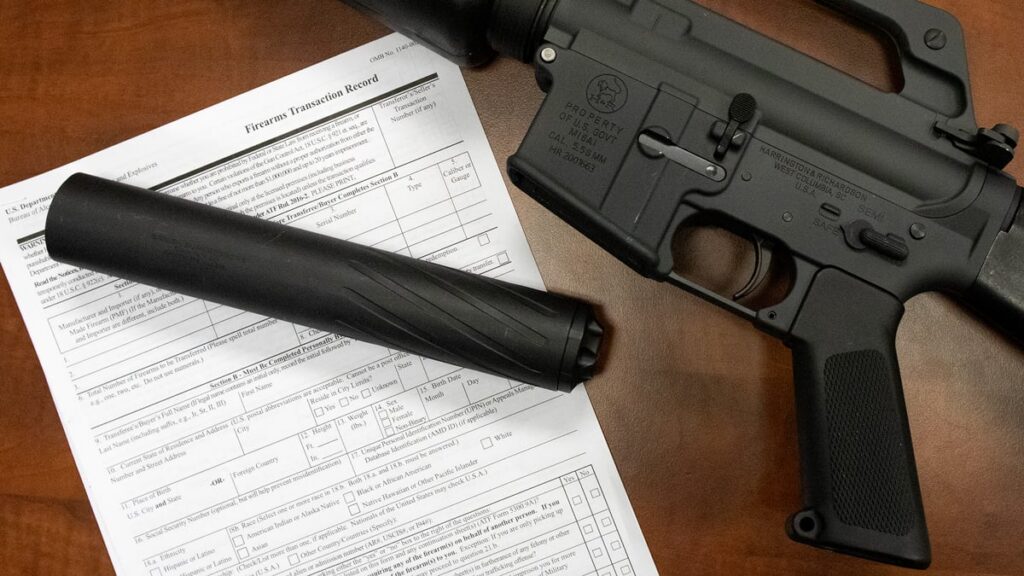
No. As of October 18, 2026, the Department of Justice has confirmed that it would not appeal the ruling in Silencer Shop Foundation v. ATF. The case concerns National Firearms Act requirements for suppressors, short-barreled rifles, short-barreled shotguns, and the statutory category called “any other weapons,” or AOWs. DOJ formally notified Congress of its decision in a September 24, 2026, letter.
A second development matters just as much for buyers: on October 9, ATF announced that its related nonenforcement policy would apply nationwide, including to people outside the lawsuit. Under that policy, ATF will not enforce specified NFA application, prior-approval, and registration requirements for those four categories. See the official ATF announcement.
- The entire NFA was not repealed. The court’s injunction and ATF’s enforcement policy have different legal foundations and scopes.
- Machineguns and destructive devices remain subject to the NFA. Their $200 making and transfer taxes remain.
- Dealer transactions still involve federal requirements. Form 4473, applicable background checks, and dealer records have not disappeared.
- State and local restrictions still matter. Federal nonenforcement does not override them.
- Interstate travel requires separate attention. ATF says individuals still need approval to transport short-barreled rifles and short-barreled shotguns across state lines.
For lawful gun owners, this is a substantial reduction in federal paperwork barriers. However, a headline saying “the NFA is gone” leaves out information that can determine whether a purchase or trip is lawful.
Before buying, identify the item’s legal category, confirm your dealer’s current transfer procedure, and check whether your state requires federal registration. Keep existing ownership and registration documents while evaluating your options. ATF continues accepting voluntary registrations, and its guidance does not promise automatic grandfathering if the legal situation changes.
This article addresses the August 2026 Texas ruling and subsequent federal guidance. If an older article discusses another NFA case, its appeal status may be different. BT Gun Company recommends checking the case name and publication date before relying on any legal headline.
Which NFA Ruling Did DOJ Decline to Appeal?
The relevant litigation involved Silencer Shop Foundation v. ATF and the consolidated Jensen v. ATF case in the Northern District of Texas. On August 5, 2026, Judge Wesley Hendrix ruled against specified NFA requirements after Congress eliminated the making and transfer taxes for the affected categories.
The initial injunction protected the plaintiffs and specified related parties, including members and customers where applicable. It was not an unrestricted order protecting every person simply because that person owned a firearm.
The court temporarily stayed its ruling. When that temporary pause ended, DOJ had not obtained continued emergency relief. However, that development alone did not establish that the government had permanently abandoned an appeal: the ordinary appeal window extended beyond the initial stay.
That distinction explains why August coverage sometimes said an appeal remained possible. NRA-ILA’s August 17 explanation accurately described the uncertainty at that time. DOJ’s September letter subsequently supplied the definitive answer.
When assessing a shared article, look for three separate dates: the court’s decision, the publication date, and the latest agency guidance. An accurate August report can still be incomplete guidance for an October purchase. Follow 2nd Amendment news with those distinctions in mind.
Why Eliminating the Tax Changed the Constitutional Argument
The NFA dates to 1934. Its regulatory framework historically connected taxation with registration and approval requirements. In Sonzinsky v. United States in 1937, the Supreme Court upheld the challenged registration requirements under Congress’s taxing authority, as DOJ recounts in its notification to Congress.
Congress’s 2025 legislation eliminated the making and transfer taxes for suppressors, short-barreled rifles, short-barreled shotguns, and AOWs while leaving regulatory provisions in place. The litigation challenged whether those remaining requirements retained a constitutional foundation.
The district court concluded that the challenged provisions could no longer rest on the taxing power once the relevant taxes were eliminated. It also rejected the government’s alternative arguments based on congressional commerce authority and the Necessary and Proper Clause. According to NRA-ILA’s explanation of the decision, the court resolved the dispute on Article I grounds and did not reach the plaintiffs’ Second Amendment claims.
That is a meaningful distinction for gun-rights advocacy. The result benefits lawful owners, but describing it as a Supreme Court declaration that every NFA restriction violates the Second Amendment would misstate both the court involved and its reasoning.
It also explains why removing a tax and removing an approval process are separate developments. A change in the amount owed does not, by itself, tell a buyer which forms remain necessary.
What ATF’s October Guidance Changes for Buyers
The October announcement broadened the practical effect beyond the people protected by the injunction. ATF adopted a uniform enforcement approach for the four affected categories, rather than requiring every buyer to establish a connection to a plaintiff organization or business.
Its October 9 open letter explains that the agency will no longer require NFA approval before making or transferring covered items, or require their registration under this enforcement policy. ATF nevertheless continues accepting Forms 1, 3, and 4 voluntarily, and manufacturers may submit Form 2 reports.
For someone considering a purchase, the useful question is now specific: “How will this particular item be transferred to me under current federal guidance and my state’s law?” Asking only whether the tax stamp disappeared can miss the remaining transaction requirements.
Request a written estimate that separates the product price, dealer charges, and any applicable taxes. A federal tax change does not establish a suppressor’s retail price or guarantee that every dealer charges the same amount. Compare complete transaction costs instead of assuming a headline describes the final invoice.
When you browse firearms, keep product selection and transfer eligibility as separate checks. Record the exact manufacturer, model, and configuration you are considering so the dealer can address your actual purchase. A general answer about suppressors cannot resolve every question about a short-barreled rifle.
Which Federal Requirements Still Apply?
The Gun Control Act remains a separate source of federal obligations. Covered items remain firearms under that law, including suppressors. Dealers must follow applicable Form 4473, background-check, recordkeeping, and transfer restrictions. People prohibited from possessing firearms do not gain eligibility through this policy.
Commercial participants also retain applicable special occupational tax obligations. The change does not mean an ordinary federal firearms license automatically satisfies every requirement for engaging in the NFA business. Meanwhile, machineguns and destructive devices remain subject to the full NFA framework.
There is an additional distinction for short-barreled rifles and shotguns: the Gun Control Act contains its own dealer-transfer authorization requirement. ATF says it is developing a replacement process and will temporarily refrain from enforcing 18 U.S.C. § 922(b)(4). NRA-ILA’s October 12 update explains this interim arrangement.
For a buyer, these distinctions are reasons to ask precise questions rather than argue from a slogan. If a dealer requests paperwork, ask whether it addresses a federal transaction requirement, state law, voluntary registration, or the business’s own policy. Those explanations have different implications.
Bring the information needed for the transaction and settle procedural questions before paying a nonrefundable charge. That approach supports lawful ownership while reducing avoidable confusion at the counter.
State Laws and Interstate Travel Need Separate Checks
ATF’s open letter expressly preserves state and local restrictions. Some jurisdictions connect lawful possession to federal registration or compliance; others prohibit particular categories. Federal nonenforcement does not answer how a state court will interpret those provisions.
The letter also cautions that application of the federal interstate-transport safe harbor to unregistered NFA items is uncertain. Additionally, individuals must still obtain approval for interstate transportation of short-barreled rifles and short-barreled shotguns, using Form 20, even when the firearm is unregistered.
Consider a proposed trip from Texas to Oklahoma. Treat it as a checklist of separate questions: what item are you transporting, is possession lawful at the destination, does the trip require ATF authorization, and are there additional restrictions along the route? The state names alone cannot establish the answer.
Prepare those questions before scheduling a class, match, or hunting trip. Give a qualified attorney or relevant authority the actual configuration, registration status, route, and purpose of travel. A vague question about whether “NFA items are legal” often produces an answer too broad to guide a specific trip.
For a purchase, ask your dealer to identify any state-registration issue before choosing whether to use the voluntary federal process. This article provides general information; state-specific advice should come from counsel familiar with your jurisdiction and circumstances.
Common Questions About the DOJ Decision
Does no appeal mean the ruling binds every court?
No. ATF explains that a district court order generally does not bind other federal courts or state courts. Nationwide agency policy and nationwide binding judicial precedent are different things.
Should I remove an existing item from the registry?
Do not treat deregistration as routine housekeeping. ATF says an item removed from the registry cannot be registered again unless the Attorney General declares an amnesty. Evaluate state-law implications and future plans before requesting removal.
Am I automatically grandfathered if enforcement changes?
No automatic protection is promised. ATF says material legal or policy changes could restart enforcement, and federal law generally does not allow later registration of unregistered NFA items. Its FAQ, updated October 16, 2026, discusses these limitations and discretionary exceptions.
What records should I keep now?
Retain purchase receipts, existing approved forms, and relevant correspondence. Save the dated guidance you reviewed, but do not treat a downloaded announcement as a substitute for required authorization. Organizing these records makes later questions easier to resolve.
What should I ask before my next purchase?
Ask which transfer process applies, whether registration is advisable or necessary in your state, and what the complete cost will be. Request clarification whenever an answer relies on an older announcement.
Ready to discuss your next purchase? Visit BT Gun Company to explore firearms and accessories and ask about the current process for the item you want.

About the Author: Jeff Brown
Jeff Brown is CEO of Fuzzy Holdings LLC and owner of BT Gun Company, a Class 7 FFL dealer since 2023. An NRA-certified Range Safety Officer who has been shooting since 1983, he teaches hunter safety at his local gun club, hunts spring and fall turkey, and has a soft spot for revolvers.