
How to Ship a Gun for Repair in 2026: Rules, Carriers, and Packing
Estimated reading time: 9 min
Summarize with AI
Share
Quick Answer
To ship a gun for repair, contact the manufacturer or licensed gunsmith first, obtain their shipping instructions, unload the firearm, and use an authorized shipping method. For many owners, the simplest route is a repair facility’s approved return-label program or a local Federal Firearms License holder who can arrange shipment.
Federal law generally allows an unlicensed owner to send a firearm to an appropriately licensed repair business in another state. However, legal permission and carrier acceptance are separate requirements. A shipping label purchased through an ordinary personal account does not establish that the carrier accepts your firearm shipment. See the ATF’s guidance for unlicensed firearm owners.
- Get authorization: Request a return merchandise authorization number, often called an RMA, the exact repair address, packaging directions, and return-delivery arrangements.
- Choose the correct route: Under USPS’s published rules, ordinary unlicensed owners cannot mail modern handguns. Eligible unloaded rifles and shotguns can be mailed to licensed dealers, manufacturers, or importers, subject to postal requirements.
- Confirm carrier eligibility: UPS restricts firearm shipments to approved contractual arrangements, including authorized customer returns. FedEx requires approved FFL shippers. Ask the repair facility which arrangement applies to your shipment.
- Prepare safely: Remove all ammunition from the firearm and any included magazines. Check the chamber and feeding system according to the owner’s manual. Never ship a firearm with a live round stuck inside.
- Pack and document: Secure the unloaded firearm against movement, use protective cushioning and a plain outer box, and include the requested service paperwork. Retain photographs, the serial number, and tracking information.
- Plan both directions: Confirm who pays shipping, what loss or damage protection applies, and where the repaired firearm will be delivered.
A licensed gunsmith generally may return a repaired firearm directly to the person who sent it, subject to applicable law and shipping restrictions. An ordinary repair return does not automatically require a new purchase transfer.
This guide covers domestic U.S. repair shipments. Suppressors, short-barreled firearms, other National Firearms Act items, and international shipments need separate review. If the repair facility’s instructions are unclear, resolve the shipping method before handing over the package.
1. Understand the Difference Between Federal Law and Shipping Policy
The federal framework permits owners to obtain professional repairs across state lines. It does not require every carrier to accept the resulting shipment. That distinction explains why an owner can have a lawful destination but still be refused service at a shipping counter.
For a repair shipment, establish three things: the recipient is appropriately licensed, the shipment complies with applicable law, and the chosen shipping service accepts it under the arrangement you are using. A gunsmith’s business name or social-media profile alone does not establish licensing or an authorized receiving address.
State and local requirements also matter. Tell the repair facility your home state and identify the firearm’s exact configuration, especially if it has restricted features or accessories. Do not assume an instruction written for customers nationwide resolves every state-specific issue.
Owners deserve clear access to maintenance that keeps their firearms dependable. At BT Gun Company, that starts with separating actual legal requirements from outdated shipping advice. Follow our 2nd Amendment news for broader developments, and confirm shipment-specific requirements with the receiving licensee.
2. Contact the Repair Facility Before Packing
Start through the manufacturer’s official service page or the licensed gunsmith’s verified contact information. Give them the make, model, serial number, caliber or gauge, and a concise description of the problem. Ask whether they service that particular model before paying for transportation.
Request written answers to these practical questions:
- Do you require an RMA or another service authorization?
- Should I send the complete firearm or only a specified component?
- Do you provide an authorized shipping label and an approved handoff location?
- Should magazines, optics, or aftermarket accessories accompany the gun?
- Who pays outbound shipping, return shipping, and diagnostic charges?
- Where will the firearm be returned?
Manufacturer instructions can be highly specific. For example, Ruger’s Ruger-57 safety-bulletin process describes issuing an RMA, prepaid label, and shipping instructions. That program illustrates why contacting the manufacturer first matters; it does not establish free shipping for every Ruger repair.
Write a useful symptom description. For a 9mm pistol, record the ammunition brand, bullet weight, and whether the problem occurred with one magazine or several. For an intermittent malfunction, distinguish what you observed from what you suspect. Do not keep firing a potentially unsafe gun merely to gather additional information.
3. Choose an Authorized USPS, UPS, or FedEx Route
USPS: Eligible rifles and shotguns
Under USPS Publication 52, section 432, an unlicensed owner may mail an eligible unloaded rifle or shotgun domestically to a licensed dealer, manufacturer, or importer. Tracking and signature capture are required for this route. USPS may require inspection or written certification of eligibility and unloaded condition.
Ordinary unlicensed owners cannot use this route for modern handguns. Removing a pistol’s slide does not make its regulated frame an ordinary mailable part. Licensed dealers, manufacturers, and importers have separate handgun-mailing provisions, including PS Form 1508. Intrastate long-gun mailings also require the specified return-service endorsement.
UPS: Approved agreements and customer returns
UPS’s firearm policy limits acceptance to approved contractual arrangements. Approved shippers may provide customer-return labels. Its published instructions allow qualifying, packed and prelabeled customer returns at UPS Customer Centers or The UPS Store locations, or through pickup. Confirm the location with the label issuer.
UPS requires handguns to use specified Next Day Air services and firearm packages to use Adult Signature Required and Direct Delivery Only. Use the supplied service rather than changing it to save money.
FedEx: Approved FFL shippers
FedEx’s firearm guidance requires an approved FFL shipper with a Firearms Shipping Compliance Agreement. Unapproved shippers, including nonlicensees, cannot independently ship firearms through FedEx. If a repair facility supplies a FedEx label, have it confirm the shipment’s authorization and handoff instructions. A printed label alone is insufficient.
4. Unload, Protect, and Document the Firearm
Prepare the firearm in a safe area with ammunition removed from the workspace. Keep the muzzle pointed in a safe direction and your finger away from the trigger. Follow the model’s manual to unload it and verify the chamber, magazine well, cylinder, or other feeding system as applicable.
If the malfunction prevents safe unloading, stop and contact a qualified local gunsmith. Explain the condition before bringing the firearm to the shop. Do not package a loaded gun or try to force a jammed action for shipping.
Follow the repair facility’s directions about disassembly and accessories. Avoid unnecessary detail stripping. Removing unrelated components can complicate diagnosis, while leaving valuable accessories attached can expose them to avoidable shipping damage. If an optic or magazine is relevant to the malfunction, ask before removing it.
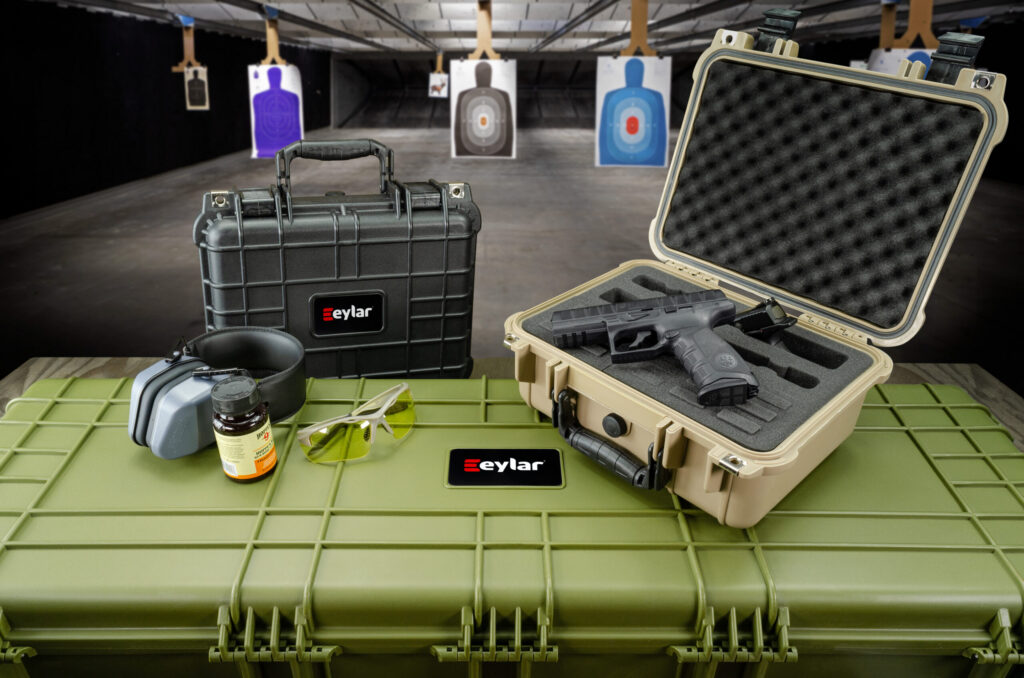
Protect the muzzle, sights, stock, and other exposed surfaces with suitable cushioning. Immobilize the firearm without placing pressure on controls or allowing metal parts to rub together. Use the case or inner packaging specified by the carrier and repair facility, inside a sturdy plain outer carton. UPS specifically requires new corrugated packaging.
Before sealing, photograph the firearm’s condition, included items, protective packing, and completed box. Keep a private record of the serial number. Place a copy of the service authorization and your contact information inside, so the repair department can identify the shipment if paperwork becomes separated.
Include only requested documents and accessories. Do not add ammunition to demonstrate a malfunction; provide the ammunition’s identifying information instead. Keep collector packaging at home unless the repair facility specifically needs it.
5. Confirm Costs, Coverage, and Package Acceptance
There is no reliable universal price for shipping a gun for repair. The complete cost depends on the authorized service, package dimensions, destination, protection purchased, and any dealer handling charge. Warranty coverage also does not automatically establish who pays every transportation expense.
Get a written total where possible. Ask whether a dealer’s quote covers packing, outbound postage, return receipt, and any pickup-related charges. A manufacturer-provided label may make the process simpler, but confirm whether its cost will appear on the repair invoice.
Ask how loss or damage claims work. Do not assume a declared value means comprehensive insurance or guarantees payment. Identify who purchased the label, who must file a claim, what documentation is required, and which exclusions apply. Retain purchase records or other support for the firearm’s value.
At handoff, accurately identify the shipment through the carrier’s required process. Plain external packaging is not permission to misrepresent the contents. Obtain an acceptance receipt and monitor tracking until delivery. If movement stops unexpectedly, contact the label issuer and carrier promptly with the tracking number and shipment details.
6. Arrange the Return Before the Gun Leaves
Federal rules recognize repair returns as distinct from ordinary retail sales. 27 CFR 478.147 provides for returning qualifying firearms received for repair or customization to the person from whom received, subject to its conditions. This supports direct return in appropriate cases.
The ATF’s gunsmith guidance says a Form 4473 and NICS check are not required when a repaired firearm is returned to the person from whom it was received. State requirements and the actual transaction still matter.
If a local dealer sends the firearm, ask whether the repair facility will return it to that dealer. Do not assume the manufacturer can substitute your home address midway through the process. Arrange availability for the applicable delivery signature and confirm the address before shipment.
If repair becomes replacement, have the facility explain the return requirements before accepting the substitution. Federal regulations contain provisions for qualifying replacement firearms, but a different serial number or configuration can raise additional state-law and processing questions. Keep the final service report with your firearm records.
7. Frequently Asked Questions About Repair Shipping
Can I ship only the slide or barrel?
Possibly, if the repair facility requests it. Confirm the component’s classification and carrier acceptance first. A regulated frame or receiver remains a firearm even when separated from other parts, and carrier restrictions may also cover unregulated firearm components.
Can I put ammunition in a separate compartment?
No. Do not include ammunition anywhere in the firearm package. UPS and FedEx prohibit shipping ammunition together with firearms. A separate compartment does not make it a separate shipment.
Should I send a suppressor with the gun?
Only after the repair facility confirms that it needs the item and establishes the applicable NFA and shipping requirements. Do not assume ordinary firearm-return instructions cover every regulated item or interstate movement.
What should I do when the repaired firearm arrives?
Check the serial number, included accessories, and service report against your records. Photograph shipping damage before discarding packaging. Read any updated instructions, and contact the repair facility if the reported work or firearm condition raises questions.
Ready to browse firearms or discuss your next purchase? Visit BT Gun Company for your firearms needs and ask about available assistance before arranging a repair shipment.

About the Author: Jeff Brown
Jeff Brown is CEO of Fuzzy Holdings LLC and owner of BT Gun Company, a Class 7 FFL dealer since 2023. An NRA-certified Range Safety Officer who has been shooting since 1983, he teaches hunter safety at his local gun club, hunts spring and fall turkey, and has a soft spot for revolvers.