
Can an FFL Refuse to Transfer a Firearm? Your Rights and Options in 2026
Estimated reading time: 8 min
Summarize with AI
Share
Quick Answer
Yes, an FFL can refuse to transfer a firearm, even if you have already paid for it or received a background-check approval. A Federal Firearms License allows a dealer to conduct regulated firearms transactions; it does not require the dealer to complete every requested transfer. Some refusals are legally required, while others reflect the dealer’s business policies or concerns about the transaction.
- A legal barrier: The dealer cannot complete a prohibited transfer, including one involving a denied background check or reasonable cause to believe the recipient is prohibited.
- An unresolved background check: A delay is different from a denial. Under applicable federal rules, a dealer may sometimes transfer after the required period expires, but is not obligated to do so.
- Identification or paperwork problems: The dealer must establish the buyer’s identity and complete the required transaction records.
- A business-policy decision: A dealer may decline incoming transfers or require an affirmative background-check approval before releasing a firearm.
The FBI expressly explains that an FFL is not required to transfer after the ordinary federal three-business-day delay period. That period is not a universal pickup deadline: state requirements and enhanced checks for buyers under 21 can change the process. See the FBI’s explanation of NICS responses.
Your first step is to identify what actually stopped the transfer. Ask whether the issue is a government denial, a pending check, missing documents, a legal restriction, or store policy. Those situations have different solutions. A background-check challenge addresses a government determination; it does not automatically resolve a dealer’s separate refusal.
If the dealer already has your firearm, request written instructions for holding it, returning it to the seller, or arranging another lawful disposition. Clarify shipping, transfer, and cancellation charges before authorizing the next step. Paying for a firearm does not eliminate transfer requirements, but a refusal also does not settle every ownership or refund question.
For Wisconsin handgun transfers, the Wisconsin DOJ instructs dealers to obtain its approval before releasing the handgun. Contact BT Gun Company before arranging an incoming transfer so the appointment, identification requirements, and fees are clear.
Why Background-Check Approval Does Not Guarantee a Transfer
A background check is one part of a firearm transfer. It does not replace the dealer’s responsibility to evaluate the transaction, verify information, and comply with other applicable requirements. A proceed response therefore does not compel a dealer to hand over the firearm.
For example, an otherwise approved transaction can still raise an actual-buyer concern. If the dealer has reasonable cause to believe the person completing the paperwork is obtaining the firearm for a prohibited person, the approval does not erase that concern. ATF’s dealer reference guide explains the prohibition on transfers to people the dealer knows or reasonably believes are prohibited and the actual-buyer requirement.
Dealer discretion is not a blanket exemption from contracts or other applicable laws. A dispute about discriminatory treatment, an agreed service, or money already paid requires a separate analysis from whether the firearm can legally be released.
Responsible gun owners should expect clear communication. Ask the dealer to distinguish a legal requirement from a business policy and identify any correctable problem. Supporting Second Amendment rights includes helping eligible buyers understand the process and challenge errors.
Common Reasons an FFL Stops a Transfer
Some problems can be corrected before an appointment; others prevent the proposed transaction entirely. Identify the specific obstacle before buying replacement documents, paying additional shipping, or contacting another dealer.
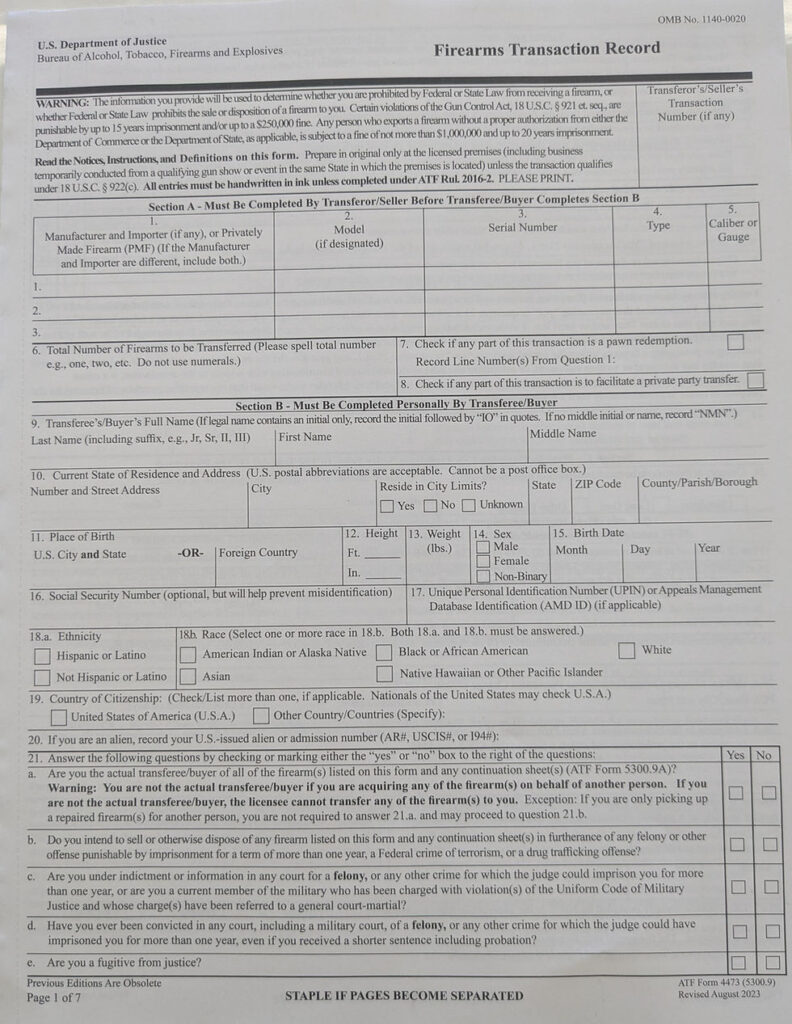
- Unverified identity or residence: An address discrepancy or insufficient documentation can prevent the dealer from completing verification. ATF describes the federal identification requirements in its firearms transfer questions and answers.
- Incomplete or inconsistent answers: Read Form 4473 carefully and answer truthfully. Ask for clarification when needed; never change an answer simply to obtain approval.
- Age or firearm classification: ATF’s published guidance generally sets the dealer-transfer minimum at 18 for rifles and shotguns and 21 for other firearms. A bare receiver is not treated as a completed rifle merely because the buyer plans to build one. See ATF’s Form 4473 guidance.
- Residency restrictions: Ordinary interstate handgun purchases generally require delivery through an FFL in the buyer’s state of residence. ATF explains that process in its interstate purchase guidance.
Give the receiving dealer the exact firearm description before shipment. Model, configuration, and recipient information are more useful than a general statement that you ordered a gun online.
Delayed Versus Denied: What the Waiting Period Means
A delayed response means additional review is needed; a denied response means the transaction cannot proceed on that response. Neither should be confused with a dealer declining to provide transfer services before a check is submitted.
Under the ordinary federal delay framework, a dealer may become eligible to transfer after three business days without a prohibiting response, subject to applicable law. That is permission, not a mandatory release date. Do not interpret it as 72 elapsed hours or assume your order date starts the clock. Ask the dealer for the applicable transfer date associated with the check. The FBI’s NICS overview explains the dealer’s discretion.
Buyers under 21 face an enhanced review process. Where the required cause is established, the investigation period can extend from three to ten business days. The FBI describes that distinction in its under-21 background-check explanation.
Before ordering, ask whether the receiving dealer releases eligible delayed transactions or waits for an affirmative approval. Learning that policy afterward can turn an expected pickup into an avoidable dispute.
What Wisconsin Buyers Should Know
Wisconsin uses different background-check channels for dealer handgun and long-gun transactions. The Wisconsin DOJ Firearms Section handles handgun checks, while the FBI’s NICS handles long-gun checks. The Wisconsin DOJ background-check page instructs handgun dealers not to transfer until DOJ approval is received.
That distinction matters when someone quotes the federal three-business-day rule as though it guarantees a Wisconsin handgun pickup. Use the applicable Wisconsin process and the actual transaction status when planning your visit.
BT Gun Company is a licensed FFL dealer in Rubicon, Wisconsin, serving shooters across Dodge, Washington, Waukesha, and nearby counties. Transfers are by appointment. The shop requires a valid Wisconsin ID with your current address, and handgun transfers require a Wisconsin DOJ background check.
Its transfer fees are $25 for a long gun or lower receiver and $35 for a handgun, including the Wisconsin state fee. A handgun-plus-long-gun combination is $35; each additional firearm on the same background check adds $5. Transfer fees are waived when you purchase and pick up a new firearm directly from the shop.
Before you shop firearms, account for the receiving dealer’s requirements and total transfer costs alongside the purchase price.
What to Do When the Dealer Already Has Your Firearm
Start with a practical question: what lawful next step will resolve the transaction? Keep your order confirmation, payment receipt, shipment tracking, and dealer correspondence together.
- Confirm the status: Determine whether the dealer is waiting, requesting documents, or definitively refusing service.
- Request the applicable terms: Ask which transfer, storage, return-shipping, or cancellation charges apply to your situation.
- Contact the seller: If a return is necessary, obtain instructions before anyone ships the firearm back.
- Coordinate another dealer if appropriate: Obtain that dealer’s agreement first and have the businesses arrange a lawful shipment.
Changing dealers does not erase a prohibition or fix an incorrect government record. Do not have a friend or relative complete paperwork as a substitute buyer to get around a blocked transfer.
For orders from BT Gun Company, contact your chosen receiving FFL first and have that dealer email its license to the shop. The receiving dealer conducts the background check and typically charges a transfer fee.
If the dispute concerns ownership, withheld funds, or an allegedly unlawful refusal, preserve the written record and seek advice specific to your state and agreement. Do not assume either an automatic refund or permanent forfeiture.
How to Challenge an Incorrect Background-Check Denial
An erroneous denial deserves correction. Ask for the transaction identifier and confirm which agency issued the decision. A store-policy refusal and a government denial are different problems, and the paperwork should reflect that distinction.
For an FBI NICS denial, you can request the reason and submit a challenge. The FBI provides instructions through its official NICS challenge process. Follow the instructions for your case and provide the requested identifying information or supporting records.
The FBI also describes its Voluntary Appeal File, which can help address recurring identification or record problems. It is not an exemption from background checks and does not guarantee a transfer. The FBI does not process a delayed transaction as a request for the reason for a denial.
For a state-issued decision, obtain the appropriate state review instructions. Keep copies of submissions and responses, and tell the dealer if a denial is overturned so it can determine the remaining requirements.
For continuing coverage of firearms policy and gun-owner issues, follow our 2nd Amendment news.
Frequently Asked Questions About FFL Refusals
Can an FFL refuse an online purchase?
Yes. Paying an online seller does not obligate an unrelated receiving dealer to accept the shipment or complete the transfer. Get the receiving dealer’s agreement before selecting it at checkout.
Does a refusal mean I am prohibited from owning firearms?
No. A refusal may involve store policy, missing documents, or an unresolved check. Ask for the specific reason before drawing conclusions about your eligibility.
Can I get my transfer fee back?
That depends on the applicable agreement, work performed, and law. Ask whether the fee covers processing or a successfully completed transfer before the dealer starts.
How can I reduce the chance of a problem?
Confirm the firearm is acceptable, verify your documents, understand the dealer’s delay policy, and schedule pickup only after the dealer confirms readiness.
Planning a transfer in the Rubicon area? Contact BT Gun Company at (262) 457-9048 to arrange an appointment and confirm the requirements before your firearm ships.

About the Author: Jeff Brown
Jeff Brown is CEO of Fuzzy Holdings LLC and owner of BT Gun Company, a Class 7 FFL dealer since 2023. An NRA-certified Range Safety Officer who has been shooting since 1983, he teaches hunter safety at his local gun club, hunts spring and fall turkey, and has a soft spot for revolvers.