
Lumens vs Candela: What Matters in a Firearm Light?
Quick Answer
Lumens measure total light output, while candela measures peak beam intensity in a specific direction. Lumens help indicate how much overall illumination a firearm light can produce. Candela gives you a better idea of how concentrated the beam is and how effectively it can illuminate objects at greater distances or through competing ambient light.
- Prioritize lumens when you want broad spill for viewing a room, nearby surroundings or a wider area.
- Prioritize candela when you need a defined hotspot, greater useful reach or stronger performance around other light sources.
- Consider both because two lights with similar lumen ratings can produce noticeably different beams.
- Check the complete design, including beam pattern, runtime, output regulation, switch placement, mounting compatibility, battery type, size and weight.
There is no single output specification that suits every firearm or setting. A compact light for a handgun may emphasize different qualities than a larger unit intended for a long gun. Choose a balanced beam that fits your expected distances, mounting space and preference for hotspot versus spill.
What Lumens and Candela Actually Tell You
A lumen rating describes the total quantity of visible light leaving the light. A higher lumen figure generally means more light is available, but it does not explain where that light goes. The reflector, lens and emitter determine whether the output becomes a broad flood, a concentrated hotspot or a blend of both.
Candela measures luminous intensity in a particular direction. In practical terms, a higher candela rating usually indicates a more concentrated beam with greater reach. That can make distant objects appear more clearly illuminated, even when two lights have comparable lumen ratings.
Think of lumens as the total amount of water coming from a hose and candela as how tightly the nozzle concentrates it. A broad spray covers more area nearby, while a narrow stream carries farther. Neither characteristic is automatically preferable. The useful choice depends on the distances and surrounding light you expect.
Published specifications are valuable for narrowing your options, but they cannot fully describe beam quality. Product images, manufacturer beam descriptions and comparisons from the same testing method can help clarify how the hotspot transitions into spill.
Matching Beam Characteristics to the Firearm
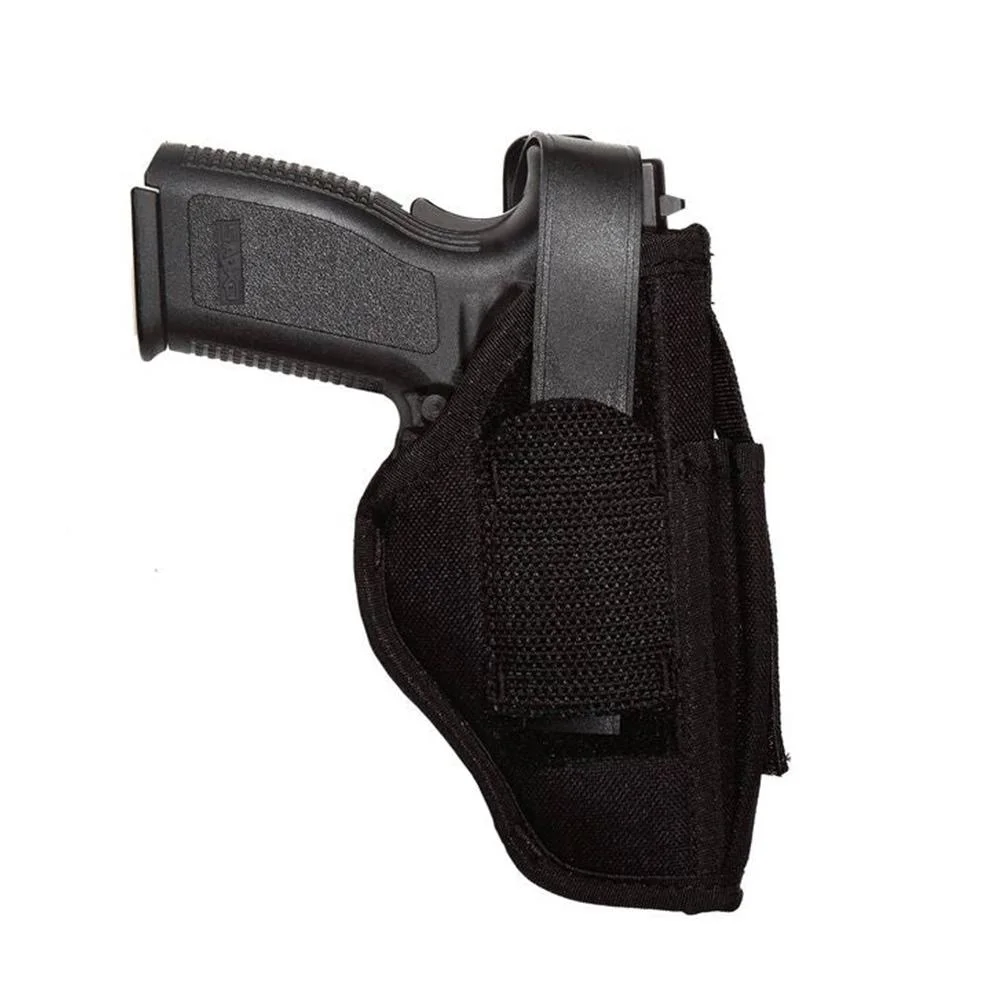
Compact lights designed around handguns often balance output with limited rail space, reduced bulk and holster compatibility. Before selecting one, confirm that the mounting system fits the firearm’s rail profile and that the resulting combination works with an appropriately designed holster. Shoppers comparing related equipment can browse holsters, but should verify the exact firearm, light and accessory configuration identified by the holster manufacturer.
Lights for rifles may offer larger reflectors, more focused beams and additional mounting or remote-switch options. A higher-candela design can be useful when the anticipated viewing distance is longer. Rail position, nearby optics and sights, switch compatibility and available mounting space all affect the final setup.
For shotguns, consider the mounting interface, overall clearance and whether the light is specifically designed to tolerate firearm use. General-purpose flashlights may not provide the mounting security, controls or construction expected from a dedicated weapon light.
Beam balance remains important on every platform. A very concentrated hotspot may provide strong reach but less surrounding illumination. A wide flood beam can reveal more of the nearby area but may appear less effective at distance. Many shoppers benefit from a defined center hotspot surrounded by usable spill.
Specifications Beyond Peak Output
Output ratings are only the beginning. Review how long the light maintains useful output rather than focusing exclusively on its brightest advertised mode. Some lights reduce output as heat builds or battery voltage falls. Manufacturer runtime graphs, when available, can provide more context than a single peak-output figure.
- Beam pattern: Look for a useful transition between hotspot and spill, without distracting artifacts.
- Battery system: Consider battery availability, storage needs, rechargeability and the manufacturer’s approved battery types.
- Controls: Compare switch style, placement and available operating modes without assuming that more modes are always more useful.
- Mounting system: Confirm rail compatibility, included keys or adapters and any required mounting hardware.
- Construction: Review the manufacturer’s stated resistance to impact, water and environmental exposure.
- Size and weight: Account for how the light changes the firearm’s dimensions, balance, storage case and accessory compatibility.
Before cleaning or inspecting a firearm, unload it, remove the magazine, lock the action open, and visually and physically check that the chamber is empty. Follow the firearm and light manufacturers’ instructions when installing, inspecting or maintaining the setup. Replacement batteries, mounts and related items may also be found under accessories.
A Practical Firearm-Light Buying Checklist
Start with the environment rather than the largest specification. Estimate whether the light will mainly serve across short indoor distances, larger buildings, outdoor property or a combination. Then decide whether broad spill, concentrated reach or a balanced beam is the priority.
- Identify the firearm’s mounting interface and available space.
- Choose a beam pattern appropriate for the expected distances.
- Compare both lumens and candela, not either figure alone.
- Review runtime behavior, battery requirements and control layout.
- Confirm compatibility with holsters, cases, sights and other mounted equipment.
- Read and retain the manufacturer’s installation and maintenance instructions.
Avoid choosing solely from the lumen rating. Also avoid treating candela as a complete measure of quality: an intensely focused beam may not provide the surrounding illumination you prefer. Beam shape, reliability, fit and controls matter just as much as the headline figures.
Treat every firearm as if it is loaded. Keep the muzzle pointed in a safe direction. Keep your finger off the trigger and outside the trigger guard until your sights are on the target and you have decided to shoot. Be sure of your target and what is beyond it.
To compare weapon-mounted illumination options with different output levels, beam patterns and mounting systems, browse the BT Gun Company Lights & Lasers category.