
Florida Bus Stop Self-Defense Case: What Gun Owners Should Know
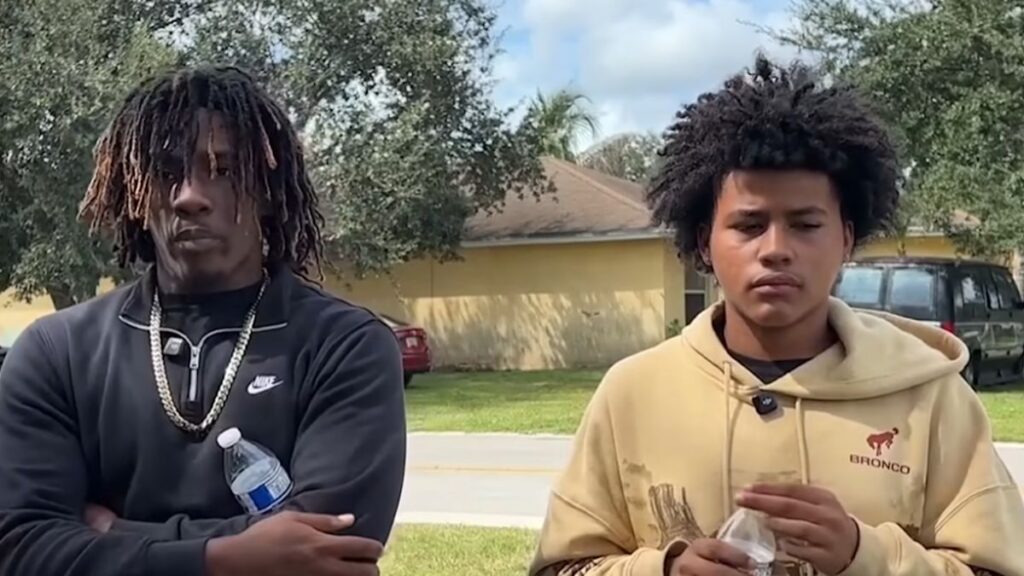
A confrontation at a school bus stop in Indiantown, Florida, ended without a shot fired or an arrest after a father displayed a concealed handgun as two teenagers approached him. Martin County Sheriff John Budensiek said investigators determined that the father acted lawfully and described him as the victim. The Florida bus stop self-defense case illustrates both the protective value of lawful firearm ownership and the serious legal scrutiny that follows any defensive display—especially near children or school transportation.
How the Bus Stop Confrontation Developed
According to the sheriff’s account summarized in the original report on the Florida bus stop confrontation, the dispute began Sept. 17 aboard a Martin County school bus. A 16-year-old student had pizza, and a 14-year-old repeatedly requested some. Sheriff Budensiek said the younger student threatened the 16-year-old after being refused and eventually struck him in the head.
The 16-year-old reported the incident to his father. The father spoke with the bus driver later that day, and she reportedly said she would try to address it. On the morning of Sept. 18, the father drove his son to the stop and again spoke with the driver. The 14-year-old, who was already on the bus, got off and confronted him.
Another 16-year-old—who had been suspended and was not riding the bus that morning—arrived after receiving a call. Budensiek said both teenagers approached the father while yelling. The father reportedly raised his hand and repeatedly directed them to stay back, but they continued closing the distance.
Only after they reached him did the father draw his concealed handgun and order them back, according to the sheriff. The teenagers retreated with their hands raised, and no shots were fired. The father then holstered or otherwise put away the firearm, drove around the corner, flagged down a deputy, and immediately reported what had happened.
Witness Accounts and the Sheriff’s Finding
Detectives interviewed students, witnesses, and the teenagers involved. Budensiek said investigators received consistent accounts about the critical sequence leading to the defensive display. He concluded that the father had committed no crime and said deputies would have sought warrants for the two teenagers if the father had wanted charges pursued. The father declined.
The teenagers later disputed portions of the sheriff’s characterization. The 14-year-old denied that the pizza dispute amounted to bullying but acknowledged that he should have stopped asking after the first refusal. He also said that he and the father’s son exited the bus and dropped their backpacks because they were preparing to fight.
The older teenager said he came after receiving a call from his younger brother and told the father to allow the students to fight. He claimed the father drew after placing his son behind him. Both teenagers said the handgun frightened them, and video showed them backing away once it appeared.
Those disagreements matter, but they do not change the official outcome of the Florida bus stop self-defense case: after conducting interviews, the sheriff’s office found the display justified and filed no charges. Budensiek cautioned that a short video circulated online did not show the events preceding the moment the firearm was drawn.
Florida Law Creates an Important Bus Stop Distinction
Florida’s location-specific firearm law makes this incident more complicated than an ordinary concealed-carry encounter. Florida Statute 790.115 expressly covers school buses and school bus stops. It makes exhibiting a firearm there in a threatening manner a felony when the act is not undertaken in lawful self-defense.
The same statute separately restricts firearm possession at a school bus stop. As described in the source report, a violation by someone otherwise authorized to carry concealed may be punishable as a misdemeanor under the statute. That creates a legal distinction between whether displaying the handgun was justified and whether possessing it at that specific location raised a separate issue.
Florida’s broader self-defense framework also matters. Under Florida Statute 776.012, a person may threaten deadly force when that person reasonably believes it is necessary to prevent imminent death, great bodily harm, or a forcible felony. The law provides no duty to retreat when its statutory conditions are satisfied, including that the person is not engaged in criminal activity and is in a place where he or she has a right to be.
No court ruled on those provisions in the Florida bus stop self-defense case. The sheriff’s office made an investigative decision not to file charges, and the father’s refusal to pursue charges against the teenagers means the reported dispute did not proceed toward a judicial resolution. Gun owners should therefore avoid treating the outcome as a binding court precedent or a blanket rule for every bus stop encounter.
Practical Lessons for Responsible Gun Owners
The father reportedly worked as a security guard, wore a badge, and kept the handgun concealed before the confrontation. He also gave repeated verbal warnings, displayed the firearm only after the teenagers continued approaching, stopped displaying it when they retreated, and promptly contacted law enforcement. Those details appear central to the sheriff’s assessment.
For armed citizens, the Florida bus stop self-defense case reinforces several practical principles:
- Avoid escalation whenever safely possible. A carry license or other authority to possess a firearm does not turn arguments into gun problems.
- Use clear verbal boundaries. Commands such as “stay back” may help establish that an armed citizen attempted to stop an advance before displaying force.
- Stop when the threat stops. In this incident, the handgun was put away after the teenagers backed off.
- Report defensive displays promptly. The father flagged down a deputy and gave his account rather than leaving officers to hear only another version.
- Know location-specific restrictions. Schools, buses, bus stops, government buildings, and private properties may carry rules beyond ordinary concealed-carry law.
- Preserve evidence and request counsel. Video, witnesses, and precise statements can become critical when investigators evaluate reasonableness.
Responsible firearm ownership is inseparable from judgment, restraint, secure carry, and knowledge of the law. The Second Amendment protects an individual right, but every defensive incident will be measured against the specific facts and applicable statutes. Readers should consult a qualified Florida attorney for advice about their own circumstances rather than relying on a news report.
Stay Informed and Equipped Responsibly
This incident ended with no injuries because the confrontation stopped when the firearm appeared. It also demonstrates why short online clips should not replace full investigations. Follow latest firearms news for coverage of cases affecting gun owners, and work with a reputable firearms dealer that emphasizes lawful, responsible ownership.
Whether you are researching defensive options, seeking an experienced FFL dealer, or ready to browse firearms, BT Gun Company is here to help. Visit our trusted gun store and firearms resource to buy guns online through the required legal transfer process and choose equipment suited to your needs.

About the Author: Jeff Brown
Jeff Brown is CEO of Fuzzy Holdings LLC and owner of BT Gun Company, a Class 7 FFL dealer since 2023. An NRA-certified Range Safety Officer who has been shooting since 1983, he teaches hunter safety at his local gun club, hunts spring and fall turkey, and has a soft spot for revolvers.