
Orland Park Concealed Carry Shooting Highlights Armed Self-Defense
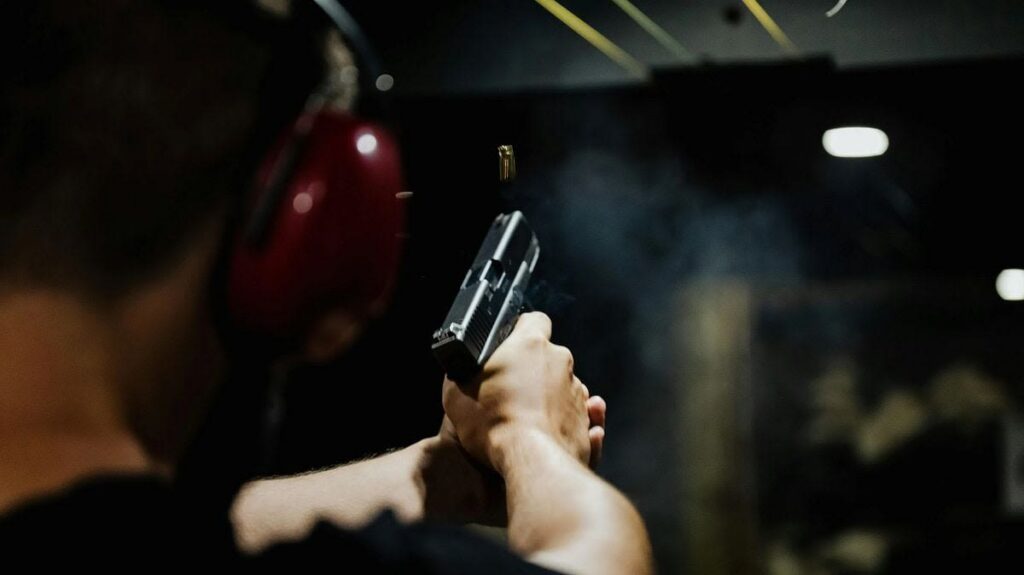
The Orland Park concealed carry shooting is drawing renewed attention to the role lawfully armed citizens can play when a violent crime unfolds without warning. According to police, an Illinois concealed-carry license holder was pumping gas when an individual allegedly attempted an armed robbery. The citizen fired a handgun, struck the suspect, escaped injury and cooperated with investigators. While the investigation remains open, the encounter offers an important reminder for Second Amendment supporters: responsible carry can give an intended victim a meaningful defensive option, but every use of force is judged under demanding legal standards.
What Police Reported About the Orland Park Incident
Orland Park police said the encounter occurred at approximately 9 a.m. on a Tuesday at a Shell station in the 15100 block of Harlem Avenue. A citizen was pumping gas when another individual allegedly attempted an armed robbery. The citizen, who held an Illinois concealed-carry license, fired a handgun and struck the alleged robber.
The armed citizen was not injured and remained at the scene to cooperate with investigators. The wounded suspect was transported to a hospital. The source report did not provide the handgun model, caliber, number of shots fired, identities of the people involved or the suspect’s medical condition. Those details should not be assumed or invented while police continue examining the circumstances.
John Boch of Guns Save Life told The Center Square that surveillance footage made the defensive nature of the encounter appear especially clear to him. He said the license holder avoided becoming a defenseless victim and appeared to be watching his surroundings before the confrontation escalated. Readers can review The Center Square report on the Orland Park gas-station shooting for the original account and Boch’s complete remarks.
What the Orland Park Concealed Carry Shooting Does—and Does Not—Establish
The Orland Park concealed carry shooting illustrates the practical value of having a lawful defensive tool immediately available. Violent encounters can develop in ordinary public places, including gas stations during daylight hours. Police cannot be physically present beside every citizen, and a firearm can help a responsible adult respond to an imminent deadly threat during the critical moments before officers arrive.
At the same time, possession of a concealed-carry license does not automatically make every defensive shooting lawful. A license authorizes qualifying individuals to carry under state law; it is not blanket permission to fire a weapon. Investigators and prosecutors still consider the actions of everyone involved, the immediacy and severity of the threat, available video, witness accounts and physical evidence.
The report describes the other individual as an alleged armed robber because the investigation is ongoing and criminal allegations are not convictions. It likewise would be premature to announce a final legal conclusion about the citizen’s use of force before authorities complete their review. That distinction supports responsible gun ownership rather than weakening it. Second Amendment advocacy is strongest when it combines the right of self-defense with accuracy, restraint and respect for due process.
Illinois Deadly-Force Law and Concealed-Carry Training
Illinois law permits a person to use force in defense of himself or another when he reasonably believes it is necessary to protect against another person’s imminent unlawful force. Deadly force is subject to a higher threshold: the person must reasonably believe it is necessary to prevent imminent death or great bodily harm to himself or another, or to prevent the commission of a forcible felony. The controlling language appears in the state’s official Illinois self-defense statute, 720 ILCS 5/7-1.
Those requirements explain why the precise facts of the Orland Park concealed carry shooting matter. The legal analysis focuses on what the armed citizen reasonably perceived at the moment force was used, not simply on the fact that he possessed a valid license. Self-defense cases are inherently fact-specific, and gun owners should avoid treating a news report as a substitute for advice from a qualified Illinois attorney.
Illinois’ Firearm Concealed Carry Act establishes the state’s licensing and training framework. The statutory program includes a 16-hour training curriculum and live-fire qualification, along with instruction addressing firearm safety, marksmanship, applicable gun laws and lawful interaction with law enforcement. Boch noted that the framework covers use of force, although the quality and practical value of instruction can vary by instructor.
A careful permit holder should go beyond doing the minimum required to obtain a license. Periodic legal updates, safe gun-handling practice, marksmanship training and realistic decision-making exercises can help preserve sound judgment under stress. A reputable instructor should emphasize avoiding danger when possible, recognizing an imminent threat, knowing what lies beyond the target and communicating safely with responding officers.
Practical Lessons for Responsible Armed Citizens
The most important lesson is situational awareness. Boch said the surveillance video appeared to show the citizen paying attention before the confrontation escalated. Awareness does not mean living in fear or treating every stranger as a threat. It means noticing unusual behavior, avoiding unnecessary distractions and recognizing potential escape routes while conducting everyday tasks.
- Carry lawfully and consistently: A defensive firearm stored elsewhere cannot help during a sudden attack. License holders must still respect Illinois carry restrictions and prohibited locations.
- Use secure equipment: A suitable holster should protect the trigger, retain the handgun and support safe access without unnecessary handling.
- Avoid preventable confrontations: A firearm is an emergency defensive instrument, not leverage in an argument. De-escalation and disengagement remain preferable whenever they can be accomplished safely.
- Expect a complete investigation: Even an apparently justified shooting can involve detention, interviews, evidence collection and legal review. Cooperating safely with officers and obtaining competent legal counsel are prudent steps.
- Maintain skills and legal knowledge: Laws, personal abilities and equipment can change. Continuing education is part of responsible armed citizenship.
Prospective buyers should also select firearms they can operate safely and reliably rather than choosing solely by popularity. A knowledgeable firearms dealer can explain general features and fit, while qualified instructors provide hands-on training. When consumers buy guns online, federal and state transfer requirements still apply, and the firearm generally must be transferred through an appropriately licensed FFL dealer. A trustworthy gun store will prioritize legal compliance instead of treating it as an afterthought.
A Reminder About the Right to Defend Innocent Life
The Orland Park concealed carry shooting does not establish a final legal judgment, but the facts reported by police show why lawful concealed carry remains important. An alleged armed robbery developed at an ordinary gas pump, the intended victim had a defensive firearm, the citizen survived without injury, and investigators received his cooperation. The episode reinforces the Second Amendment’s real-world relevance while underscoring the responsibilities attached to carrying a handgun.
Stay informed through our latest firearms news, and consult official sources or qualified counsel for legal guidance. For responsible ownership resources and the opportunity to browse firearms through a licensed dealer, visit BT Gun Company.
Prepared to exercise your rights responsibly? Explore dependable firearms and knowledgeable service from BT Gun Company, your trusted destination for lawful purchases, informed ownership and Second Amendment support.

About the Author: Jeff Brown
Jeff Brown is CEO of Fuzzy Holdings LLC and owner of BT Gun Company, a Class 7 FFL dealer since 2023. An NRA-certified Range Safety Officer who has been shooting since 1983, he teaches hunter safety at his local gun club, hunts spring and fall turkey, and has a soft spot for revolvers.