
Florida Governor Gun Laws: Donalds and Jolly Split on Parkland Act
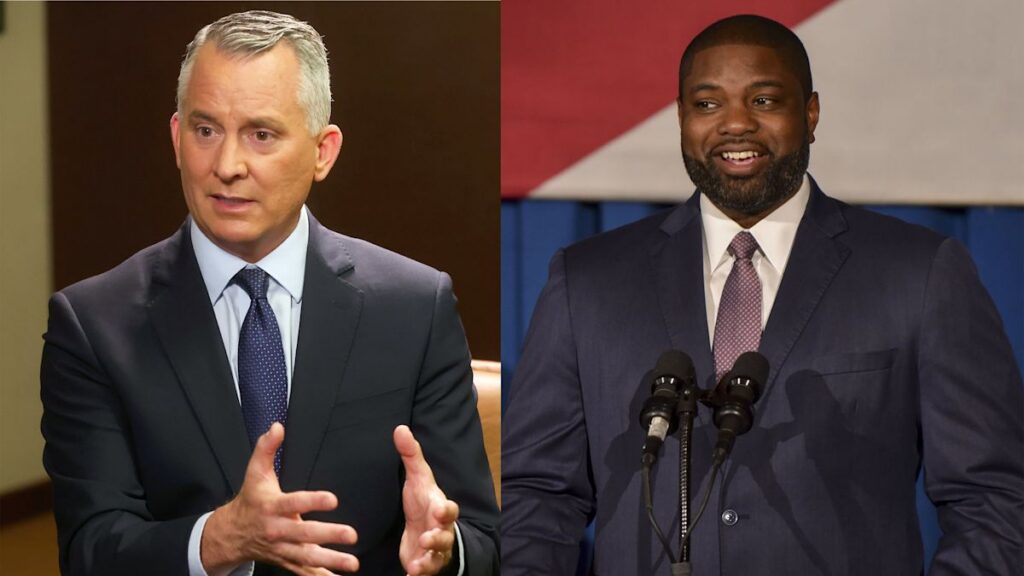
Florida voters face a sharp choice on firearms policy as Republican gubernatorial nominee U.S. Rep. Byron Donalds and Democratic nominee David Jolly take opposing positions on the state’s post-Parkland laws. Donalds has called for repealing Florida’s risk protection order law and restoring firearm purchases for adults ages 18 to 20. Jolly wants to preserve the Parkland package, expand the red flag law, require universal background checks and prohibit sales of new firearms he defines as assault weapons. The debate over Florida governor gun laws could determine whether the state strengthens or rolls back restrictions adopted after the February 14, 2018, shooting at Marjory Stoneman Douglas High School, where 17 people were killed.
Why the 2018 Parkland Act Remains Central
The Florida Legislature responded to the Parkland murders by passing the Marjory Stoneman Douglas High School Public Safety Act. The package addressed school security while imposing several firearm restrictions, including a minimum purchase age of 21, risk protection orders and a state bump-stock ban. Readers can review the measure through the Florida Senate’s official CS/SB 7026 legislative page.
Donalds, then a freshman member of the Florida House, voted against the legislation. Jolly has said he does not want to “dilute” the package. According to the report on Donalds’ and Jolly’s firearm-policy positions, Florida’s next governor could have the final say if lawmakers send legislation repealing or revising these provisions to the governor’s desk.
The campaigns have framed the disagreement in stark terms. Donalds’ campaign highlighted a television clip in which Jolly said it was necessary to “crush the culture of guns in the United States.” Jolly responded by accusing Donalds of selling out Florida children to the gun lobby. Beyond campaign rhetoric, however, their stated policies reveal consequential differences for lawful gun owners and the Second Amendment.
Red Flag Orders and Due-Process Concerns
Florida’s 2018 risk protection order law permits a court to temporarily require a person to surrender firearms and ammunition when the court finds that the person poses a significant danger to himself, herself or others. Only a law-enforcement officer or agency may file the petition. The procedure, evidentiary standards and available hearings appear in Florida Statutes Section 790.401.
Donalds has said he wants the red flag law repealed, arguing that it violates the Fifth Amendment right to due process. Florida does not guarantee appointed counsel to respondents in these civil proceedings, although a respondent may retain an attorney. That distinction matters because an order can remove constitutionally protected arms before a respondent has been convicted of a crime.
Jolly’s campaign takes the opposite approach. He proposes preserving and expanding the law, saying it should not be rolled back to satisfy special interests. His campaign declined to specify to the source what an expansion would include. Florida sheriffs and other law-enforcement officials have supported the existing process as a violence-prevention tool, while gun-rights advocates continue to raise concerns about notice, representation, evidentiary standards and meaningful opportunities to contest an order.
Lawmakers have not repealed the provision despite pressure from Gov. Ron DeSantis. For gun owners evaluating Florida governor gun laws, the dispute is therefore not theoretical: Donalds favors repeal, while Jolly favors retention and an unspecified expansion.
Minimum Purchase Age and Background Checks
The Parkland act generally raised Florida’s minimum age to purchase any firearm to 21. Adults younger than 21 may still lawfully possess a rifle or other firearm acquired through a permissible method, such as a lawful gift, provided they are not otherwise prohibited. The law also contains purchase exceptions for qualifying law-enforcement officers, correctional officers and service members.
The Florida House has repeatedly passed proposals to restore the purchase age to 18, but those efforts have not gained sufficient traction in the Senate. The source also reports that the U.S. Department of Justice issued a September opinion concluding that a similar federal restriction is unconstitutional. An executive-branch legal opinion does not by itself repeal Florida’s statute, so buyers and every firearms dealer must continue following applicable state and federal requirements unless the law changes or a controlling court rules otherwise.
Donalds argues that Florida’s age restriction creates two classes of legal adults. In a radio interview, he said repealing the purchase-age limit and red flag law would “probably be job one.” Jolly has said he would protect the post-Parkland package. He also supports universal background checks for all firearm sales, while Donalds has voted against such a requirement.
Federal law already requires a licensed FFL dealer to conduct the applicable background-check process before transferring a firearm to a nonlicensee, subject to governing law and limited exceptions. Jolly’s proposal would extend checks to sales beyond the transactions already covered. Anyone planning to buy guns online should remember that an online order generally must be transferred through an appropriate licensee rather than shipped directly to an ordinary consumer.
Campus Carry, Bump Stocks and Semiautomatic Rifles
Florida generally prohibits carrying firearms on college and university campuses. After the 2025 shooting at Florida State University, lawmakers expanded the school guardian program—originally created for K-12 schools after Parkland—to colleges and universities. An institution that opts in may authorize selected trained staff or hire an employee for armed security. The change does not broadly allow students to carry firearms in class or keep them in dormitories.
Neither Donalds nor Jolly clarified a personal campus-carry position when contacted for the source report. Bryan Avila, Donalds’ lieutenant-governor running mate, said he supports campus carry and would encourage schools to use the guardian program. Avila’s statement provides insight into the ticket’s direction, but it should not be treated as a detailed policy commitment from Donalds himself.
The candidates also divide over firearm types and accessories. Florida’s Parkland package prohibited bump stocks, with unlawful possession punishable by up to five years in prison. Donalds opposes that ban, according to Gun Owners of America, which endorsed him. He also opposes bans targeting AR-15s and other commonly owned semiautomatic rifles.
Jolly proposes prohibiting sales of new firearms categorized by his campaign as assault weapons while grandfathering firearms already owned. He also cites firearm-death and suicide data in support of his platform. Because labels such as “assault weapon” are political and statutory classifications rather than descriptions of automatic operation, the eventual bill language would determine which semiautomatic rifles, features or configurations would be affected.
What Florida Gun Owners Should Watch
The major Florida governor gun laws questions are now clearly defined: whether to repeal or expand risk protection orders, whether adults ages 18 to 20 should regain the right to purchase firearms, whether private sales should face additional background-check mandates, and whether the state should restrict commonly owned semiautomatic rifles. Campus carry and the guardian program remain important areas where the candidates have provided less detail.
Gun owners should follow actual bill text, committee action and official court decisions instead of relying solely on campaign summaries. A governor cannot unilaterally rewrite Florida statutes, but can sign or veto legislation, influence legislative priorities and shape appointments and agency policy. Follow latest firearms news for updates as these proposals develop.
As the election approaches, Florida governor gun laws will remain a defining issue for voters who value public safety, individual responsibility and constitutional rights. Visit BT Gun Company, your trusted online gun store, to shop firearms, learn about lawful purchasing and stay informed about policies affecting America’s gun owners.

About the Author: Jeff Brown
Jeff Brown is CEO of Fuzzy Holdings LLC and owner of BT Gun Company, a Class 7 FFL dealer since 2023. An NRA-certified Range Safety Officer who has been shooting since 1983, he teaches hunter safety at his local gun club, hunts spring and fall turkey, and has a soft spot for revolvers.