
Jacksonville Gun Rights Lawsuit Challenges Venue Firearm Policies in 2026
A newly filed Jacksonville gun rights lawsuit alleges that people lawfully carrying firearms were ordered to disarm, denied admission, or threatened with trespass at several city-owned venues. Florida Carry Inc., Gun Owners of America, and individual plaintiffs brought the action against the City of Jacksonville, Mayor Donna Deegan, and Sheriff T.K. Waters. The dispute could clarify how Florida’s firearm-preemption law applies to venue policies while distinguishing general city restrictions from state prohibitions that apply at professional sporting events.
What the Jacksonville Gun Rights Lawsuit Alleges
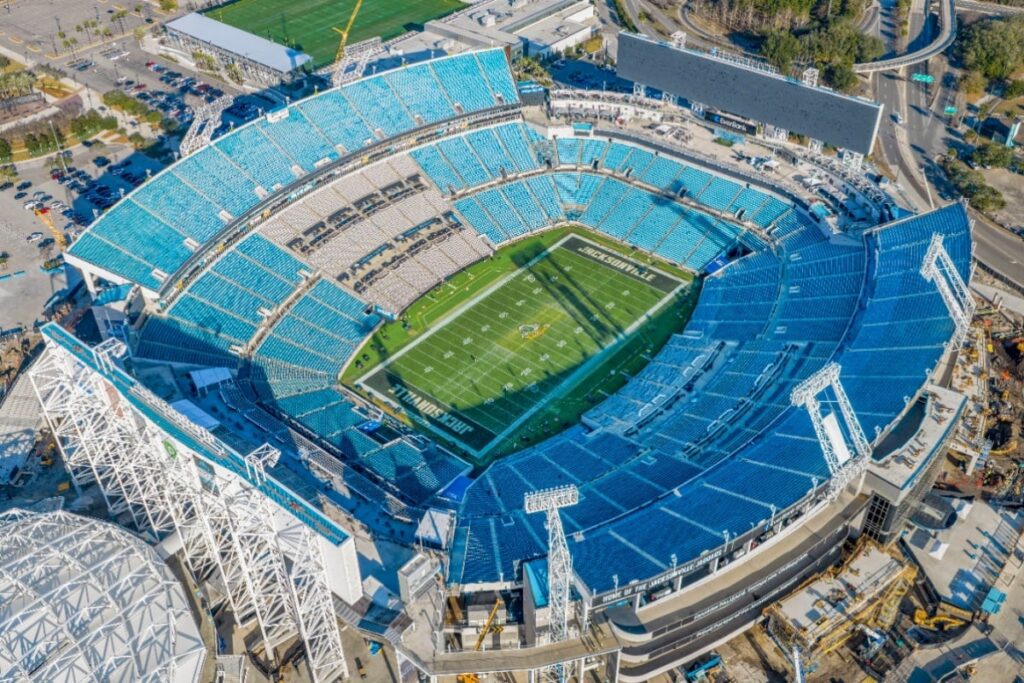
According to the report on the Jacksonville firearm-policy lawsuit, the complaint concerns EverBank Stadium, the Florida Theatre building, and the Jacksonville Center for the Performing Arts. The plaintiffs describe multiple incidents involving written or unwritten admission rules, directives, or recurring enforcement practices.
The complaint reportedly alleges that uniformed law-enforcement personnel participated in some encounters. Individuals who said they were carrying legally were allegedly instructed to remove their firearms, refused entry, or warned that they could be treated as trespassers. These remain allegations; the available reporting does not include a judicial ruling on whether any challenged policy violated Florida law.
The plaintiffs are seeking declaratory relief invalidating the disputed policies and an injunction preventing future enforcement. Mayor Deegan and Sheriff Waters are named directly. A city spokesperson confirmed that the city and sheriff’s office had been served, while the Jacksonville Sheriff’s Office referred litigation questions to the city’s Office of General Counsel.
That distinction matters for gun owners following the Jacksonville gun rights lawsuit. The case is not reported as an isolated disagreement between one visitor and one security employee. It alleges a broader pattern across multiple properties associated with the city.
Florida Firearm Preemption Is Central to the Case
Florida reserves most regulation of firearms and ammunition to the state. Under Florida Statutes Section 790.33, local governments generally may not create their own firearm regulations in areas preempted to the Legislature. The statute reaches beyond ordinances enacted by a city council. Its language also addresses rules, regulations, policies, and directives, including unwritten measures.
That breadth is important because a government entity cannot necessarily avoid preemption merely by enforcing a restriction through an admission practice instead of a formal ordinance. The plaintiffs contend that Jacksonville’s alleged venue practices amounted to local firearm regulation prohibited by state law.
Section 790.33 provides mechanisms for affected people and organizations to seek declaratory and injunctive relief. As summarized in the reporting, prevailing plaintiffs may recover attorney fees and actual damages capped at $100,000. The statute separately permits a civil fine of up to $5,000 against an official when a violation is determined to have been knowing and willful.
Those remedies do not establish that Jacksonville or any named official violated the statute. The court would still need to examine the actual policies, who authorized them, how they were enforced, and whether an exception or another state law permitted a restriction. At the center of the Jacksonville gun rights lawsuit is whether the alleged conduct constituted prohibited local regulation rather than lawful enforcement of statewide rules.
Why EverBank Stadium Presents a Narrower Question
EverBank Stadium requires separate analysis because Florida law restricts firearm possession at certain locations and events. Florida Statutes Section 790.06 states that concealed-carry authorization does not permit carrying a weapon or firearm into a professional athletic event unrelated to firearms. Stadium rules also identify guns as prohibited items while recognizing exceptions required by applicable law.
Consequently, the existence of statewide preemption does not mean a person may carry a firearm into every city-owned building or every event held on city property. State restrictions remain enforceable, and the type of event can be decisive. A Jacksonville Jaguars game, for example, implicates the professional-athletic-event provision. A different gathering at the same property could require a separate legal assessment based on its nature, location, and applicable statutes.
The lawsuit therefore appears to present more specific questions than whether a city can post a general “no guns” sign. A court may need to determine which incidents occurred during restricted events, what authority supported each denial, and whether venue personnel applied broader rules than Florida law allows. Responsible gun owners should not treat the filing itself as permission to disregard screening rules or enter a prohibited place.
Related City Hall Dispute and Practical Takeaways
The new case follows an earlier conflict over firearm logbooks at Jacksonville City Hall and the Yates Building. In May 2026, Florida Attorney General James Uthmeier sued the city and sought a $5 million judgment and other relief. Those logbooks reportedly collected personal information and firearm details from people entering while legally armed.
A State Attorney’s Office investigation memo referenced in the reporting found no criminal intent behind the logbooks. It concluded that the instruction originated with a public works manager and had not been reviewed or approved by senior city officials. That finding concerning criminal intent did not resolve every potential civil or preemption issue. Uthmeier characterized the broader controversy by arguing that the Second Amendment cannot be treated as a second-class right.
Until the Jacksonville gun rights lawsuit produces a ruling, carriers should take a careful, location-specific approach:
- Check current Florida statutes before visiting a stadium, government facility, or other restricted location.
- Confirm whether the event itself falls within a state-law prohibition, regardless of who owns the property.
- Do not force entry or escalate a confrontation at a security checkpoint. Record relevant details and seek qualified legal advice afterward.
- Remember that a lawsuit states the plaintiffs’ claims; it is not a final judgment or a statewide change in carry law.
Gun owners can follow latest firearms news for developments affecting lawful carry and the Second Amendment. Buyers should also verify current federal, state, and local requirements through a knowledgeable firearms dealer or FFL dealer. Whether visiting a local gun store or planning to buy guns online, every transfer and carry decision must comply with applicable law.
What Comes Next for Jacksonville Gun Owners
No court date or docket information was included in the source reporting, and no final decision has been issued. The next significant developments may include the city’s formal response, motions addressing the scope of preemption, and evidence showing how the venue rules were created and enforced. The outcome could affect how Florida municipalities manage admission policies at publicly owned entertainment properties without intruding on authority reserved to the state.
BT Gun Company supports informed, responsible firearm ownership and close scrutiny of government policies that burden lawful carry. Follow the case, understand restricted-location rules, and visit our site to browse firearms from a licensed dealer. For dependable service, firearm options, and continuing coverage of the Jacksonville gun rights lawsuit, connect with BT Gun Company today.

About the Author: Jeff Brown
Jeff Brown is CEO of Fuzzy Holdings LLC and owner of BT Gun Company, a Class 7 FFL dealer since 2023. An NRA-certified Range Safety Officer who has been shooting since 1983, he teaches hunter safety at his local gun club, hunts spring and fall turkey, and has a soft spot for revolvers.