
NRA Files Amicus Brief Urging SCOTUS to Hear Challenge to Ban on Firearms Possession by Nonviolent Felons
What Happened
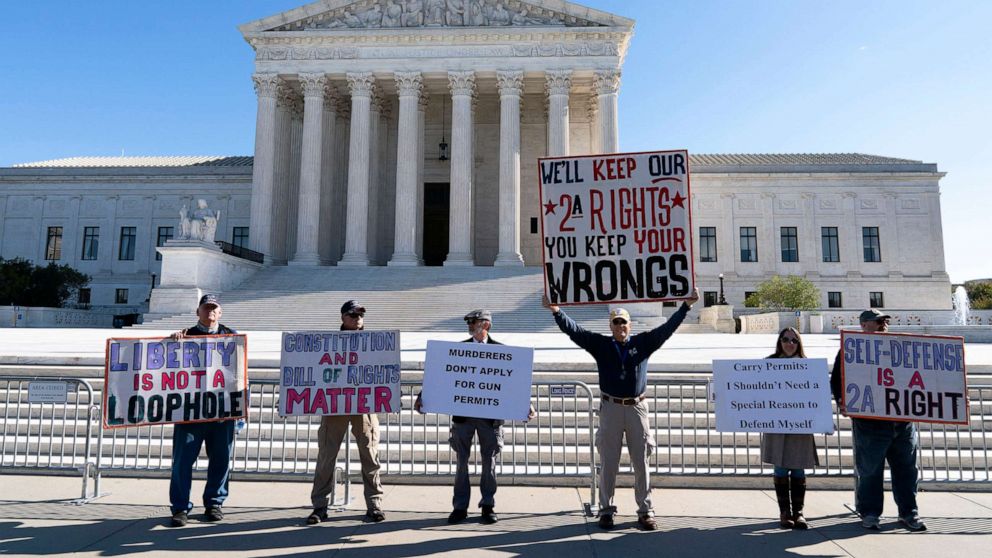
The National Rifle Association, joined by the Firearms Policy Coalition and Second Amendment Foundation, filed an amicus brief asking the U.S. Supreme Court to hear a challenge involving the federal lifetime ban on firearm possession by nonviolent felons, according to the announcement describing the Supreme Court filing. The groups want the Court to grant certiorari, meaning accept the case for review.
No Supreme Court ruling has been issued, and the filing itself does not suspend or invalidate the federal prohibition. The supplied source does not identify the case name, the person challenging the law, or a separate ruling date, so gun owners should not mistake this amicus brief for a final decision.
Background
The dispute concerns the federal lifetime prohibition on firearm possession by people convicted of felonies, specifically as applied to a person whose offense was nonviolent. The source says the U.S. Court of Appeals for the Tenth Circuit has not applied the Supreme Court’s current Second Amendment test to this prohibition and instead prevents challenges regardless of the offense’s nature or how long ago it occurred.
An amicus brief is a filing by a person or organization that is not one of the principal parties but believes it can provide useful legal analysis. Here, the NRA, FPC, and SAF are supporting Supreme Court review rather than bringing the underlying case themselves. Their central argument is that no category of firearms law should be insulated from the constitutional test governing Second Amendment claims.
Under the standard described in the filing, the government must prove that a firearm restriction is consistent with America’s historical tradition of firearm regulation. The brief’s historical analysis reportedly covers regulations from colonial America through the nineteenth century.
The organizations distinguish between dangerous and peaceable people. According to the brief, historical laws permitted disarming people who threatened the government or had demonstrated a proclivity for violence. It argues that the historical record does not establish a comparable tradition of permanently disarming peaceable citizens solely because they had committed nonviolent felonies; instead, peaceable citizens were often permitted or required to keep and bear arms.
What the Ruling Means for Gun Owners
For now, nothing changes. There is no new ruling restoring anyone’s firearm rights, and the Supreme Court has not agreed to hear the case. A person currently prohibited under federal law should not possess, receive, or attempt to purchase a firearm based on the filing of this brief.
That distinction is especially important during a purchase from an FFL dealer. Licensed dealers must continue following existing federal transfer requirements and cannot treat a pending lawsuit or an amicus brief as proof that a buyer’s prohibited status has ended. Anyone uncertain about personal eligibility should consult a qualified attorney before handling or attempting to acquire a firearm.
If the Supreme Court accepts the challenge, the eventual decision could affect whether people with old, nonviolent convictions may bring individual Second Amendment claims. Acceptance alone would not guarantee that the challenger wins, and a decision could be broad, narrow, or limited to the facts of the specific case.
The filing nevertheless raises a consequential gun rights question: Can the government impose a permanent, categorical loss of Second Amendment rights without showing that the affected person is dangerous? The supporting organizations say the Constitution requires courts to conduct the historical inquiry rather than treating every felony conviction as an automatic answer.
What Comes Next
The immediate question is whether at least four Supreme Court justices vote to grant certiorari. If the Court denies review, that does not necessarily endorse the Tenth Circuit’s reasoning; it simply leaves the lower-court result in place and provides no nationwide Supreme Court ruling on the merits.
If review is granted, the parties would submit merits briefs, additional organizations could file further amicus briefs, and the Court could schedule oral argument before issuing a decision. Gun owners should watch for the petition’s case name and docket number, a response from the federal government, and an order either granting or denying review.
The source directs readers to NRA-ILA’s official litigation updates. Readers can also follow Second Amendment news from BT Gun Company for developments that may affect lawful firearm ownership and transfers.
The Bigger Picture
This dispute sits at the intersection of two major questions in modern firearms law: how courts apply the historical-tradition test and whether lifetime disarmament can be imposed on people who have not shown a propensity for violence. The brief does not argue that government lacks authority to disarm genuinely dangerous people. Instead, it contends that danger—not a broad label detached from violence or present conduct—is the historically supported dividing line.
That issue matters because the modern category of felony offenses is broad. The brief’s position is that courts must examine whether the government’s asserted restriction has a valid historical analogue rather than refusing to hear an as-applied challenge at the courthouse door. For supporters of Second Amendment rights, meaningful judicial review is essential when a law permanently strips a constitutional right.
At the same time, this filing should not be read as a general restoration program or an instruction to ignore current law. Relief from a firearms disability can depend on federal and state law, the conviction, the jurisdiction, and any valid pardon, expungement, restoration order, or other legal process. A trusted firearms dealer can explain ordinary transfer procedures, but only qualified legal counsel can advise whether a particular person is legally eligible to possess firearms.
For responsible ownership resources, lawful purchasing information, and continuing coverage of cases affecting gun owners, visit BT Gun Company. When you are legally eligible and ready to browse firearms, our team is here to help you complete the process responsibly.

About the Author: Jeff Brown
Jeff Brown is CEO of Fuzzy Holdings LLC and owner of BT Gun Company, a Class 7 FFL dealer since 2023. An NRA-certified Range Safety Officer who has been shooting since 1983, he teaches hunter safety at his local gun club, hunts spring and fall turkey, and has a soft spot for revolvers.